For many older adults, movement doesn’t stop being important just because balance feels shakier or joints feel stiffer. In fact, gentle movement often matters more as we age. The good news is that staying active doesn’t require standing workouts, gym equipment, or pushing through discomfort.
Exercise snacks have proven their worth and chair exercises for the elderly offer a safe, practical way to keep the body moving while staying supported, too. Whether you live with arthritis, use a walker, feel unsteady on your feet, or simply prefer the security of sitting down, chair-based movement can help you stay engaged with your body in a way that feels manageable and reassuring.
This isn’t about “exercise” in the traditional sense. It’s about small movements that support daily life.
Why Chair-Based Movement Matters
When we sit for long stretches without moving, muscles gradually weaken and joints stiffen. Over time, this can make everyday tasks—standing up, reaching overhead, walking short distances—feel harder than they need to be.
Gentle chair movement helps keep muscles awake and joints lubricated. It can improve circulation, ease stiffness, and support better posture. Many people also notice that moving regularly, even in small ways, helps with confidence. The body feels more familiar, less fragile.
Perhaps just as important, chair exercises reduce the fear of falling. When your feet are flat on the floor and your body is supported, you can focus on movement instead of worrying about losing balance.
What “Safe” Movement Really Means
Safe movement is slow, controlled, and pain-free. You should be able to breathe normally and hold a conversation while moving. Any motion that causes sharp pain, dizziness, or shortness of breath is a sign to stop.
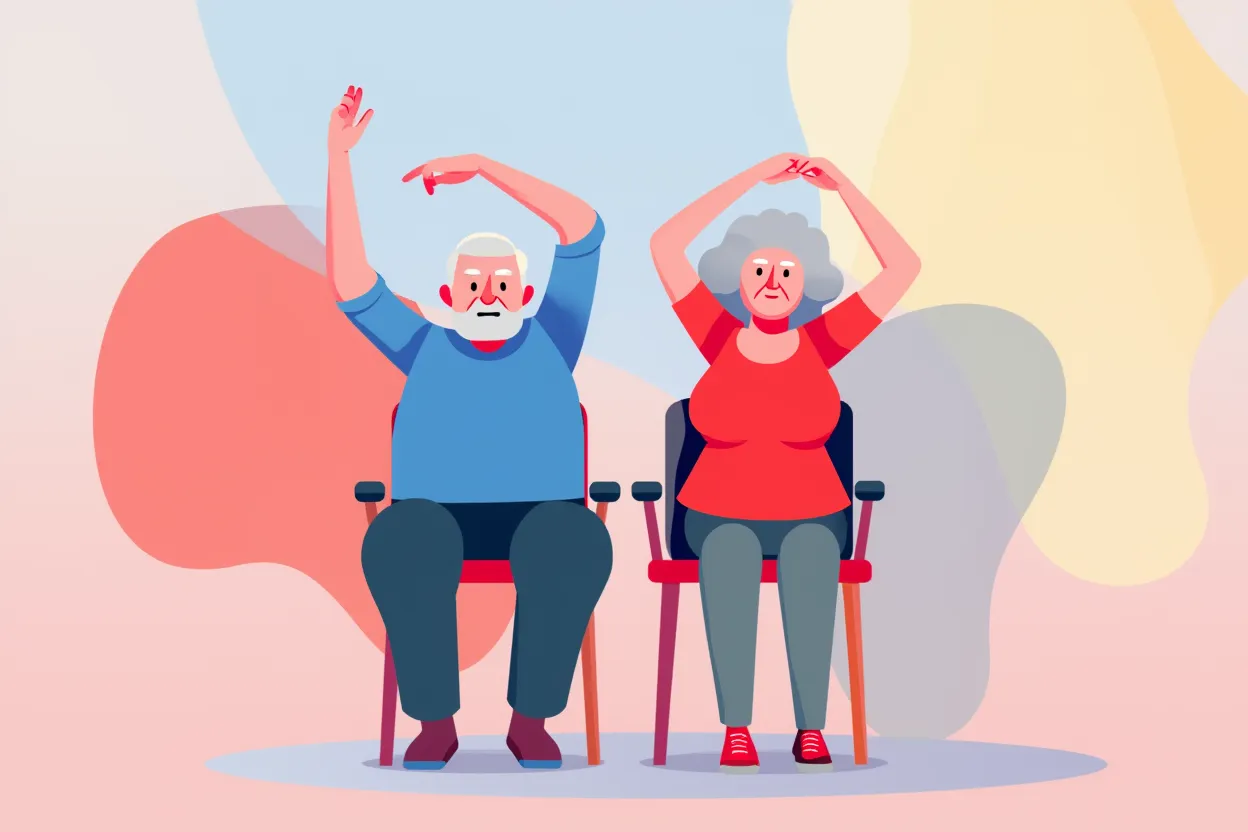
A sturdy chair is essential. Choose one that doesn’t roll, with a firm seat and, if possible, armrests. Sit tall with your back supported and your feet flat on the floor. Good posture alone is a gentle exercise for the body.
There’s no rush. These movements aren’t about counting repetitions or pushing limits. Even a few minutes of mindful motion can be beneficial.
 Smart Senior Daily Staff
Simple, Gentle Movements You Can Try
Many effective chair exercises for the elderly look more like everyday motions than workouts.
Slow ankle circles or gently lifting one heel at a time can help keep the lower legs flexible and support circulation. These small movements matter, especially for people who sit often.
Raising one knee slightly and setting it back down helps engage the muscles used for walking and standing. This can be done one leg at a time, with hands resting on the chair for support.
Shoulder rolls—lifting the shoulders up, then easing them back and down—can release tension that builds up from sitting. Gentle arm lifts, reaching forward or to the side only as far as comfortable, help maintain shoulder mobility.
Turning your head slowly from side to side, or tilting it gently toward one shoulder, can ease neck stiffness. These movements should always be slow and never forced.
Even something as simple as squeezing your hands into a loose fist and releasing them helps maintain hand strength for daily tasks like opening jars or holding utensils.
Listening to Your Body Comes First
One of the most important parts of chair movement is paying attention to how your body responds. Mild stretching sensations are normal. Pain is not.
Some days will feel easier than others. That’s normal, too. Fatigue, sleep, weather, and stress all affect how the body feels. Movement should meet you where you are, not where you think you “should” be.
Resting between movements is not a failure. It’s part of staying safe.
Who Should Check With a Doctor First
While chair exercises are generally gentle and low-risk, some people should speak with a healthcare provider before starting anything new.
This includes seniors who have recently had surgery, experienced a fall, or have severe joint pain. People with heart conditions, uncontrolled blood pressure, advanced osteoporosis, or neurological conditions should also ask for guidance.
If you’re unsure, a quick check-in with a doctor, physical therapist, or nurse can provide peace of mind and help you understand which movements are best for you.
 Smart Senior Daily Staff
Building Confidence One Small Move at a Time
Chair exercises aren’t about transforming your body. They’re about maintaining independence, comfort, and confidence. Each small movement reminds your body that it’s still capable.
You don’t have to do everything. You don’t have to do it perfectly. You just have to move gently, safely, and in a way that feels right for you—today.
And for many seniors, that’s more than enough to make a difference.