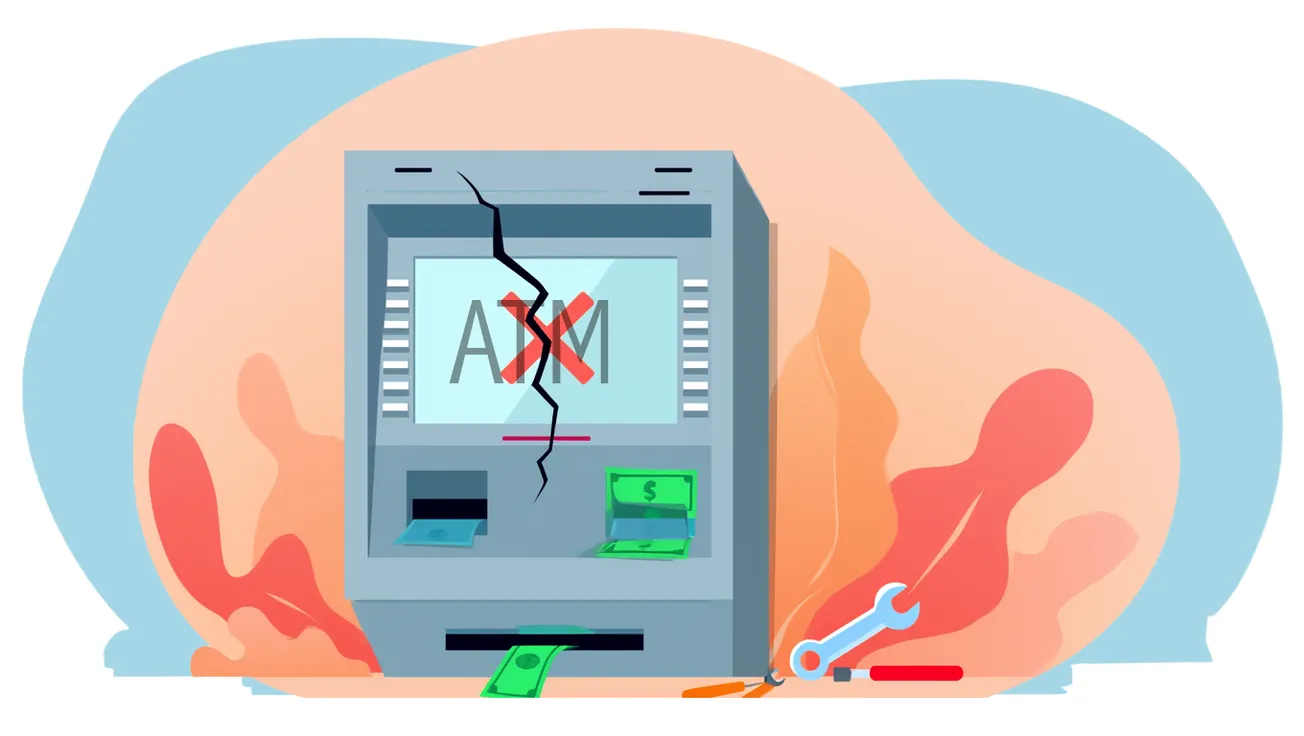
How many times have to stode up to an ATM, put in your PIN code only to find that the dang machine is on the fritz? So, if you figure you're out of luck and you walk away. There's a new scam brewing that counts on you doing exactly that.
Philadelphia police have been finding hidden "trap door" devices attached to ATM cash dispensers over the last couple of weeks — nine machines so far, at corner stores, dollar stores, and bank locations across the City of Brotherly Love – a little device that physically blocks your cash from coming out.
So, like you ususally do, you throw up your hands, thinking the machine malfunctioned and go and try to find another. If you had stayed, however, you might have seen someone coming to the busted ATM and collecting your money.
 Gary P Guthrie
How it works
These devices target ATMs with a roll-down door on the cash slot. You request your withdrawal, hear the machine counting bills, but the door never opens. The cash is sitting in a hidden compartment. Your account is already debited.
Philadelphia Police Capt. Robert McKeever put it plainly: the customer hears the machine working, can't get the door to open, and assumes it's out of money or broken.
That assumption is what the whole scam is built on. See for yourself...
Why weekends are the danger zone
These scammers are far from dumb. They know that banks are typically closed on the weekends, so that's when they install the devices. That gives thieves about 60 hours to let cash accumulate before returning to collect.
Where the risk is highest
Police say that most of the standalone machines are in low-traffic retail spots — not busy bank lobbies. Here's a list of ATM locations to avoid:
- Convenience stores and gas stations (especially independent ones)
- Dollar stores (explicitly mentioned in the Philly cases)
- Corner stores / bodegas
- Laundromats
- Check-cashing shops and payday loan storefronts
- Small grocery stores
- Hotel lobbies (especially budget properties)
- Bar or restaurant ATMs
- Casino floors (though those tend to be monitored)
The riskiest machines are ones run by third-party operators rather than banks — the ATM tucked in the corner of a convenience store or laundromat that nobody's really keeping an eye on.
 Gary P Guthrie
Comin' to get 'ya
Law enforcement is saying it plainly: expect this to spread. The device is super cheap, fast to install, and requires no technical skill. When a scam this simple works this well, other criminals no doubt tell their fellow scammers around the country who join in on the fun and replicate it in a city where they live.
What to do
- Inspect the cash slot before you start. Anything loose, added, or out of place — walk away and find another machine.
- Don't leave if cash doesn't appear. Check your account balance, report it to the store, and call the number on the machine.
- Call your bank immediately if you're debited but receive nothing. Banks generally refund trapped cash once confirmed — but you have to report it.
- Stick to bank-branch ATMs when you can. The more foot traffic and oversight, the less attractive the target.
The scam works because it's invisible. No alarm, no confrontation — just a machine that seems to have had a bad day. Now you know better. Don't say no one told you.