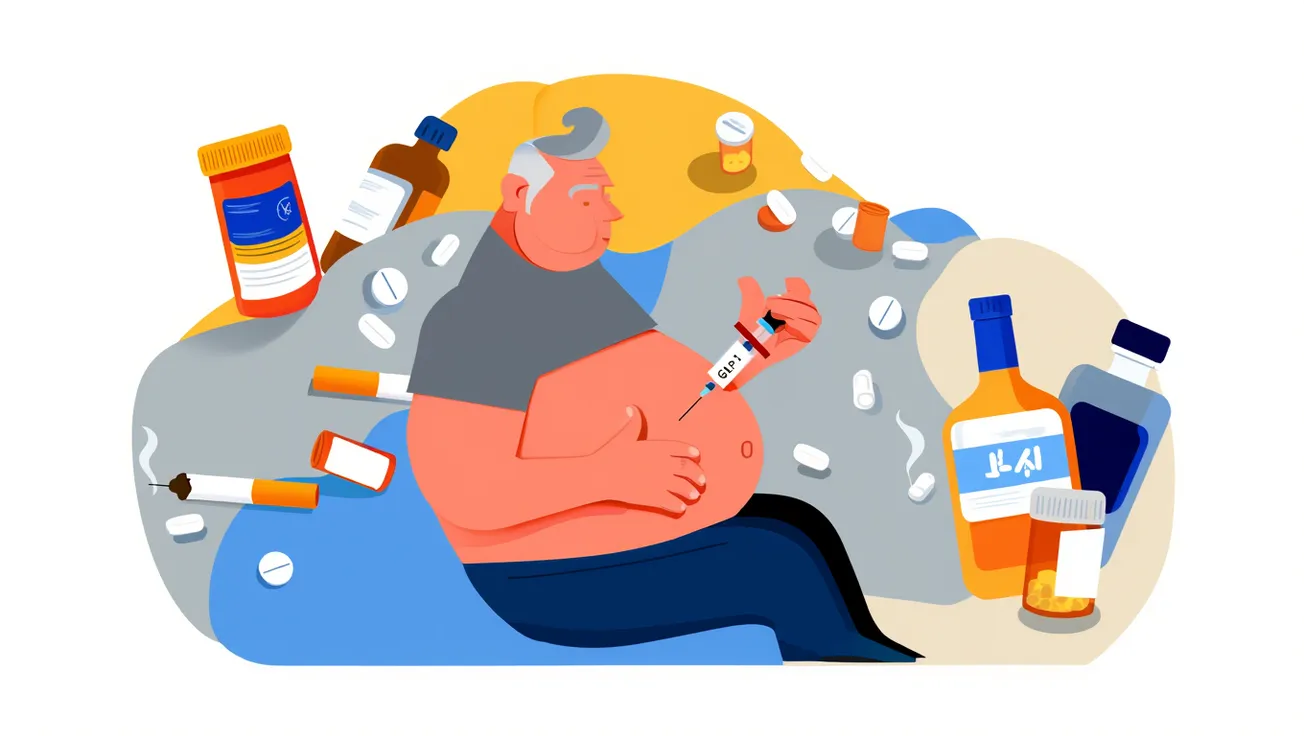
GLP-1 drugs – Ozempic, Wegovy, Zepbound being the big three – have re-entered the news cycle like a house on fire.
"GLP-1s might help curb addiction to alcohol, opioids, and cigarettes"
"New direct-to-employee platform for GLP-1s is launched"
"Most GLP-1 patients keep weight off with fewer shots"
The big question to ask is: will this work for you, a senior? Here's what we found out about that first study ("curbing addiction"). We'll follow up on the others in subsequent articles.
 Gary P Guthrie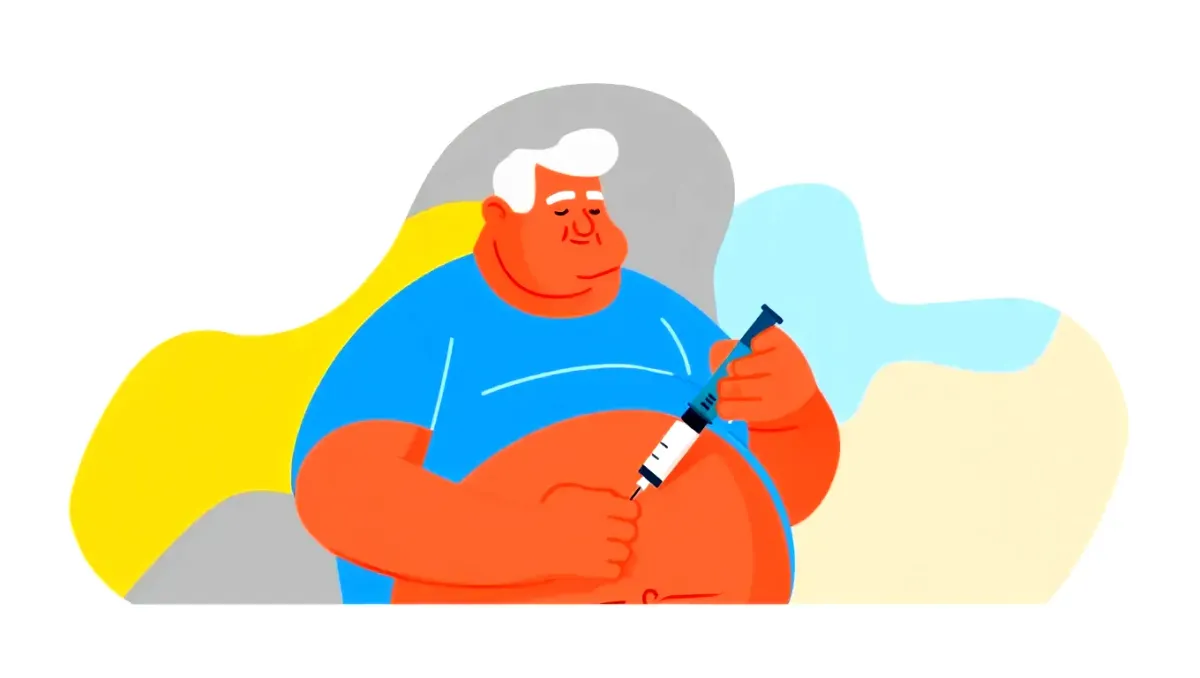
"GLP-1s might help curb addiction to alcohol, opioids, and cigarettes"
It's not just someone's opinion, but a major study (600,000 U.S. veterans with type 2 diabetes) done by researchers at VA Saint Louis Health Care System, St Louis.
The researchers found that using GLP-1 was links to lower rates of substance abuse than if someone used an SGLT-2 inhibitors (Jardiance (empagliflozin), Farxiga (dapagliflozin), and Invokana (canagliflozin) — across every category tested.
And vets with no pre-existing substance use disorder? They proved to have reduced risk as well – with the strongest positive result being alcohol use disorder, with a net risk difference of nearly 5.6 fewer cases per 1,000 people. Marijuana, nicotine, opioids, cocaine, and other substance use disorders all trended in the same direction, too.
And it gets better, too
Ziyad Al-Aly, one of the researchers, said that among people with existing substance use disorders, they found fewer drug related emergency department visits, hospital admissions, and deaths.
"This translated into roughly 12 fewer serious events per 1000 users over three years, including two fewer deaths," Al-Aly said. "Crucially, we also saw clear reductions in drug overdoses and suicide attempts, suggesting these drugs may reduce some of the most lethal consequences of addiction."
Given how many people now take GLP-1 receptor agonists, even modest individual effects could translate into a substantial population level shift in the burden of addiction.
 Smart Senior Daily Staff
What does this mean for Seniors?
Here's the thing nobody talks about: addiction doesn't retire when you do.
Alcohol use/abuse disorder affects about 10% of the 65+ demographic. That may not seem like a lot, but to those who it affects, it affects in a big way – not only physically, but socially and within their own family.
Opioid misuse is a growing concern, too, for seniors. Often beginning as something prescribed by a doctor when a senior gets knee or hip replacement, people tend to get comfortable with taking it and have a hard time putting it down.
Tobacco addiction probably speaks for itself given its history.
And because our generation wasn't exactly raised to talk about this stuff, a lot of older adults — and their families — never connect the dots and the whole mess can slide further downhill.
So when a study of 600,000 people that a drug many seniors are already taking for diabetes or weight loss also appears to reduce addiction risk? That's worth paying attention to.
If you do it, do this cautiously
We don't have a license to tell you to go to your GP and ask if you can have a prescription of Wegovy or Ozempic so you can curb your drinking.
Going all in can be dangerous: you can lose muscle mass you can't afford to lose, your bones aren't big fans of rapid weight loss, and if you're already taking a handful of pills, adding a GLP-1 to the mix needs a careful, honest conversation.
But if you're already a candidate for one of these drugs — and a lot of us are — then, you've now got one more reason to have that fuller conversation with your doctor about everything related: weight as well as alcohol, opiods, and tobacco.
Disclaimer: This article is for informational purposes only and does not constitute medical advice. Medications like Ozempic, Wegovy, and other GLP-1 drugs should only be started, adjusted, or stopped under the guidance of a qualified healthcare provider. Individual results and risks may vary.