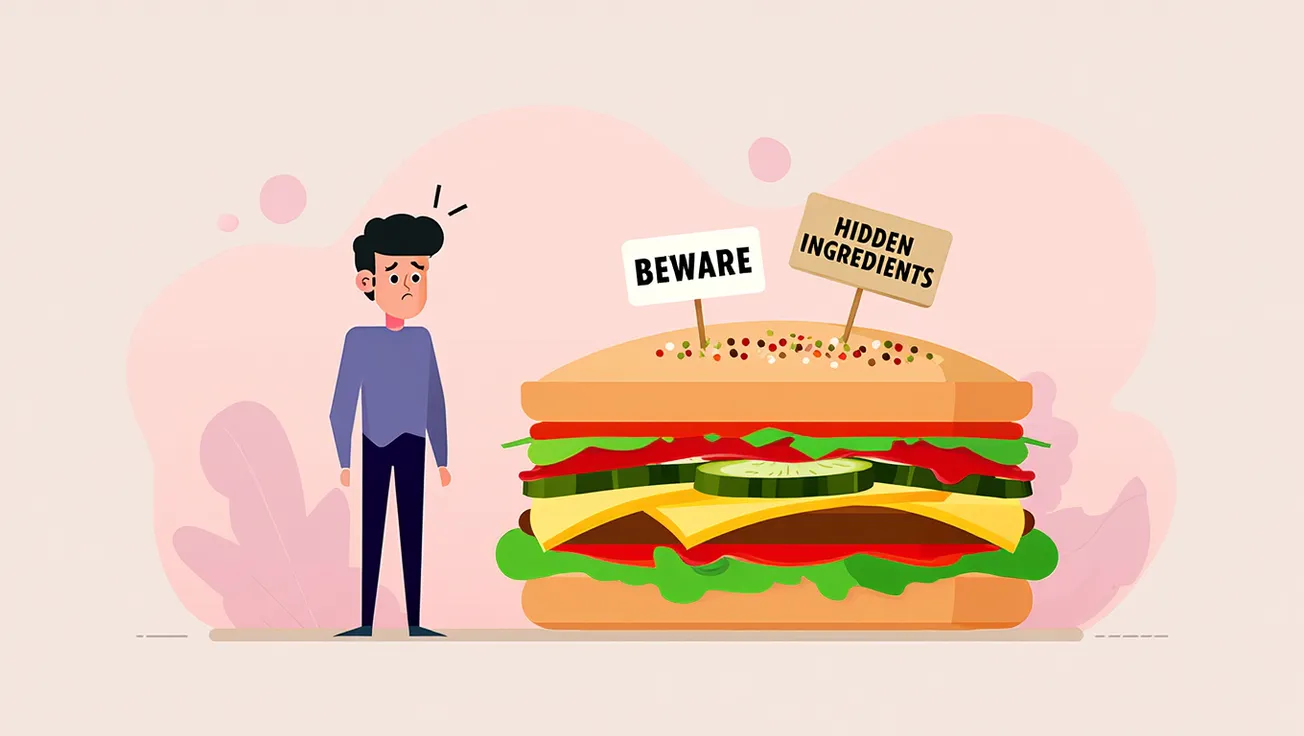
If You Don’t Read Anything Else…
- Nearly half of fatal food-allergy reactions in the U.S. occur after restaurant meals, CDC data show.
- Restaurants often use pre-mixed sauces and marinades that contain undeclared allergens.
- Seniors may experience gut pain or weakness instead of classic hives or swelling — a dangerous delay signal.
- Always tell servers about sensitivities up front and ask to review ingredient lists or recipe sheets.
- Federal law doesn’t require allergen disclosure on menus — only on packaged foods.
A Surprise Ingredient with Painful Results
When I ordered a a marinated tuna starter at a restaurant recently, I felt good about my choice because none of the ingredients list on the menu seemed to conflict with my food allergies and nothing, in particular, suggested heat.
However, within an hour of eating the dish, I developed sharp gut pain. Later I learned that sriracha had actually been added to sauce — an unlisted addition that even the restaurant’s manager said they didn’t know about.
That single “hidden” ingredient was enough to make me sick. I didn't go into Anaphylactic Shock, mind you, but the next few hours were anything but pleasant. For diners with serious allergies, the results can be catastrophic.
A Widespread but Overlooked Problem
“It’s not a rare problem,” says Lauri Wright, PhD, RDN, associate professor at the University of South Florida’s College of Public Health. “Dining out is one of the leading settings for accidental food-allergy exposures.”
The CDC reported that nearly half of fatal food-allergy reactions over a 13-year span were linked to restaurant or food-service meals. Less than half of managers and servers had any allergen-safety training.
“Many restaurants use pre-mixed or commercially prepared sauces and marinades,” Wright explains. “Those products follow FDA labeling rules, but there’s no requirement that menus list allergens for made-to-order foods. Unless staff can check the label or recipe, that hidden risk is real.”
Why Older Adults Should Pay Special Attention
Food allergies don’t fade with age — they just look different. “Older adults may show more cardiovascular or gastrointestinal symptoms rather than the textbook skin signs,” Wright says.
“The absence of hives does not rule out anaphylaxis. Gut pain, vomiting, lightheadedness, or sudden weakness after eating should prompt urgent action.”
Reactions can also be worsened by other conditions. “Aging hearts and lungs can make allergic reactions more severe, and recovery slower,” she notes. “Intolerances to milk or wheat are also more common in older adults and often appear as GI distress after restaurant meals.”
How to Protect Yourself When Menus Don’t Tell the Full Story
Wright suggests a few practical steps:
“Let the restaurant staff know about your allergy up front. Ask to review the packaged label or recipe sheet and confirm how cross-contact is prevented.”
Try: “I have a severe allergy to [ingredient]. Does the marinade or sauce contain it? Can mine be cooked with only oil, salt, and pepper in a clean pan?”
“Always have your auto-injector if prescribed and use it at the first sign of reaction,” Wright advises. “Even if you take beta-blockers or ACE inhibitors like lisinopril or metoprolol, use epinephrine promptly — it can still save your life.”
“Ask if they follow the FDA Food Code allergen-training rules for the person-in-charge (PIC). Chain restaurants often have standardized recipes and allergen protocols that make checking easier.”
Note: It might be wise to print that out and carry it in your purse or billfold.
What Restaurants Should Be Doing
Wright says that the supplement to the 2022 Food Code (released 2024) expects a trained manager on duty who understands the nine major allergens and their symptoms. “That’s the baseline,” she says. “But restaurants should train all staff, not just one PIC, and keep supplier labels for all pre-made sauces and marinades.”
She also recommends an allergen binder available for guest review, plus standardized cleaning protocols — separate fryers, dedicated utensils, sanitized surfaces, and a “clean-pan” policy for allergy orders.
“Federal law doesn’t require allergens to be listed on menus,” Wright notes, “but restaurants can and should flag high-risk dishes like nut pestos or sesame-topped items. It’s a small step that could prevent a tragedy.”
Got IBS, SIBO, Acid Reflux? What the FDA doesn't tell you about "natural flavors"...
“Natural flavors” sound harmless, but the FDA allows manufacturers to use the term as a catch-all for dozens of substances — as long as they originated from something found in nature. For seniors with reflux, IBS, SIBO, food sensitivities, or general digestive issues, that vagueness can make symptom-tracking a nightmare.
Here’s what might be inside the blend:
• Preservatives and solvents. Natural flavors may contain propylene glycol, alcohol, or BHA/BHT. All are “safe” under FDA rules, but some older adults find they worsen bloating, nausea, or stomach irritation.
• Hidden sugars and sweet enhancers. Some flavor compounds are carried in fruit concentrates or glycerin. That tiny extra sweetness can trigger symptoms for people with glucose instability or gut fermentation issues.
• Yeast extracts and hydrolyzed proteins. These behave like MSG. They’re incredibly common in savory packaged foods and can cause headaches, flushing, gas, or heartburn in sensitive individuals — even when “MSG” never appears on the label.
• Citrus-derived flavor compounds. Lemon, lime, and grapefruit bases are common natural flavor ingredients. They can aggravate reflux — and grapefruit derivatives may interfere with medications like statins or certain blood pressure drugs.
• Fermented bases. Many natural flavors begin with a fermentation step. That’s fine for most people, but seniors dealing with histamine intolerance, SIBO, or post-antibiotic gut imbalance may react strongly.
Bottom line: “Natural flavor” can mean one ingredient… or forty. If you have a sensitive gut, choose brands that list their flavor sources (“vanilla extract,” “lemon oil,” etc.) or opt for organic products, which follow stricter rules on flavor additives.
A Caution Worth Heeding
Two high-profile deaths — one involving physician Dr. Kanokporn Tangsuan and another young woman, Mae Bodziony, both linked to hidden allergens — have made national headlines in the past two years. Their stories underscore why transparency and proactive communication matter on both sides of the table.
For seniors, it may be as simple as asking one extra question — and refusing to assume that “mild” means “safe.”
Disclaimer: This article is for informational purposes only and does not constitute medical or legal advice. Always consult a qualified professional for personal guidance on food allergies or sensitivities.