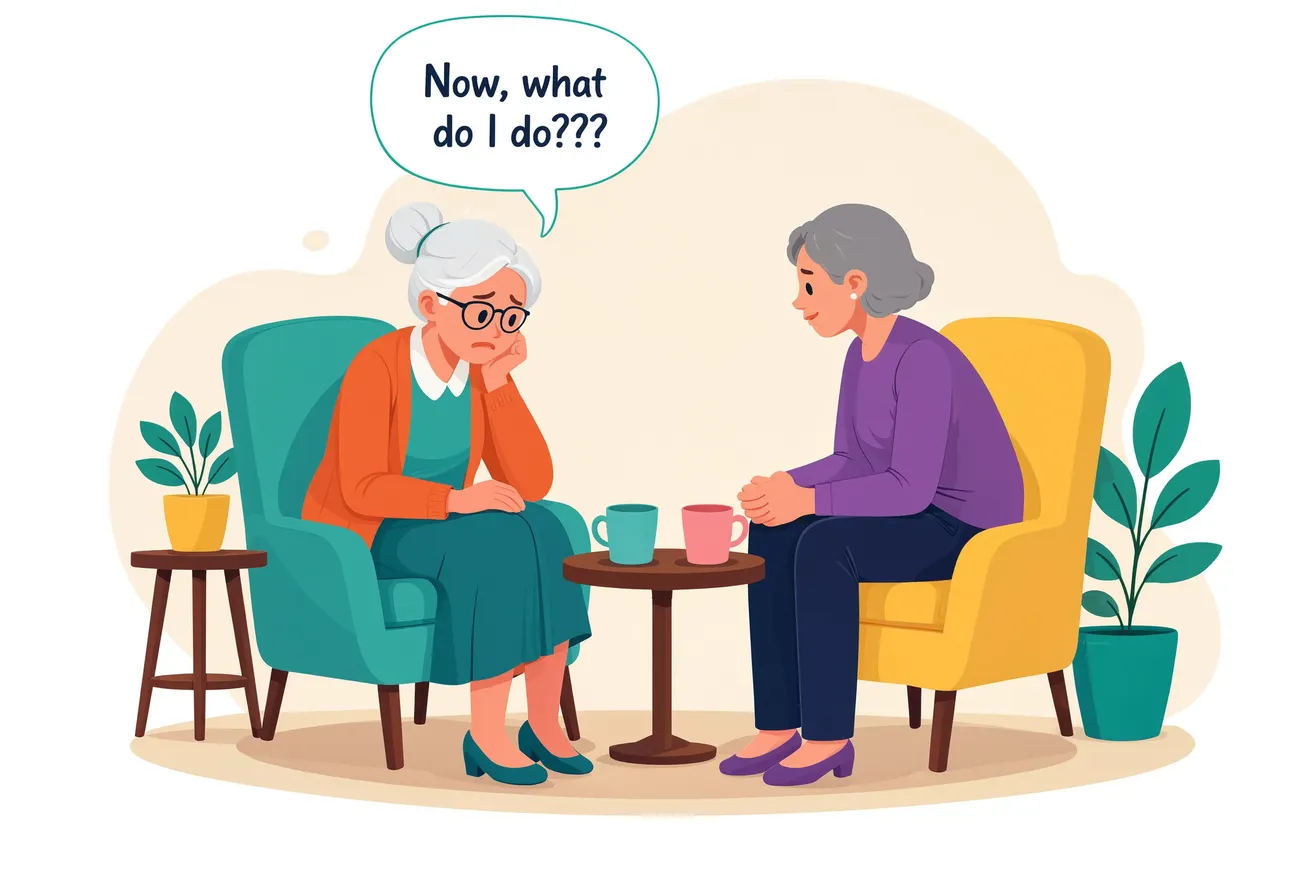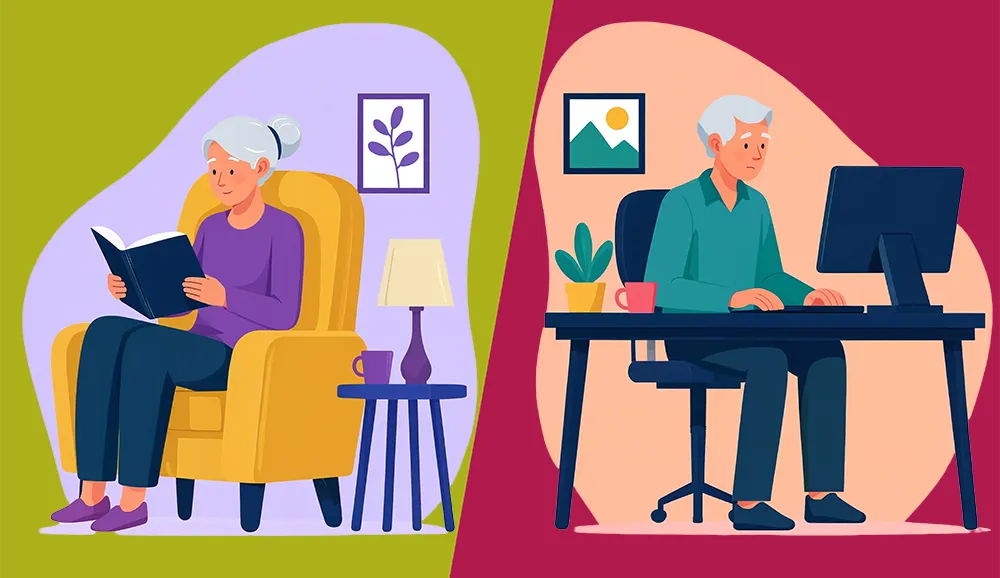
You sit in one room while your spouse sits in another... you both go to dinner together, but don't say a word to each other... you've barely touched each other since who knows when...
Growing old is bad enough as it is. Growing old in a less-then-happy relationship can be downright awful. But while there are little things that someone outside your relationship could probably point out as trouble spots, there’s no one single moment you know your marriage is over.
For many thinking about divorce in their later years, it’s less like a lightning bolt than a slow accumulation of quiet dinners or not interacting for much of the day that no longer feels like enough.
So how do you know when that’s the right thing to do instead of just putting up with it? Smart Senior Daily put that very question to three "gray divorce" specialists and experts. Here's what we found out.
 Smart Senior Daily Staff
Quit Waiting for Certainty
“Certainty is the wrong test,” Cherie Morris, J.D., a Certified Divorce Coach who specializes in gray divorce, told Smart Senior Daily. “It’s waiting to know for sure that keeps people stuck for years.”
She recommends flipping the question. Don’t ask, "Am I sure?” Ask, "What would have to change for me to answer differently in six months?” That’s information worth taking seriously if nothing realistically will.
Morris also rejects the notion that it’s ever too late to make this decision carefully. With a longer life expectancy, one decision at 55 or 65 can still impact two or three decades.
“That’s a reason to make a good decision, not a reason it’s too late,” she says.
Her practical advice: really understand the finances, understand what the changes to your household and routines will actually look like, and imagine the ordinary day-to-day after the decision and not the dramatic version of it that fear tends to conjure up.
What Changes When the Children Are Grown
“Many of the things that make divorce so agonizing earlier in life don’t apply the same way later on,” says Jason Fierstein, a licensed professional counselor who sees couples and individuals.
"Seniors don’t have to worry as much as younger couples about how their children will be impacted,” says Fierstein, “because their children are adults and often have families of their own. For a lot of people, that one shift removes one of the heaviest weights from the decision."
He also points out something he sees a lot in his practice—an increased awareness of mortality that makes people less willing to spend what could be their final years unhappy.
“I hear clients say, ‘This is the last chapter of my life, and I want to be happy and fulfilled.'"
Fierstein is careful to point out that this is not automatically a clean story. When one spouse wants out and the other doesn’t, the person left behind can be lonely, not want to date again or build a social life.
But he sees the throughline clearly: marriage for no other reason than obligation, when it was the only reason left, ends up costing more than leaving does.
 Francine Toder
It’s Not Failing. It's Often a Quest for Peace.
Paulette Rigo, a certified divorce coach and mediator who has worked with hundreds of divorcing individuals, constantly hears a version of the same misconception: that people who divorce later in life are being impulsive.
“People over 60 aren’t impulsive divorcees,” Rigo commented to SSD. “They’re finally getting a divorce because they’ve realized that another 20 or 30 years of chronic conflict isn’t the life they want.”
She’s also heard how much courage it can take, especially for those who stayed together for decades for children, money, social mores, or religious reasons.
“I’ve seen people survive a marriage for 40 years instead of living it," she says.
One thing Rigo wants more people to know? You don't have to go to court for a divorce when you're older.
“I’ve seen mediation help couples to keep their assets, to maintain their dignity and to protect the relationships that matter most to them, especially with adult children and grandchildren."
The Plain Fact Is
If there is one thing common to all three views, it is this: the goal is not to be absolutely certain before making any decisions.
Conversely, it's to not confuse exhaustion with stability, get real information about what the practical realities would look like, and lean on a therapist, coach, or mediator, not just a lawyer, to make the process as calm as the decision deserves to be.