Author and essayist Anne Lamott recently shared a story on her Substack that stopped a lot of people in their tracks.
She was visiting a friend with her young son, who was five at the time. At some point the boy got his head stuck between the slats of a chair. Nobody noticed right away. Then came this small, matter-of-fact voice:
"I need help with me."
Lamott called it a great prayer. She's right. And if you think about it, it may be the hardest prayer for older adults to say out loud.
What "Stuck" Actually Looks Like
There's no "Hi, I'm here" with stuck'ness. It just adds up over time.
Dr. Maya Reynolds, a psychiatrist and behavioral health spokesperson at ChoicePoint Health, puts it plainly. From her perspective, feeling stuck can show up as a loss of motivation, increased irritability, a decline in interest in life, and withdrawal from daily activities and socializing. It often hits hardest during major life transitions — retirement, declining health, loss of a spouse or close friend.
Think about it. The busy routine that gave your days structure — gone. The social connections that came with work — faded. The body that used to cooperate — less reliable. Any one of those would be hard. All three at once? That's when people get stuck and stay there.
 Dr. Carol McKinley
Eileen Borski, a licensed professional counselor and founder of Authentic Brain Solutions, describes it another way. For seniors, getting stuck is a little like the movie Groundhog Day — the same painful memories replayed on a loop, sometimes for years, until the original experience becomes distorted beyond recognition.
"When processing past trauma, the brain remains on alert, ready for a recurrence even if the threat is gone," Borski explains. New stressors — grief, loss of purpose, physical decline — pile on top of an already-activated nervous system. Added up, that equals a compounding kind of stuck that feels impossible to move through alone.
So Why Don't We Ask for Help?
Buckle up, because here's where it gets honest.
If you're like most seniors, you grew up in a world where you handled things privately. You dared not air your problems and you certainly didn't see a therapist. You just pushed through (or plowed around whatever emotional stump you faced).
Dr. Clint Salo, a board-certified psychiatrist at The Grove Recovery Community in Southern California, sees this pattern constantly.
"Many older adults were raised to handle things privately," Salo says. "Asking for help can feel unfamiliar or even uncomfortable, especially if they've spent most of their life being the one others rely on."
That last part is key. If you've spent decades as the strong one — the parent, the provider, the person everyone else leaned on — asking for help can feel like a betrayal of who you are.
There's also the burden question. Salo hears it repeatedly:
"A lot of people in this age group hesitate to bring things up because they don't want to worry family members or feel like they're asking for too much."
Borski adds another layer that doesn't get enough attention — the mental health system hasn't done the greatest of jobs serving seniors as well as they could have.
Ageism within the mental health community, she says, has led to mediocre or nonexistent treatment for older adults, based on the false belief that mental decline is simply part of aging. If a senior reached out once and felt dismissed, they're not likely to try again.
"If someone does not feel heard or is dismissed, they won't trust or seek that type of support," Borski says. She witnessed this firsthand during her time as Director of Behavioral Health for a hospital-based senior renewal program — hearing it not once, but repeatedly, directly from patients.
 Smart Senior Daily Staff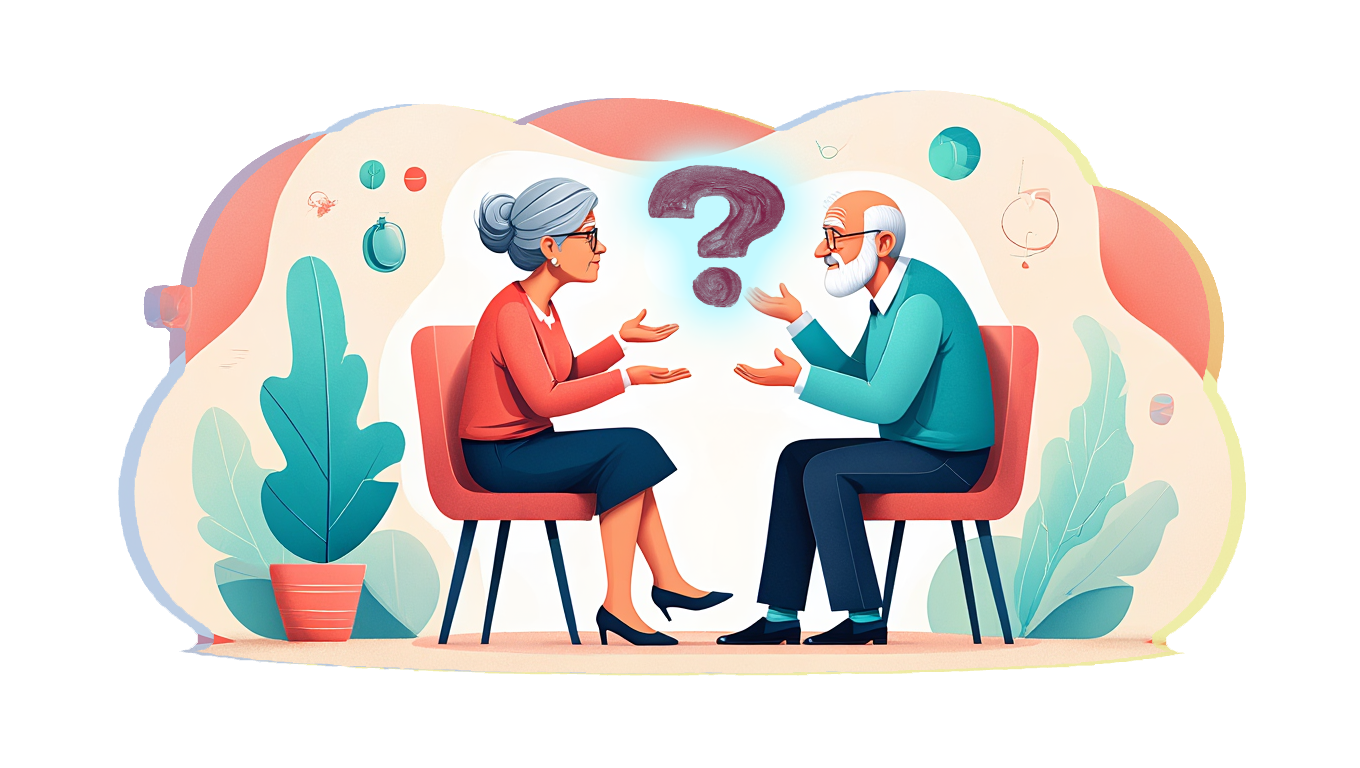
The First Step Is Smaller Than You Think
Here's what the experts want you to know: getting help doesn't mean committing to years on a couch.
"The first step is usually smaller than people expect," Salo says. "It might be a single conversation with a primary care doctor or one appointment just to talk things through. You don't have to commit to anything long-term right away."
Reynolds echoes that. The very first move can be as simple as talking to a trusted person — a friend, a pastor, a doctor. That initial conversation opens a door. It doesn't lock you into anything.
Borski suggests looking specifically for therapists who specialize in working with seniors and understand their unique experience — clinicians trained to avoid the ageist assumptions that have turned so many older adults away. Group counseling is another option worth considering. Hearing that others are navigating the same feelings can be powerful. It reduces the shame and the isolation at the same time.
If you like the "group counseling" idea, here's how to search for it:
🔽 Where to look for group therapy/counseling
For group therapy/counseling specifically, consider these:
- Psychology Today (psychologytoday.com/us/groups) — has a dedicated group therapy finder, filterable by zip code, issue type, and age group. Best overall option.
- SAMHSA's treatment locator (findtreatment.gov) — free, government-run, zip code based.
- Mental Health America (mhanational.org) — has affiliate offices in most states that run or can refer to local groups.
Senior-specific:
- AARP has a Mental Health Resource Center and can connect people to local programs.
- Local Area Agencies on Aging (eldercare.acl.gov, 1-800-677-1116). They often know about free or low-cost counseling groups in the community that never show up in a Google search.
Medicare pays for counseling:
Remember: Medicare Part B covers various outpatient counseling and mental health services, including individual/group therapy, family counseling, and depression screenings. After meeting the Part B deductible, you typically pay 20% of the Medicare-approved amount, provided the provider accepts assignment
It's Okay to Say It
That little boy with his head stuck in the chair? He figured something out that most of us spend decades avoiding.
He needed help. He said so. And somebody came.
The situations seniors face — grief, loneliness, why-am-I-here, a body that doesn't work the way it used to? We can't think of these as character flaws, nor are they signs of weakness. They're hard things that deserve real support.
You've spent a lifetime being there for other people. It's okay to let someone be there for you.
"I need help with me" isn't losing in the game of life. It's a starting point.
Disclaimer: This article is intended for informational and educational purposes only. It is not a substitute for professional mental health advice, diagnosis, or treatment. If you or someone you know is struggling emotionally, please consult a licensed mental health professional. Smart Senior Daily is an independent editorial publication and has no affiliate relationships with any therapists, services, or organizations mentioned in this article.