A Smart Senior Daily reader pinged us, Monday, asking if this text message they received is for real or is it a scam?
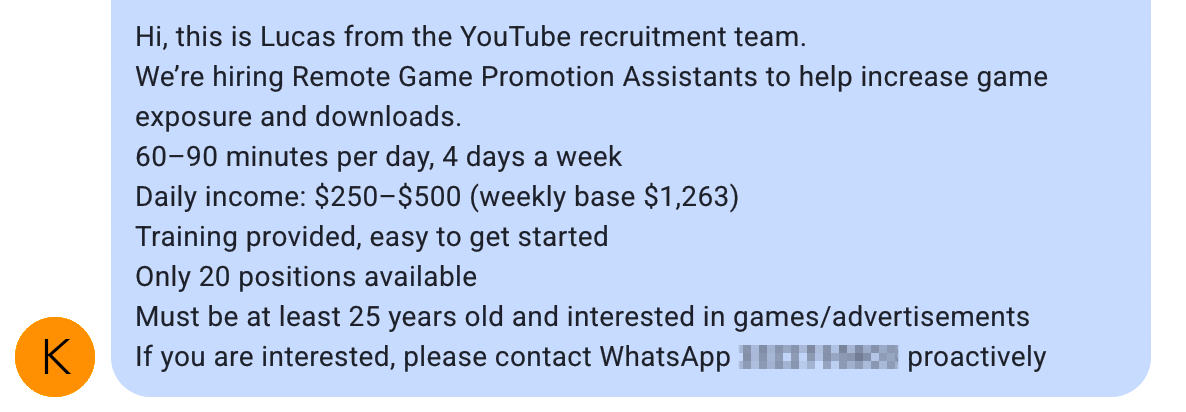
It starts the way so many modern scams do — quietly, politely, and just plausible enough to make you pause.
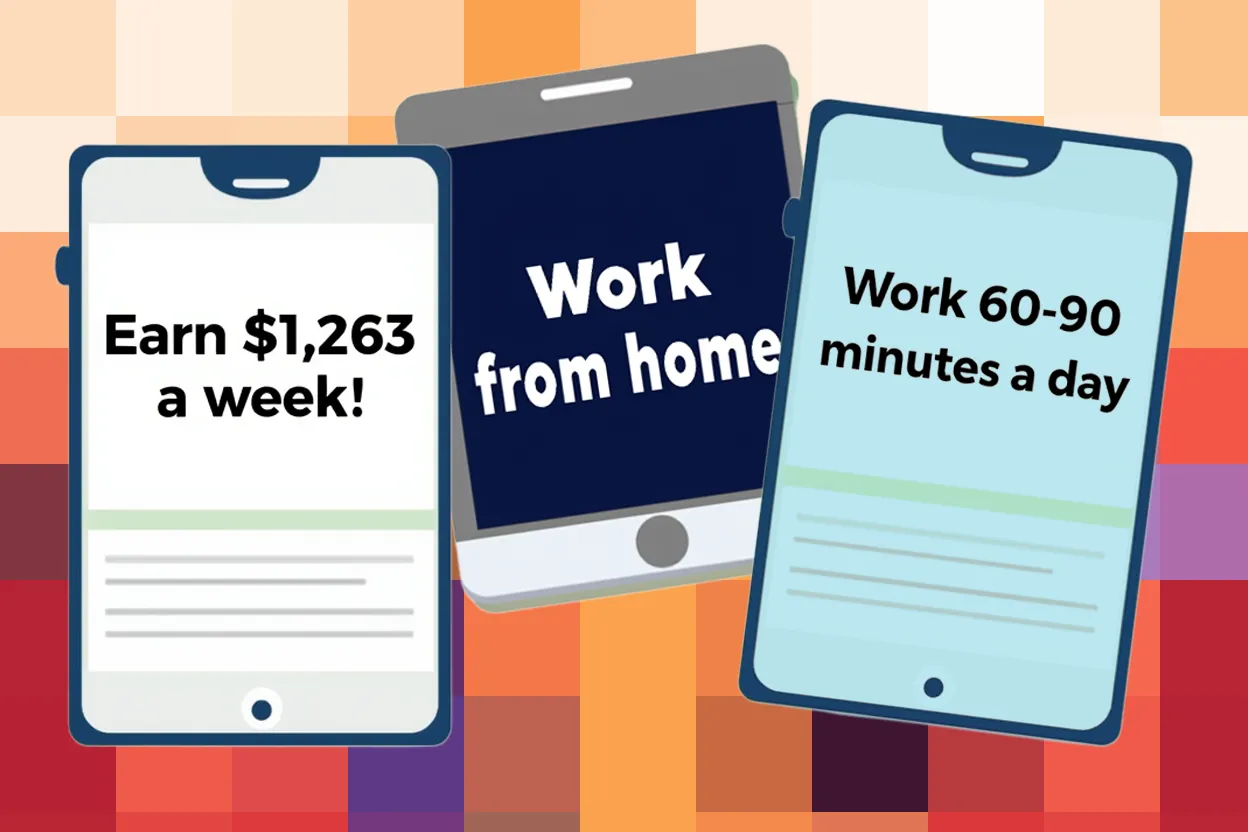
A short message pops up claiming to be from “the YouTube recruitment team.” The work is remote. The hours are light. The pay is eye-catching — hundreds of dollars a day for barely more than an hour’s effort.
And on top of that: No resume. No interview. Just a friendly nudge to move the conversation over to WhatsApp and get started.
What's not to like?
For many seniors, especially those curious about part-time income or flexible work, that kind of offer can feel like a lucky break.
It isn’t.

This is a textbook example of a job scam, and it follows a script that has been hitting inboxes, texts, and messaging apps across the country.
The language is vague but confident. The pay sounds generous but not impossible — at least at first glance. And the name being dropped, in this case YouTube, is familiar enough to lower your guard.
But behind the friendly tone and big promises is a setup designed to separate you from your money, your personal information, or both.
Here’s how to spot what’s really going on — and why messages like this should always be treated as a hard stop, not an opportunity.
Here's why
🚩 1. “YouTube recruitment team” isn’t how YouTube hires
YouTube (owned by Google) does not recruit through random text messages or chats.
Legitimate jobs come from careers.google.com, use @google.com email addresses, and involve a formal application process.
A first-name-only recruiter (“Lucas”) with no last name, title, or company email is a huge warning sign.
🚩 2. Unrealistic pay for minimal work
- $250–$500 per day
- 60–90 minutes of work
- No experience required
That math doesn’t add up. Real marketing or promotion roles don’t pay executive-level rates for entry-level, part-time tasks. Scammers use high pay + low effort to override skepticism.
🚩 3. Vague job description by design
“Game Promotion Assistant” is intentionally fuzzy.
There’s no explanation of:
- What platforms you’ll use
- What skills are required
- Who you report to
- How performance is measured
Scams avoid specifics because the job doesn’t actually exist.
🚩 4. Pressure tactics: “Only 20 positions available”
Artificial scarcity is a classic manipulation technique.
Real employers don’t rush candidates via text messages with countdown-style language.
🚩 5. WhatsApp is a massive red flag
Legitimate companies do not:
- Conduct hiring over WhatsApp
- Ask applicants to “contact proactively”
- Move conversations off official email immediately
WhatsApp is popular with scammers because it’s harder to trace and easier to disappear from.
🚩 6. Age requirement makes no sense
“Must be at least 25 years old” has no legal or practical relevance for online promotion work. This is often used to:
- Create false legitimacy
- Avoid dealing with minors
- Target people with disposable income
🚩 7. This scam often turns into a payment trap
These offers typically evolve into one of the following:
- You’re asked to pay a “deposit” or “activation fee”
- You’re told to send crypto
- You’re asked to front money to “unlock tasks”
- You’re given fake earnings dashboards and then blocked
No real job asks you to pay them.
Bottom line
This message checks nearly every box on the job-scam checklist:
- Fake company affiliation
- Too-good-to-be-true pay
- Messaging app recruitment
- Vague role
- Urgency and scarcity
- No verifiable contact info
Do not reply. Do not message the WhatsApp number. Block and delete.
Disclaimer: Smart Senior Daily provides consumer education and scam-awareness content for informational purposes only. We are not a law enforcement agency, legal service, or financial advisor. Scam tactics change frequently, and individual situations may vary.
If you believe you’ve been contacted by a scammer or have shared personal or financial information, consider reporting the incident to the Federal Trade Commission (FTC) at reportfraud.ftc.gov and contacting your bank or service provider immediately. Always verify job offers, payment requests, and unsolicited messages independently before taking action.