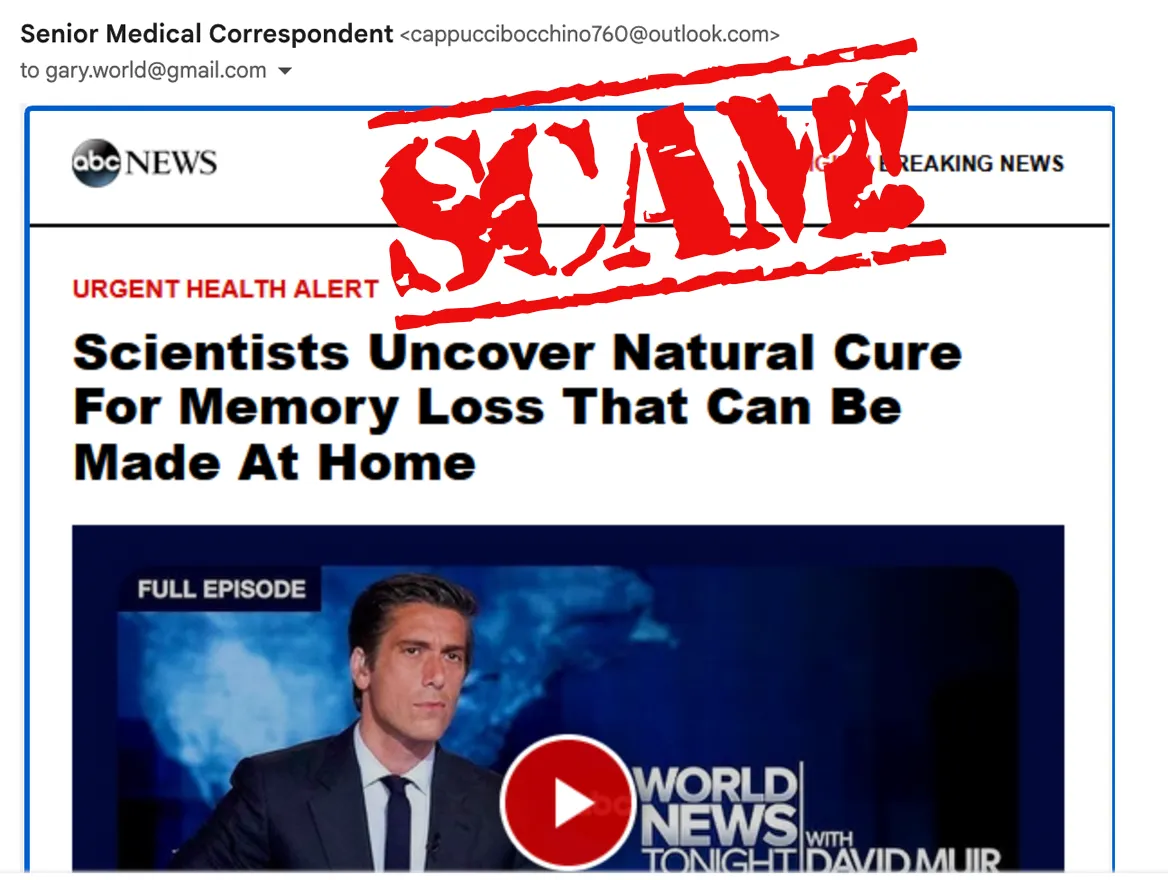
It looked official at first glance.
ABC News logo.
“Urgent Health Alert.”
A supposed interview about a “natural cure for memory loss you can make at home.”
And a familiar medical name in the subject line.
But one small detail gave it away:
The email didn’t come from ABC News at all. And if you click on it and play the video of ABC News anchor David Muir, the voice you'll hear is a perfect AI rip-off created by someone who sampled David's voice.
Next clue:
It came from: cappuccibocchino760@outlook.com (whoever that is).
That’s your first clue.
This latest scam making the rounds is a classic fake-news-style health pitch designed to scare seniors — and then sell them overpriced supplements.
Let’s break it down.
🚩 The Red Flags
1️⃣ Fake Media Branding
The email uses the ABC News logo and claims to feature a medical breakthrough tied to a TV interview.
But real ABC News stories:
- Come from abcnews.com
- Don’t send readers to unrelated websites
- Don’t originate from random Outlook accounts
Major networks do not sell supplements through affiliate links.
2️⃣ “Urgent Health Alert” Language
Scammers love emotional triggers:
- URGENT
- BREAKING
- Scientists shocked
- Doctors don’t want you to know
Legitimate medical reporting doesn’t read like a late-night infomercial.
3️⃣ The Website It Links To
The link goes to:
memopezil.com/mmp-pv-cart-aff-abc/...
Notice the clues:
- “afid=” (affiliate ID)
- “cart”
- “abc” used in the URL path
This is not a news site.
It’s a sales funnel.
 Gary P Guthrie
There's No Such Thing as “Memopezil”
There is no legitimate prescription medication in the U.S. called Memopezil.
In fact, the name “Memopezil” appears designed to sound similar to donepezil, a legitimate prescription Alzheimer’s medication — which is another common tactic used to create false credibility.
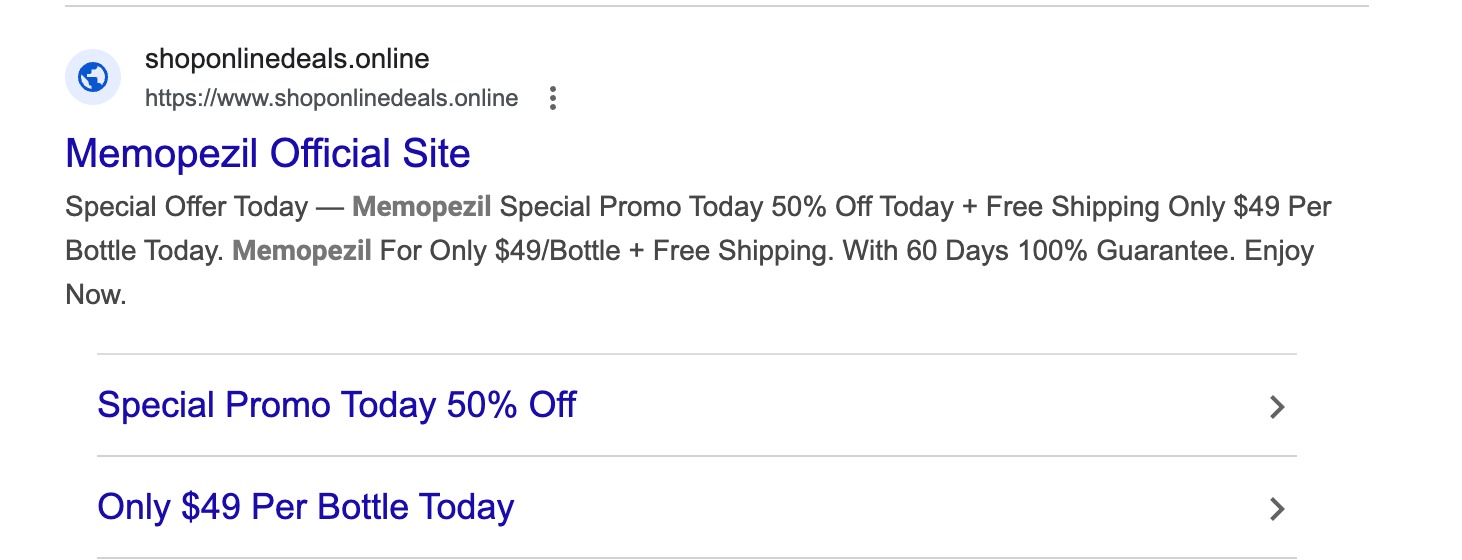
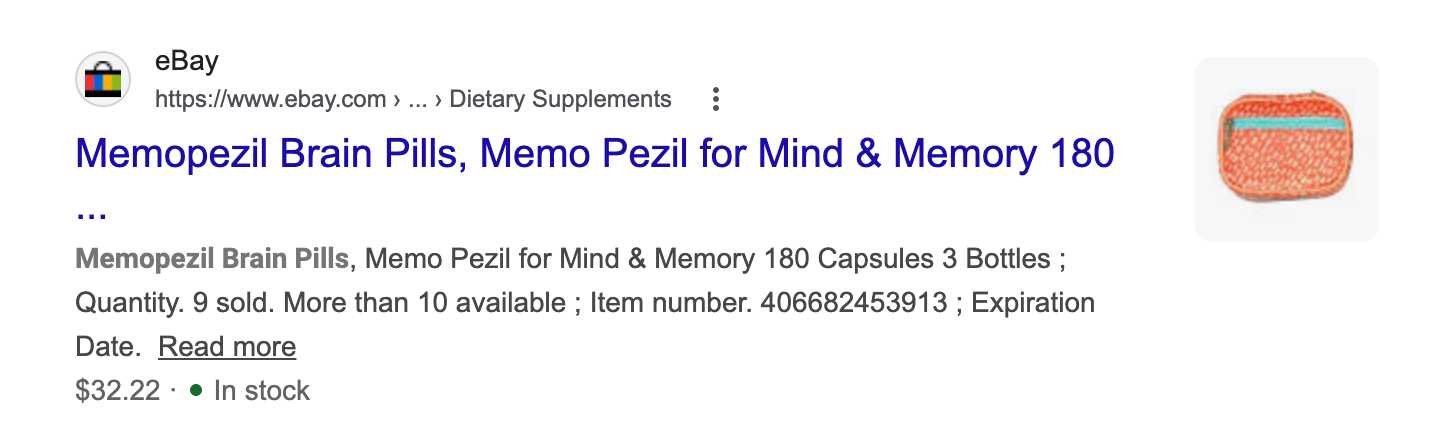
And scammers are all over Google trying to sucker you in with things like...
⚠️ The Bigger Issue
There is no FDA-approved “natural cure” for memory loss you can make at home.
If there were:
- It would be covered widely by reputable outlets.
- It would appear in peer-reviewed journals.
- Your doctor would know about it.
It would not arrive via a forwarded email with a suspicious sender address.
 Smart Senior Daily Staff
💳 What Happens If You Click
These types of schemes often lead to:
- High-priced supplements with no proven benefit
- Automatic monthly billing that’s difficult to cancel
- Data harvesting for future scam targeting
Seniors concerned about memory changes are especially vulnerable to this kind of marketing.
✅ What To Do If You Receive It
- Do not click the link.
- Delete the email.
- Do not provide personal or payment information.
- If you’re concerned about memory changes, speak with your primary care doctor or a neurologist — not an online supplement ad.
You can also report scam emails to:
- The FTC at reportfraud.ftc.gov
- Your email provider as phishing
The Takeaway
When a “medical breakthrough” arrives in your inbox with urgent language and a mysterious link, it’s not breaking news.
It’s marketing.
And in this case, it’s almost certainly a scam.
Smart Senior Daily reminder: We do not provide medical advice. Always consult a licensed healthcare professional regarding diagnosis or treatment decisions. If you believe you’ve been targeted by a scam, report it and speak with your financial institution immediately if payment information was shared.