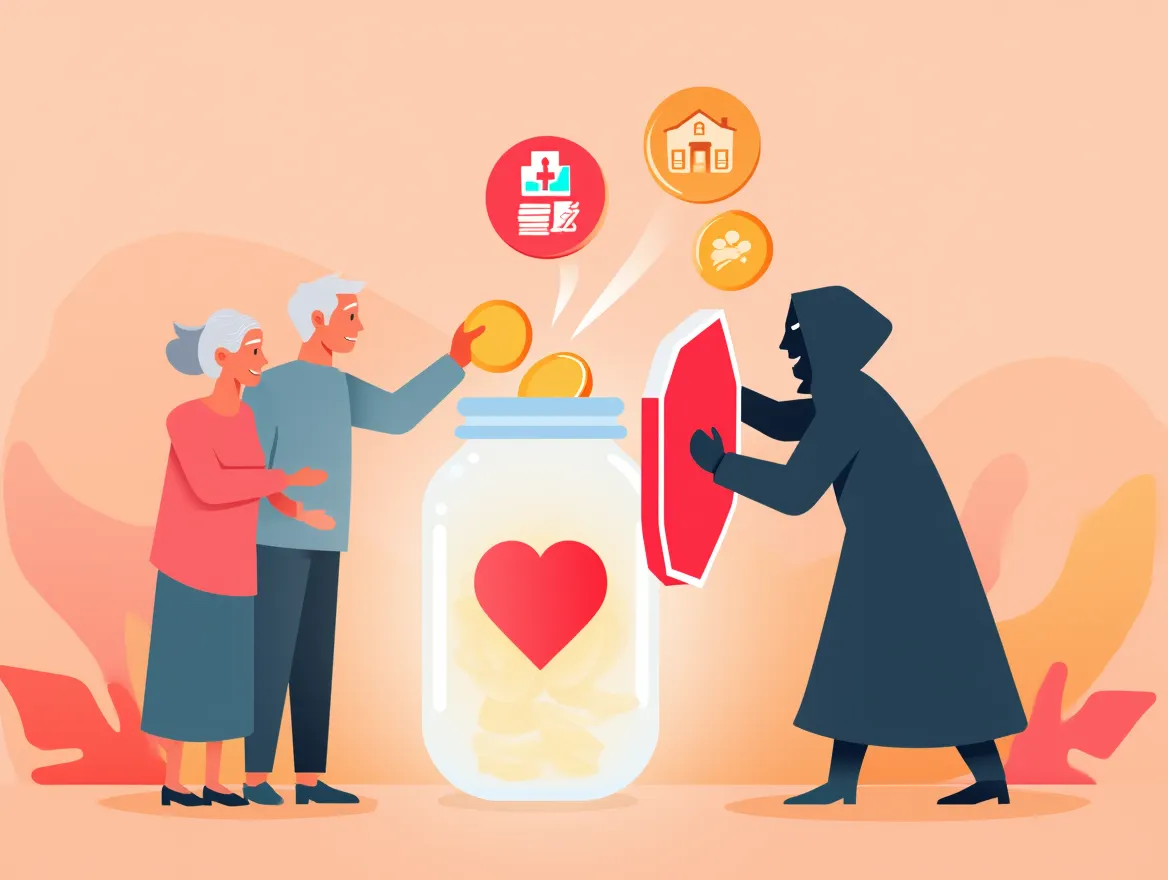
You have a big heart and you’re generous. That’s a great thing. Unfortunately, when you give to charity, some scammers may take your kindness for weakness and try to exploit the fact that you use your money to make a positive difference in the world.
In fact, charity scams cost consumers $10 billion every year.
For seniors, the cost of these scams can be especially high since their life savings may be on the line.
That doesn’t mean you have to become Ebenezer Scrooge to protect yourself, however. You can safeguard your wallet without closing your heart to generosity.
Beware of Unsolicited Calls
You get a call from an organization you’ve never heard of asking for money. It sounds like a worthy cause, so you immediately want to help.
Not so fast.
Since you don’t know these people, be very cautious.
No one is obligated to give a donation over the phone—especially if you don’t know the caller who is using high-pressure tactics.
If something about the organization sounds interesting, you can jot down its information and do your own homework.
If an organization is legitimate, there will be clues.
It may have a positive report from the Better Business Bureau on Give.org. There may be information about how the organization spends its money on CharityWatch. It may be registered as a charity in your state or have a listing on Candid.
These are signs that an organization is safe.
If the charity clears this hurdle and you still want to give, contact the group directly. This way you can be sure of who you’re actually talking to.
 Smart Senior Daily Staff
Beware of Artificial Intelligence
AI is everywhere these days, and charity scammers are taking advantage of it.
Sometimes an artificial intelligence call will sound so real that you think you’re speaking to an actual person. But you’re not.
It’s best to not engage with it at all. The longer you stay on the phone with someone you are suspicious about, the more information they or AI (artificial intelligence) can try to record about you.
Avoid giving out your personal information. You don’t need to confirm anything to someone you don’t know.
If you don’t know the organization calling you, especially if an AI bot is on the other end of the line, you can just hang up the phone. You may want to write down the name of the group to research if the organization is actually legitimate.
Simply put, do not give unsolicited calls any financial information.
Pay Close Attention to Email Addresses
If you get an email solicitation for a donation, pay close attention to where it’s coming from. The email address and the URL of the charity should match what your records show.
If the email address doesn’t make sense, and you’re not sure it came from the entity you want to engage with, just delete the message and report it as spam in your email system.
Scammers will often impersonate a charity to get money from kind-hearted people. Responding to suspect emails will just open you up to more messages—and more potential scammers trying to steal from you.
 Gary P Guthrie
Trust Your Gut
There are many worthy causes out there for you to contribute to. You don’t have to waste your time—and money—on groups that seem sketchy.
If something about a charity makes you uncomfortable, pay attention to that.
When someone calls, if you have questions, ask them. If the answers don’t make you feel warm and fuzzy about giving money, research the organization.
Giving is supposed to make you feel good. If something about a charity makes you uneasy, there’s probably a good reason for that.
Trust your gut. Protect your money so that you can feel good about giving.