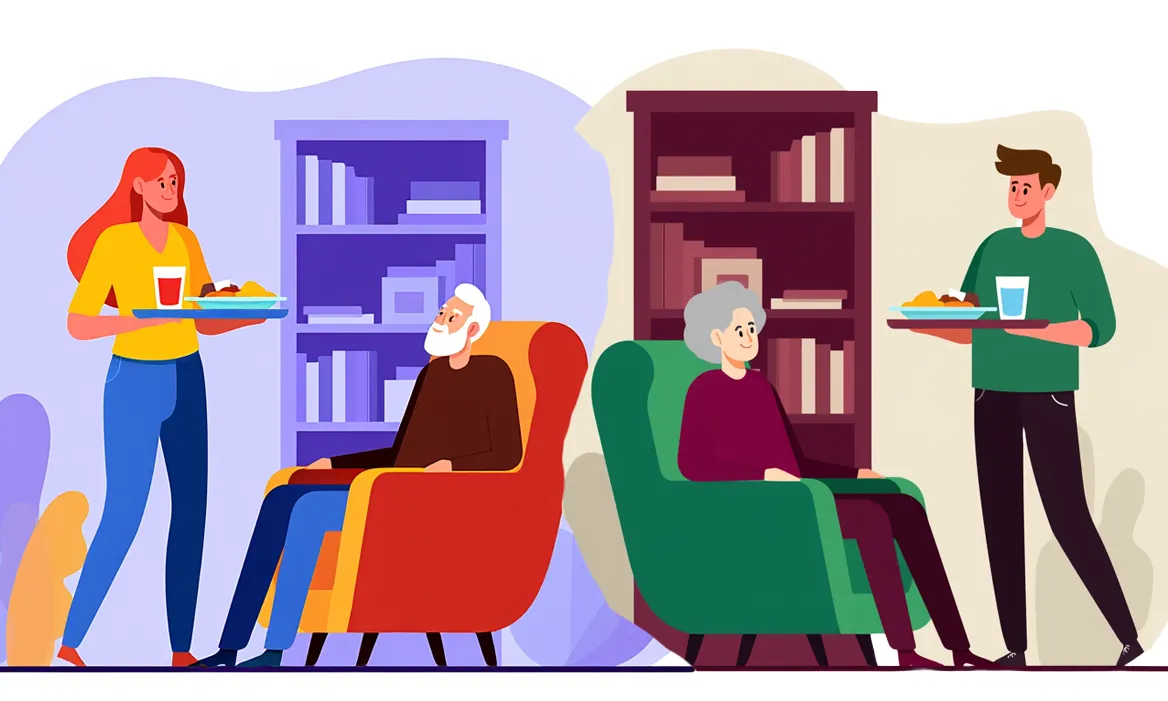
Across the U.S., a growing number of seniors are no longer just aging together — they’re providing full-time care to a spouse who is ill, disabled, or cognitively impaired. It’s happening quietly, often without formal support, and it’s reshaping what later life looks like for millions of older adults.
This isn’t the caregiving model most families imagine. Adult children are often far away or stretched thin. Professional care is expensive, fragmented, or short-term. Public programs were never designed for long-duration spousal caregiving. The result: older adults becoming the default caregivers — alone.
That invisibility is part of the problem. As Caroline’s Cause founder Drew Ann Long notes, caregiving often stays hidden until something breaks.
Caregivers “normalize exhaustion, isolation, and declining health as part of the job,” she says — and by the time anyone intervenes, the caregiver may already be in crisis.
Why this crisis is growing now
Several forces are converging at once:
- Longer life expectancy, uneven health
Couples are living longer, but not necessarily healthier at the same pace. One spouse may remain mobile and independent while the other needs daily assistance. - Limited Medicare coverage for long-term care
Medicare helps with short-term skilled care — not ongoing help with bathing, meals, supervision, or memory support. - Adult children living farther away
Families are more geographically dispersed, making daily help unrealistic even when relationships are strong. - High cost of private care
In-home aides and assisted living are often financially out of reach for couples living on fixed incomes.
Long points out that this model was never sustainable. “Much of the public conversation around caregiving focuses on parents caring for children or adult children caring for aging parents,” she explained in comments to Smart Senior Daily.
“Far less attention is given to seniors caring for spouses — often for years or decades — with little formal support.”
The hidden toll on senior caregivers
Spousal caregivers often don’t identify themselves as “caregivers.” They see what they’re doing as part of marriage. But the physical and emotional toll is real — and growing.
Common consequences include:
- Falls and injuries from lifting, rushing, or exhaustion
- Delayed medical care for the caregiver’s own health needs
- Medication errors and missed appointments
- Sleep deprivation, anxiety, and depression
- Financial strain from reduced income and out-of-pocket costs
Long puts it bluntly: caregiving is more than a full-time job — but without benefits, sick days, or a retirement plan. Over time, chronic fatigue, untreated health issues, and emotional strain pile up.
In many cases, the caregiver becomes the next patient.
 Dr. Carol McKinley
Why the system isn’t built for this
Public policy still assumes caregiving will be:
- Short-term
- Supplemented by family
- Or handled by paid professionals
But long-term spousal caregiving doesn’t fit neatly into any of those categories.
There is no single point of coordination. No automatic check-ins. No standard safety net for the caregiver themselves. And because the care is happening at home, the crisis stays largely invisible.
“In healthcare settings, attention is rightly focused on the patient,” Long says. “But the caregiver’s well-being is rarely assessed. No one asks the most critical question: Who is taking care of the caregiver?”
Early warning signs families shouldn’t ignore
Many caregiving crises escalate quietly. These are signs it’s time to intervene — even if the caregiver insists they’re “managing fine”:
- The caregiver has fallen or been hospitalized in the past year
- Missed or canceled their own medical appointments
- Increasing confusion about medications or schedules
- Visible exhaustion, weight loss, or withdrawal
- Statements like “I can’t leave them alone” or “There’s no backup”
Long stresses these are not signs of weakness. They are signals of a system under strain — and of a caregiver pushed too far without support.
What helps — even when resources are limited
There’s no single fix, but small supports can dramatically reduce risk:
- Caregiver health checkups focused on fall risk, sleep, and stress
- Medication simplification and clear written schedules
- Respite planning — even a few hours a week
- Emergency plans: who to call, where to go, what happens if the caregiver is injured
- Community resources such as adult day programs, faith-based volunteers, or local aging services
Long also urges families to involve caregivers as part of the care team — during medical visits, care planning, and future discussions. “Struggling does not mean you are failing,” she says. “It means the system is failing you.”
Why this matters to every senior household
Even couples who feel healthy today may face this reality tomorrow. The question isn’t if help will be needed — it’s whether there’s a plan in place when it is.
Spousal caregiving is becoming one of the defining challenges of aging in America. Naming it — and preparing for it — is the first step toward making it safer, healthier, and more humane.
 Carolyn Ames
Disclaimer: This article is for general informational purposes only and is not intended as medical, legal, or caregiving advice. Caregiving needs vary widely based on individual health conditions, mobility, and family circumstances.
Readers should consult qualified healthcare professionals, social workers, or local aging services when making decisions about medical care, safety planning, or caregiving support. If you or a loved one is in immediate danger or experiencing a health emergency, contact local emergency services right away.