The current news cycle will be brimming with news about Congress moving forward on the 21st Century Road to Housing Act. The headlines will likely focus on the "good" parts—government assistance in fixing up your home, protections for veterans, and restrictions on money-grabbing corporate house-flippers.
All of that is real. However, like most bigger-than-they-need-to-be bills (e.g., The One Big Beautiful Bill), the headlines and the fine print aren't always a match—at least not a match made in heaven.
Here's what's actually in it for people 50 and older and what to watch out for before you get your hopes up and get all giddy.
The good: a new program to help pay for aging-in-place repairs
The most direct benefit piece for Smart Senior Daily readers is the Whole-Home Repairs Act (Section 203). It would create a pilot program offering grants and forgivable loans to help homeowners pay for these five categories in a home:
- Grab bars, ramps, and stairlifts
- Bathroom and kitchen accessibility modifications
- Doorway and hallway widening
- General habitability and safety repairs
- Weatherization and energy efficiency upgrades
Qualifications Requirements
You'd qualify if ...
- Your income is at or below 80% of your area's median income
- OR if you're already enrolled in Medicaid, Supplemental Security Income (SSI), SNAP, or a few other assistance programs.
That second option comes with its own special value. It means the eligibility check largely piggybacks on programs many seniors are already enrolled in (like the ones mentioned), rather than requiring a whole new means test.
There's Also a Companion Measure
The RESIDE Act (Section 212), which funds converting vacant, abandoned commercial buildings into housing. Congress specifically wants the program's later impact report to track whether it increased affordable housing access for elderly and disabled people.
 Gary P Guthrie
The fine print: it's small, competitive, and not yet paid for
Here's the part the confetti headlines don't mention.
It's a pilot, not a program. The Whole-Home Repairs Act authorizes grants to somewhere between 2 and 10 organizations nationwide per year — with no more than one grantee per state.
Don't think it's anything close to "seniors nationwide can now apply," because it's not. That's a small number of local governments or nonprofits competing for a limited pot of money, and whether your area is one of them could be one..
It expires. If Congress doesn't renew the pilot, it terminates October 1, 2031.
Money isn't guaranteed. Section 1102 of the bill is titled, plainly, "No Additional Funds Authorized." Authorizing a program on paper is not the same as Congress actually appropriating dollars to run it. Plenty of federal programs exist in statute for years without meaningful funding behind them. Until Congress separately votes real money, this is a framework, not a check.
You won't apply directly. The money flows downstream to "implementing organizations"—meaning state or local governments, tribal authorities, or qualified nonprofits—who then run their own local version of the program. There's no federal website where an individual homeowner files their application. If this becomes law and gets funded, the actual mechanics will depend entirely on what your city, county, or a local nonprofit sets up.
How Will This Affect You?
Fox10 in Phoenix asked Mark Stapp, the executive director of real estate programs in the W.P. Carey School of Business at Arizona State University, to explain how this law will (or won't) work in your favor.
Other provisions worth knowing about
Manufactured housing rules are loosening (Title III). This part of the bill has some promise. It redefines what a "manufactured home" is to now include homes built without a permanent chassis and eases some federal oversight to encourage more of this housing to be built.
If you or someone you know lives in a manufactured home community (aka trailer park), this is worth monitoring.
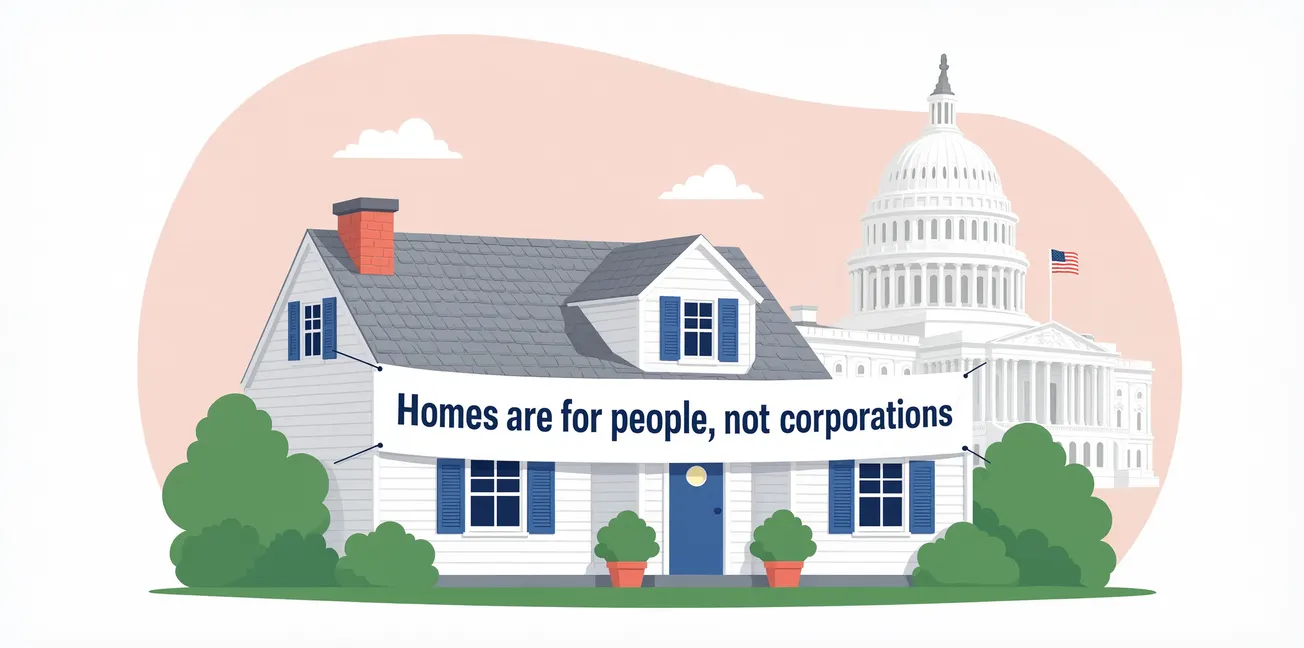
"Homes are for people, not corporations" (Section 901). Corporate investors bought one-third of all single-family residential properties sold in the second quarter of 2025, and they could pressure Congress to move slowly on the implementation of this section. But if Congress can keep from giving in to outside influence, this section will keep those large institutional investors from buying up certain single-family homes.
If you're trying to buy a home and competing against cash-flush corporate buyers, consider this good news. Conversely, it cuts the other way if you're a senior looking to sell quickly for cash. A smaller buyer pool of institutional investors could mean fewer of those fast, no-repairs-needed cash offers some sellers relish.
Veterans get real disclosure upgrades. The VA Home Loan Awareness Act and the VALID Act require lenders to actually tell veterans about VA loan benefits and how they compare cost-wise to FHA loans. This will close an information gap that's cost some veteran homebuyers money for years.
 Smart Senior Daily Staff
But You Need Repairs ... Now?
Given that Congress moves like molasses, this bill could be sitting and waiting a long time.
In the meantime, if you need help modifying your home now, the Older Adult Home Modification Grants Program already exists and is funded. Contact the Area Agency on Aging at 1-800-677-1116 and ask to be connected directly to your local Area Agency on Aging to find out more.
Smart Senior Daily will track this bill's progress and update this piece if it moves toward a floor vote.