by Dave Parkinson, Chairman of John Parkinson Family Foundation
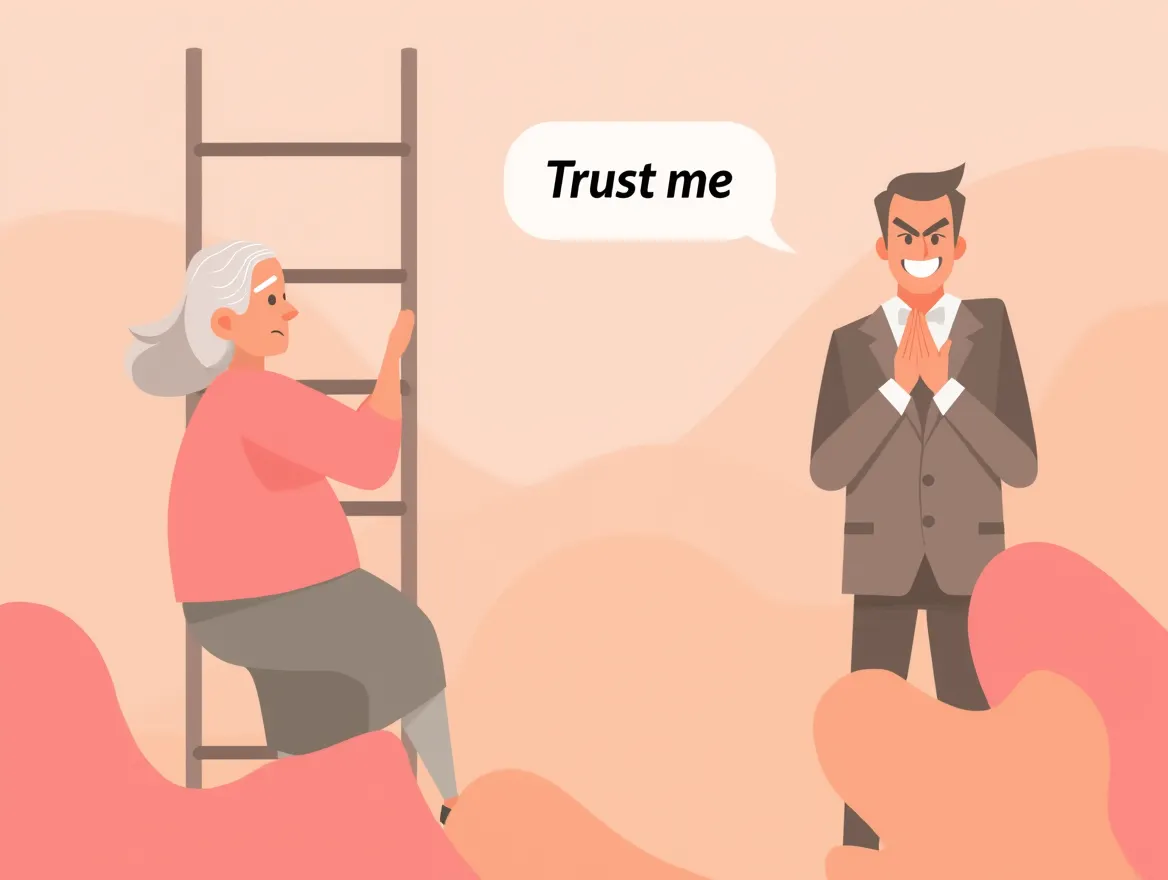
Most seniors don't realize that the most effective scams taking place don't start with a request for money. They begin innocently enough by establishing a trustworthy relationship.
What happens is a slow, deliberate process where the person earns your trust over time. Money never enters the conversation, no suspicion is raised — just trust. This is what's described as a "Trust Ladder" scam.
In the past, scammers were easy to spot. Random poorly written messages, red flags that were clearly suspicious. Scammers demanded money quickly, often without any legitimate reason or logical context.
That's not the case anymore
Scammers are much more insidious, employing patience. They take all the time they need to build trust, credibility and connection with you over weeks or months before asking for anything at all.
These Trust Ladder scams unfold in several incremental stages, with each stage feeling unsuspectingly harmless by itself.
The introduction can begin with a simple message, a social media comment, a wrong-number text, or any random online interaction that feels like ordinary friendly outreach.
Over time, this person stays in contact with you, asking about your day, remembering personal details, discussing current events, politics, or common interests so conversations feel consistent and natural.
The relationship begins to feel real. They share personal stories, offer advice, interact with you on subjects of mutual interest, positioning themselves as a friend you can depend on and trust.
Going in for the kill
Once the scammer feels they've established your trust, they introduce the proposal they'll use to exploit your goodwill. A problem appears, or an opportunity is introduced — an emergency, an investment opportunity, or a situation where help is needed and they claim they have nowhere else to turn.
By this stage, a request for money does not feel out of place. You are simply helping someone you know, listening to their investment advice, or rescuing them from a bad situation. This is what makes these scams so effective — the psychological manipulation behind them.
 Gary P Guthrie
This is not about deception alone...
... It is about emotional positioning.
Most seniors grew up in an era where consistent communication meant something reliable. Someone who stayed in touch, remembered personal details, and communicated respectfully was a sign of trustworthiness. Scammers now imitate that pattern, weaponizing trust as a tool for deception.
They communicate clearly, respond thoughtfully, and create a sense of familiarity that feels genuine. The interaction does not feel risky — it feels like a real relationship.
Once you recognize how these scams work, the focus shifts. Instead of looking for a suspicious message or nefarious behavior, you begin to look at how the relationship evolved. A key question becomes: how did this person convince me to trust them so quickly?
Here's two examples of how fraudsters exploit trust:
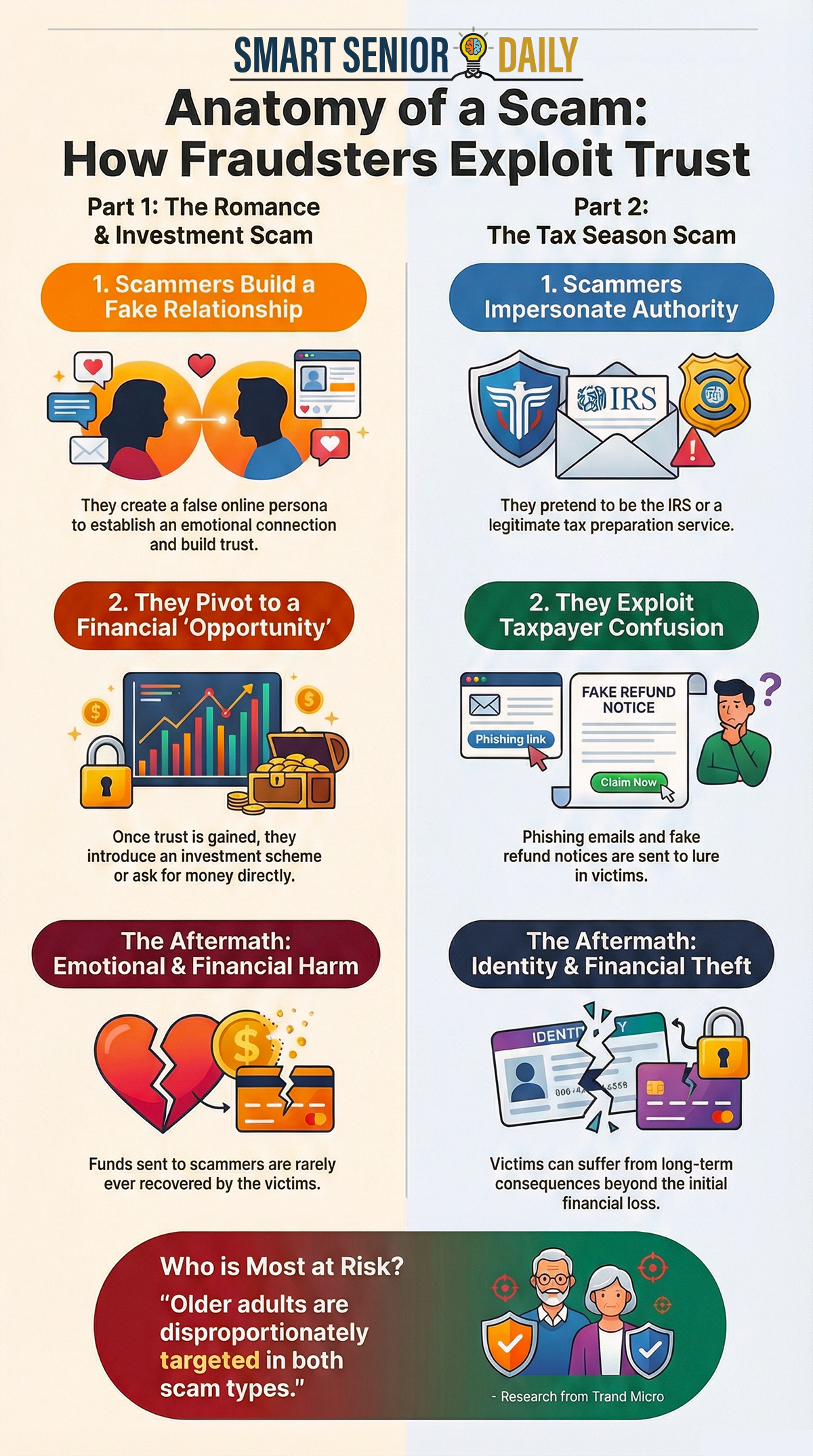
Trust built over a few weeks or months with someone you've never met in person deserves scrutiny. Because these scams develop over a long period, the warning signs can be subtle:
- A new contact suddenly becomes a regular part of your daily routine.
- The relationship feels unusually strong for someone who was recently a stranger.
- The person prefers to keep conversations private, discouraging you from speaking to others.
- A financial request appears after a period of friendly contact, with pressure to act quickly.
One of the clearest signals is isolation. When someone discourages you from discussing your concerns with others, it is time to pause and reevaluate.
The most effective protection is not technical — it is behavioral
Step outside the conversation and view it from a third-party perspective. Is this a normal relationship? What red flags should I be looking out for?
If a situation involves requests for money, speak with a family member, friend, or professional before acting. Scammers depend on speed and privacy. Slowing things down and bringing in another perspective can prevent you from becoming a victim.
Most people who encounter these situations don't recognize them at first, which is understandable given the psychological manipulation involved. These scams are designed to feel like perfectly normal everyday interactions.
The goal is not to question every interaction, but to stay aware of how trust is being built — especially when it leads toward a financial decision.
Understanding the Trust Ladder gives you the ability to step back, pause, reevaluate, and make a decision on your own terms.
Dave Parkinson, Chairperson: The John Parkinson Family Foundation — ForJohn.ca. Dedicated to shielding seniors from financial predators through rigorous education, institutional advocacy, and compassionate family support.