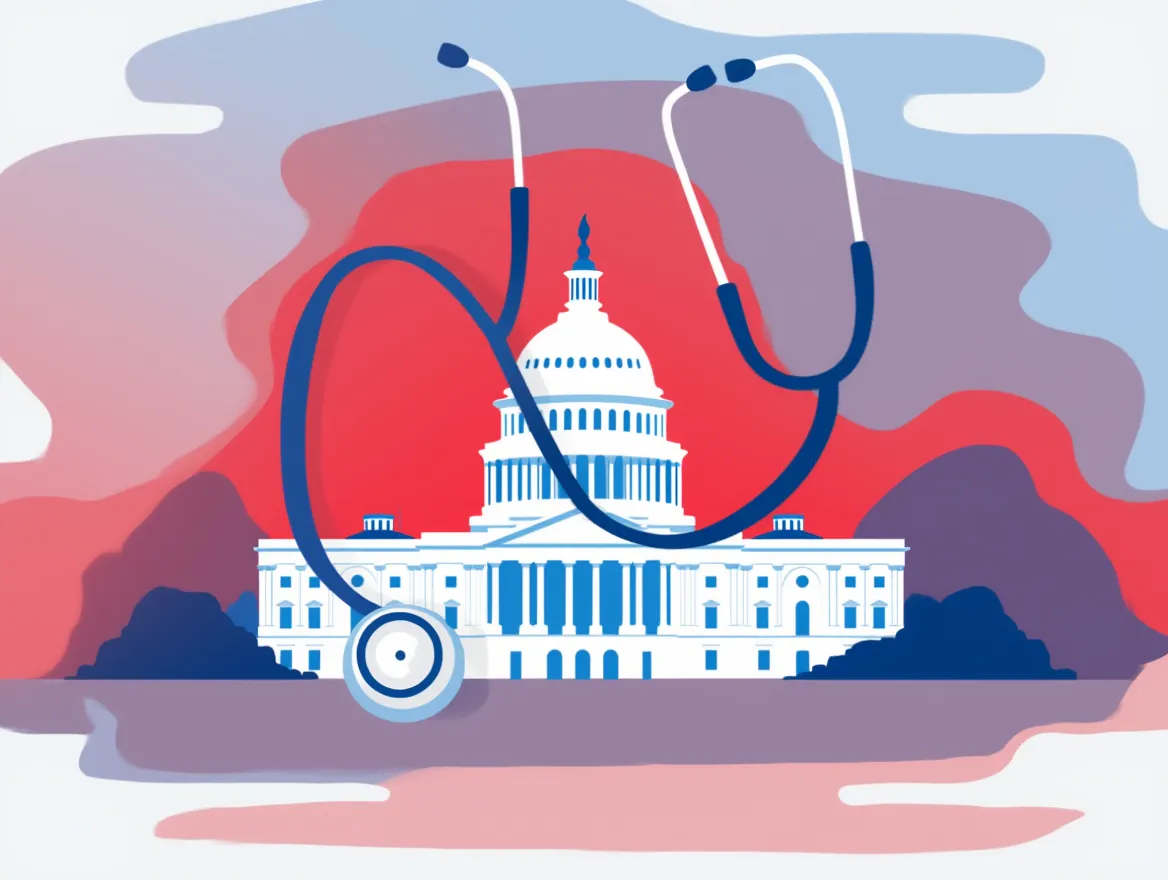
When President Donald Trump announced a new “Great Healthcare Plan,” the headlines focused on familiar promises: lower premiums, cheaper drugs, no cuts to Medicare checks.
But according to Stephen Crystal, Ph.D., the real story for seniors isn’t in broad White House statements. It’s in what has already been passed — and what is now being rolled back.
Crystal is a distinguished research professor at Rutgers University, where he directs the Center for Health Services Research and leads the university’s Division on Aging. And he doesn’t mince words about what seniors should be paying attention to.
“The White House announcement is a very general statement of principles,” Crystal said. “For seniors specifically, it’s far more informative to look at recent legislative actions — and those actions are very concerning.”
Medicare: not cut, but quietly pressured
Crystal emphasizes that Medicare’s core hospital and physician benefits remain in place. There is no proposal eliminating Medicare or reducing Social Security checks.
Still, pressure is building around the edges.
Premiums and deductibles continue to rise. For 2026, the full Medicare Part A premium for people without enough work history will reach $565 per month. At the same time, the 2025 budget reconciliation law is structured in a way that could trigger hundreds of billions of dollars in reduced Medicare payments over time.
“These aren’t direct benefit cuts,” Crystal said, “but lower payment updates can affect whether providers continue to participate — especially in rural areas.”
He also flags new Medicare prior-authorization experiments, including the use of AI tools in several states. While the benefit technically remains, Crystal says seniors with complex medical needs may face more delays and denials for tests, rehab stays, or follow-up care.
Medicaid: where the real danger lies
If there is one area Crystal repeatedly points to, it’s Medicaid.
The reconciliation law includes roughly $900 billion in federal Medicaid cuts over 10 years, heavily affecting adults age 50 and older. Conservative proposals aligned with the administration emphasize block grants and per-capita caps that shift costs to states.
That matters because Medicaid is the primary payer for:
- Nursing homes
- Home- and community-based services
- Personal care aides and in-home support
“One major projection shows about 1.3 million people over 65 could lose Medicaid coverage by 2034,” Crystal noted.
Because women make up the majority of older Medicaid recipients in every state, he says older women — particularly women of color and disabled women — would bear the greatest burden.
 Gary P Guthrie
Long-term care and nursing homes: a turning point
Crystal is especially alarmed by regulatory changes affecting long-term care.
He points to a proposed repeal of federal nursing-home staffing standards, including requirements for minimum nurse and nursing-assistant staffing and a registered nurse on site around the clock. The proposal is currently open for public comment through February 2, 2026.
“These standards were put in place to protect residents,” Crystal said. “Rolling them back directly affects quality and safety.”
But here's where things take a turn
He adds that Medicaid cuts compound the problem. States are required to fund nursing-home care, but they are not required to fund most home-care services. When budgets tighten, home care is often the first thing cut — even though it keeps seniors out of institutions.
“In many states, Medicaid has supported alternatives to nursing homes like in-home services and assisted living,” Crystal said. “Those programs are now at risk.”
 Smart Senior Daily Staff
Why Crystal still sees an opening
Despite his concerns, Crystal is not fatalistic.
He notes that key Medicaid changes are scheduled to take effect after the 2026 elections, giving Congress an opportunity to revisit them. He also points to recent reversals — including the rapid undoing of canceled mental-health grants — as evidence that pressure works.
“It truly is disturbing what is in store for seniors,” Crystal said. “But there is still time for it to be turned around.”
For seniors and their families, his message is clear: don’t focus only on slogans. Watch the details. And don’t assume the door is closed.
Disclaimer: This article is for informational purposes only and does not constitute medical, legal, or financial advice. Health policy is complex and subject to change. Seniors should consult qualified professionals and official government sources when making healthcare decisions.