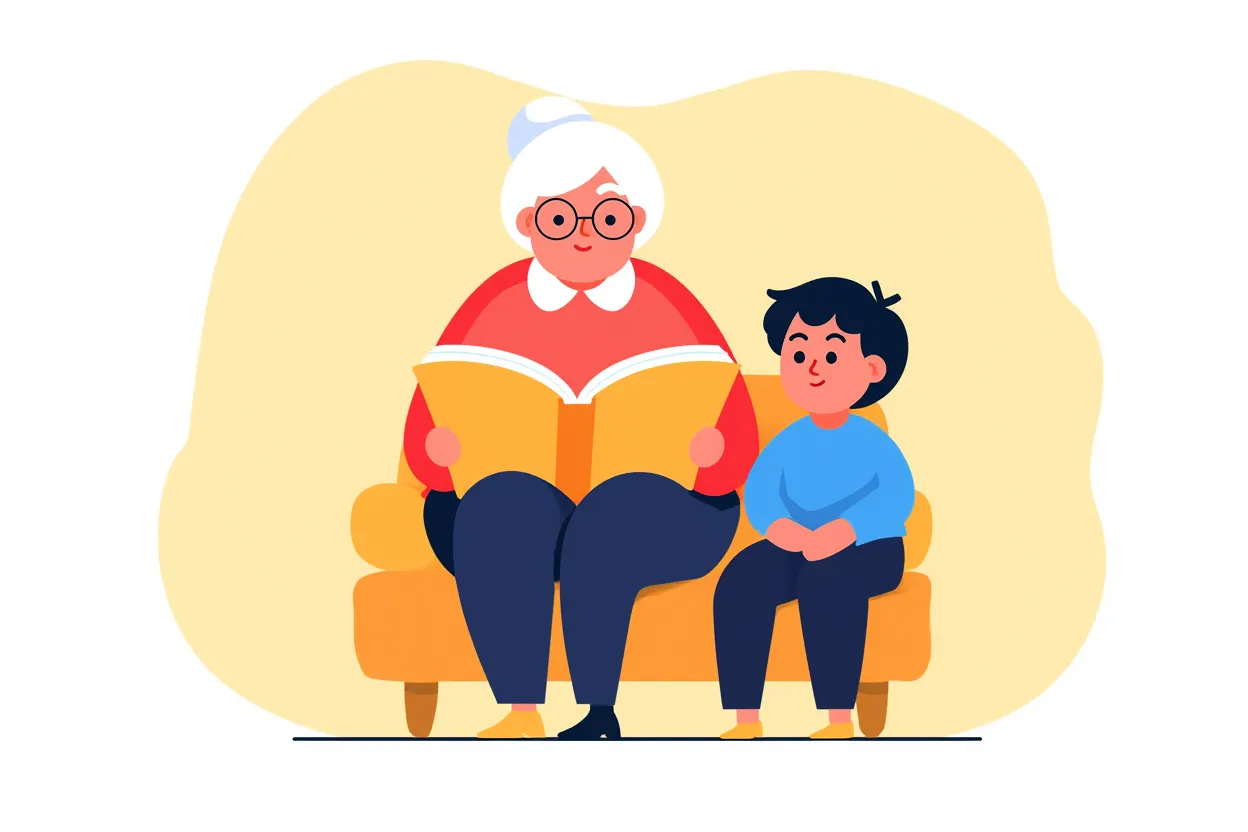
Researchers at Washington University in St. Louis (WashU) are taking a closer look at what actually happens in conversations between grandparents and grandchildren — and why those moments matter.
Their work builds on the long-running St. Louis Personality and Aging Network (SPAN) study, which began in 2007 and now follows about 500 adults as they enter their grandparent years.
“Despite how important grandparenting is, this is one of the first studies to really ask what’s going on in these conversations,” said Patrick Hill, a professor of psychological and brain sciences.
How Technology Has Changed the Relationship
One of the biggest differences between today’s grandparents and earlier generations is access.
“Grandparents are more accessible thanks to technology, even as people move further away and generations don’t live together anymore,” said Mary Cox, a graduate student researcher involved in the study.
Longer life spans and digital communication mean grandparents today talk with their grandchildren far more often than past generations did — even if they live hundreds of miles apart.
Who Talks More — and About What
The study found familiar patterns. Grandmothers tend to communicate more frequently with grandchildren than grandfathers, especially about work, friendships, social change, and family history.
“Women are the keepers of these narratives and stories in their family,” Cox said.
Those conversations help pass down context, values, and lived experience.
Differences by Race and Culture
Researchers also found differences between Black and white families.
Black grandparents were more likely to talk with grandchildren about race, racism, and identity — conversations often shared by elders as part of preparing younger generations for the realities of the world.
Cox noted this doesn’t mean white grandparents avoid social issues, but that families may define those conversations differently — something future research will explore.
Why These Conversations Matter
Beyond helping grandchildren, these exchanges also benefit older adults.
“The grandparenting role does seem to be salient in people’s lives,” Hill said, noting that talking with grandchildren was linked to a stronger sense of purpose and contribution.
All types of conversations mattered — including phone calls, texts, and video chats.
“It’s just as beneficial to give older adults a call or give them a text,” Cox said.
Disclaimer: This article is for informational purposes only and is not intended as medical, psychological, or family counseling advice. Family relationships vary widely. Readers with concerns about mental health or family dynamics should consider speaking with a qualified professional.
Source: Cox MA, Beatty-Wright JF, Wolk MW, Hill PL. “Intergenerational Conversations and Social Well-Being: How Race and Gender Shape Grandparent-Grandchild Discussions.” Research in Human Development (2025).