by Francine Toder, Ph.D.
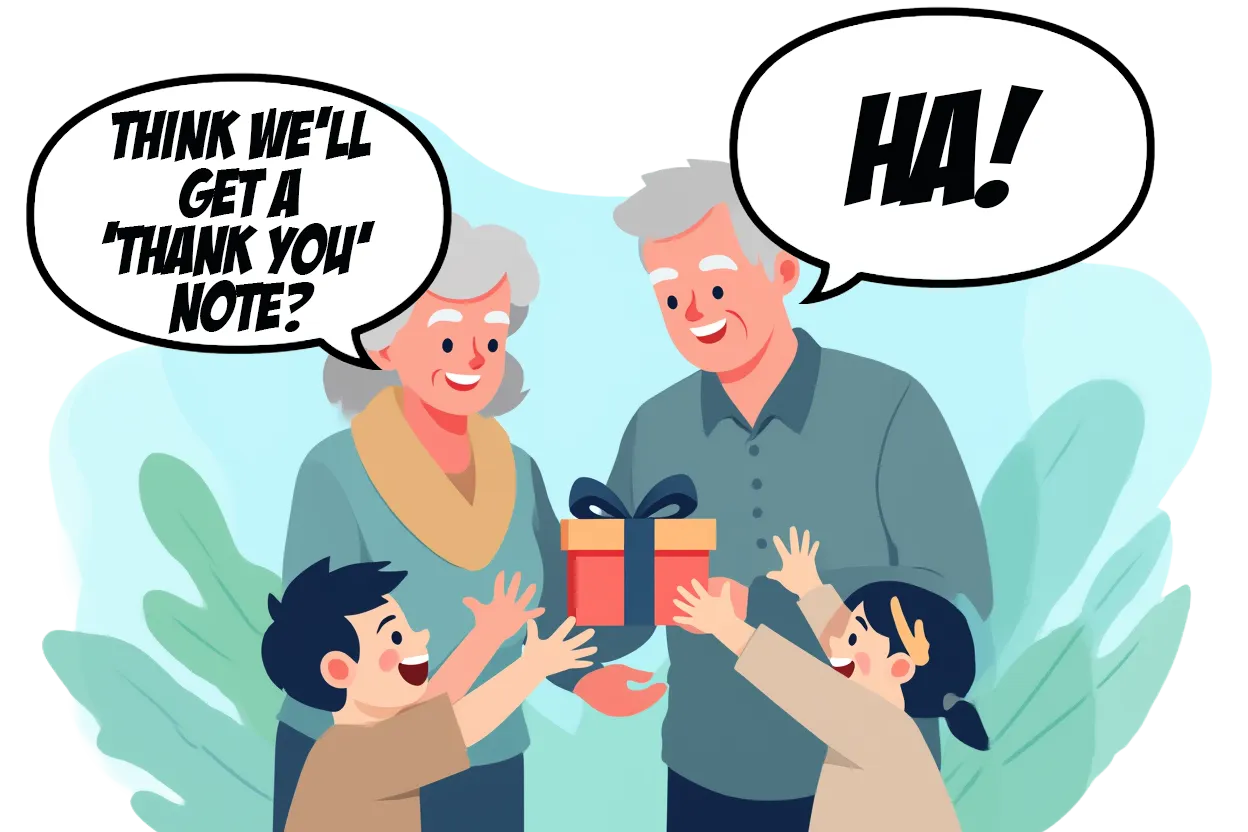
The holiday, birthday, or another occasion has come and gone and you’ve not received a thank you from your grandchildren for the gift you sent. What is your first reaction? Hurt? Anger? Disappointment? A mix of the three? Something else?
How you feel, and then respond, may be a reflection of your own temperament, personality, and family history. What does it mean to you that you’ve been ignored? Perhaps your view and response may have less to do with your grandchildren than with your own life experiences and personal values.
That is not to say that disregarding a gift is appropriate, but teenagers today are generally not good about writing, or knowing etiquette that was more prevalent in years past, without being prompted by an adult.
You are entitled to your feelings, whatever they are. But how you respond will affect the relationship with your grandchildren, so it’s important to consider why they didn’t convey their thanks to you.
 Skip to content
Remember...
Children are not known for their empathy. That is a quality that doesn’t become manifest until the teen years, or sometimes even later. Empathy is the ability to put yourself in someone else’s shoes, and feel what they feel. Let’s assume that it wasn’t your grandkids’ intent to slight you— that they didn’t know that you would be offended. Then why punish them?
Your daughter and her husband, the parents, might be the weak links here. But maybe not. Did the parents know about the gift? Did they know about it but thought that you wouldn’t be troubled by a lack of response? Bad manners, maybe.
But assuming that the relationship with the boys’ parents is satisfactory, a conversation about your feelings would be appropriate and probably well received. If, on the other hand, Grandma and daughter have a tense relationship, that is where some repairs need to be made—without chastising the boys.
Finally, one option might be for Grandma to send an email or text message to her grandsons telling them about the bad feeling she had because they didn’t acknowledge the gift. But not a blaming or punishing message. That might just provide the corrective learning experience, and wake-up call, that they need!
About the Author
Francine Toder, Ph.D. is faculty emeritus at California State University, Sacramento and is a clinical psychologist retired from private practice. She is the author of 5 books. Her newest book (August, ’25), is Your Kids are Grown: Parenting 2.0.
Her extensive writing about mindfulness and aging appears in magazines, professional journals, newspapers, blog sites and as edited book chapters. She resides in the San Francisco Bay area where she practices the cello in her spare time.
If this article resonates with you, take a look at Francine's latest book "Your Kids are Grown: Parenting 2.0."