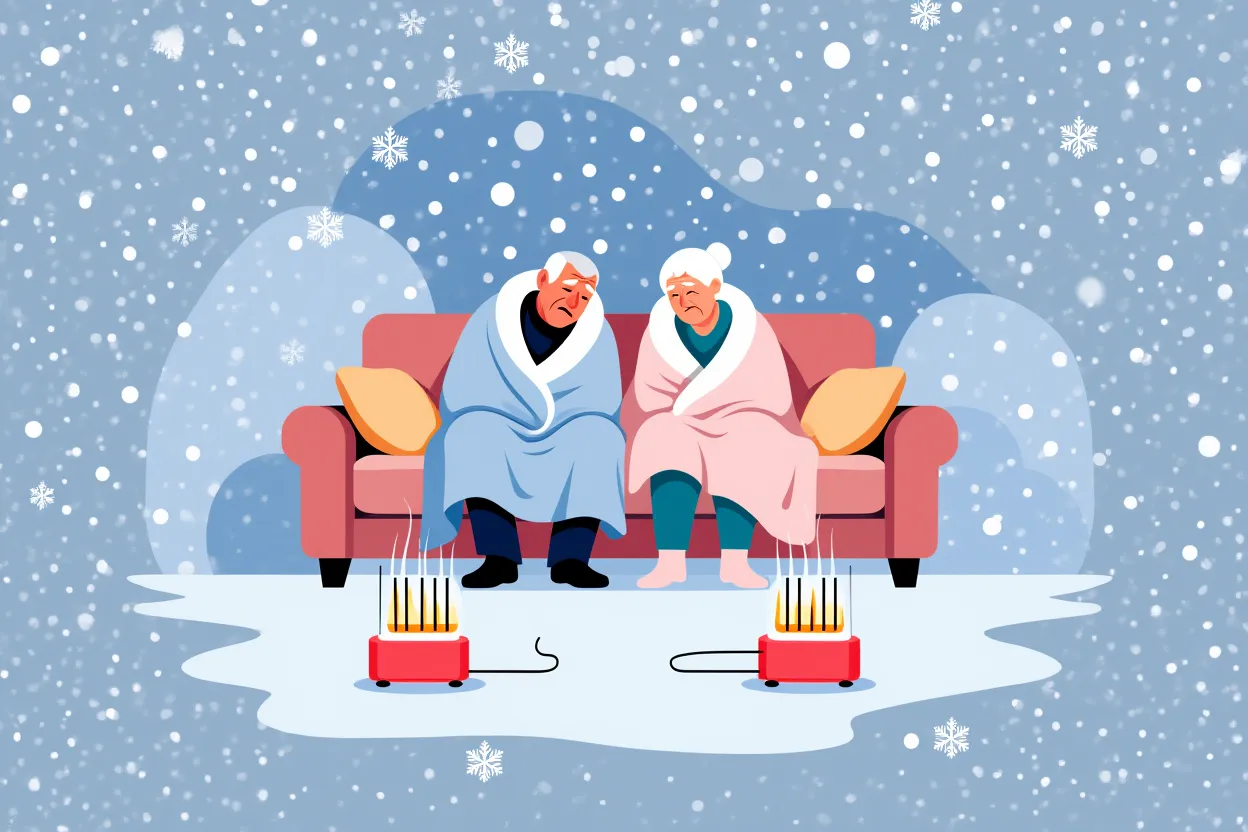
As a winter storm pushes across much of the country, many households are cranking up heaters, lighting fireplaces, or preparing for possible power outages. That combination worries federal safety officials — especially when cold weather forces people to improvise.
The U.S. Consumer Product Safety Commission (CPSC) is urging consumers to take extra care with home heating equipment. Their message is simple: most winter heating tragedies are preventable.
Here’s what matters most.
Smoke and carbon monoxide alarms save lives
Cold weather raises the risk of both house fires and carbon monoxide poisoning.
- Install smoke alarms on every level of your home and inside each bedroom.
- Place carbon monoxide alarms on every level and outside sleeping areas.
- Choose alarms with battery backup so they work during power outages.
- Test alarms monthly and replace batteries yearly — or use 10-year sealed battery alarms.
If one alarm sounds, everyone in the house should hear it. Interconnected alarms are best.
Space heaters: small device, big risk
Portable heaters — including electric space heaters — are involved in an estimated 1,600 home fires per year, causing an average of 70 deaths and 150 injuries, according to CPSC data from 2020–2022.
To reduce the risk:
- Keep heaters at least three feet away from furniture, curtains, and bedding.
- Plug electric heaters directly into a wall outlet — never into extension cords or power strips.
- Turn heaters off before sleeping or leaving the room.
- If using fuel-burning heaters, never refuel while they’re running. Let them cool first.
Fireplaces, furnaces, and chimneys need attention
Fireplaces and chimneys account for an estimated 15,400 fires each year, killing about 30 people and injuring 90 more.
Problems often stem from:
- Cracked or blocked chimneys
- Creosote buildup
- Embers escaping into nearby flammable materials
Fuel-burning systems can also release carbon monoxide, especially if vents or flues are blocked or poorly maintained. Annual professional inspections of furnaces, fireplaces, chimneys, and vents are one of the smartest winter safety investments you can make.
Winter Storm Home Safety Checklist
Simple steps to reduce fire and carbon monoxide risks
Smoke & Carbon Monoxide Alarms
☐ Smoke alarms installed on every level of the home
☐ Smoke alarms installed inside each bedroom
☐ Carbon monoxide (CO) alarms installed on every level of the home
☐ CO alarms installed outside sleeping areas
☐ Alarms have battery backup for power outages
☐ Alarms tested this month
☐ Batteries replaced within the past year (or 10-year sealed alarms installed)
Space Heater Safety
☐ Space heaters placed at least 3 feet from furniture, curtains, and bedding
☐ Electric heaters plugged directly into wall outlets
☐ No extension cords or power strips used
☐ Heaters turned off when sleeping or leaving the room
☐ Fuel-burning heaters allowed to cool before refueling
☐ Heater has an automatic shutoff if tipped over (recommended)
Fireplaces, Furnaces & Chimneys
☐ Furnace inspected by a professional within the past year
☐ Chimney and flue inspected and cleaned if needed
☐ Fireplace screen or doors in place
☐ No flammable items stored near fireplaces or heaters
☐ Vents and exhaust pipes kept clear of snow and debris
Generator Safety (During Power Outages)
☐ Generator used outdoors only
☐ Generator placed at least 20 feet from the home
☐ Exhaust directed away from doors, windows, and vents
☐ Generator never used in garage, basement, or shed
☐ Generator turned off and cooled before refueling
☐ CO alarms working before generator use
Power Outage Lighting
☐ Flashlights or battery lanterns easily accessible
☐ Extra batteries on hand
☐ Candles avoided whenever possible
☐ If candles are used, never left unattended
Product Safety Check
☐ Space heaters, generators, and heating products checked for recalls
☐ Recalled products stopped immediately and reported
☐ Recall info checked at cpsc.gov/recalls
Emergency Reminder
If a smoke or carbon monoxide alarm sounds:
Get outside immediately and call 911. Do not re-enter the home.
Generators: never indoors — ever
Gasoline-powered generators produce extremely high levels of carbon monoxide. Between 2012 and 2022, about 750 people died from generator-related CO poisoning alone.
Safety rules are non-negotiable:
- Use generators outdoors only, at least 20 feet from your home.
- Keep exhaust pointed away from doors, windows, and vents.
- Never run generators in garages, basements, sheds, or near open windows.
- Turn generators off and let them cool before refueling.
Skip candles during outages
Candles may feel old-fashioned and cozy, but they’re a common fire source during blackouts.
- Use battery-powered flashlights or lanterns instead.
- Never leave candles burning unattended.
Check for recalled heating products
Before using heaters, generators, or other household equipment, check for recalls at cpsc.gov/recalls. If a product has been recalled, stop using it immediately and follow the instructions for repair, replacement, or refund.
Smart Senior Daily Safety Disclaimer: This article is for general safety awareness only and does not replace professional inspection, installation, or emergency guidance.
Always follow manufacturer instructions and local safety regulations. If you suspect carbon monoxide exposure or a fire hazard, leave the home immediately and contact emergency services.