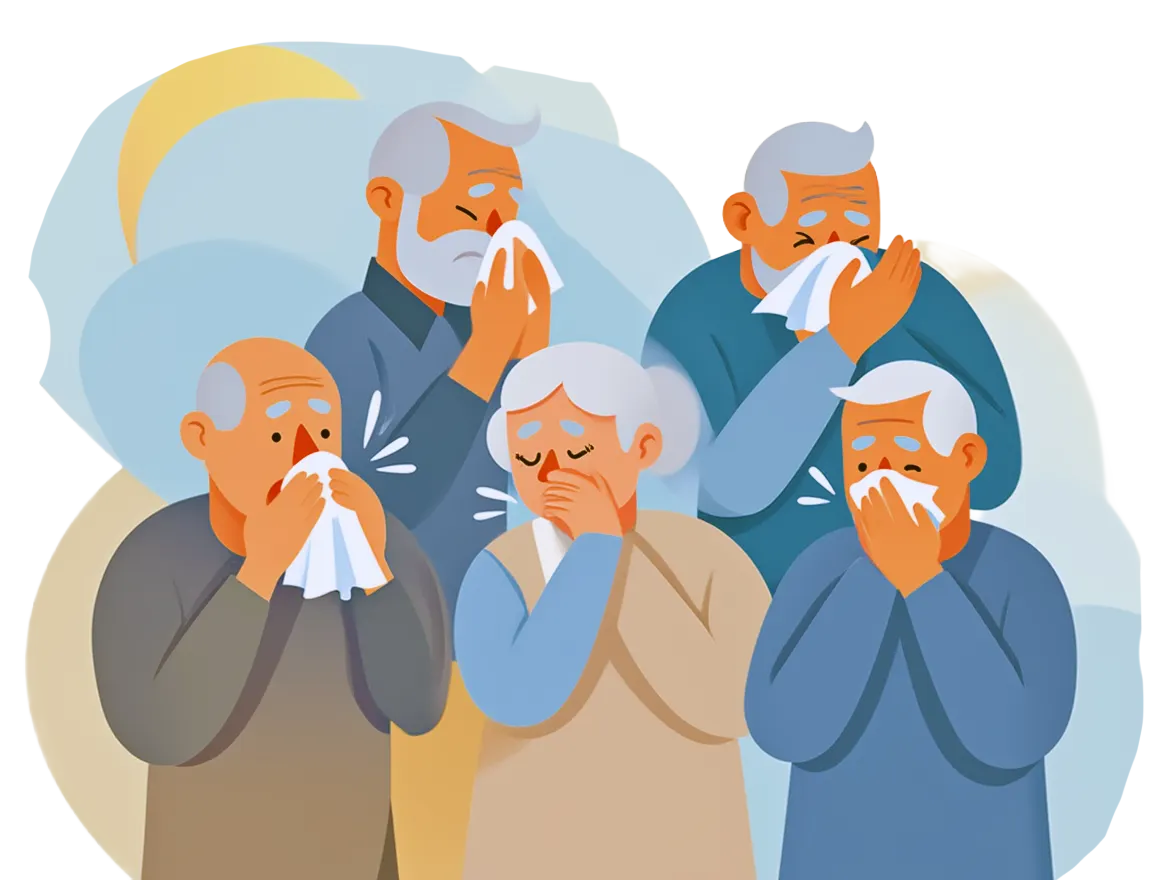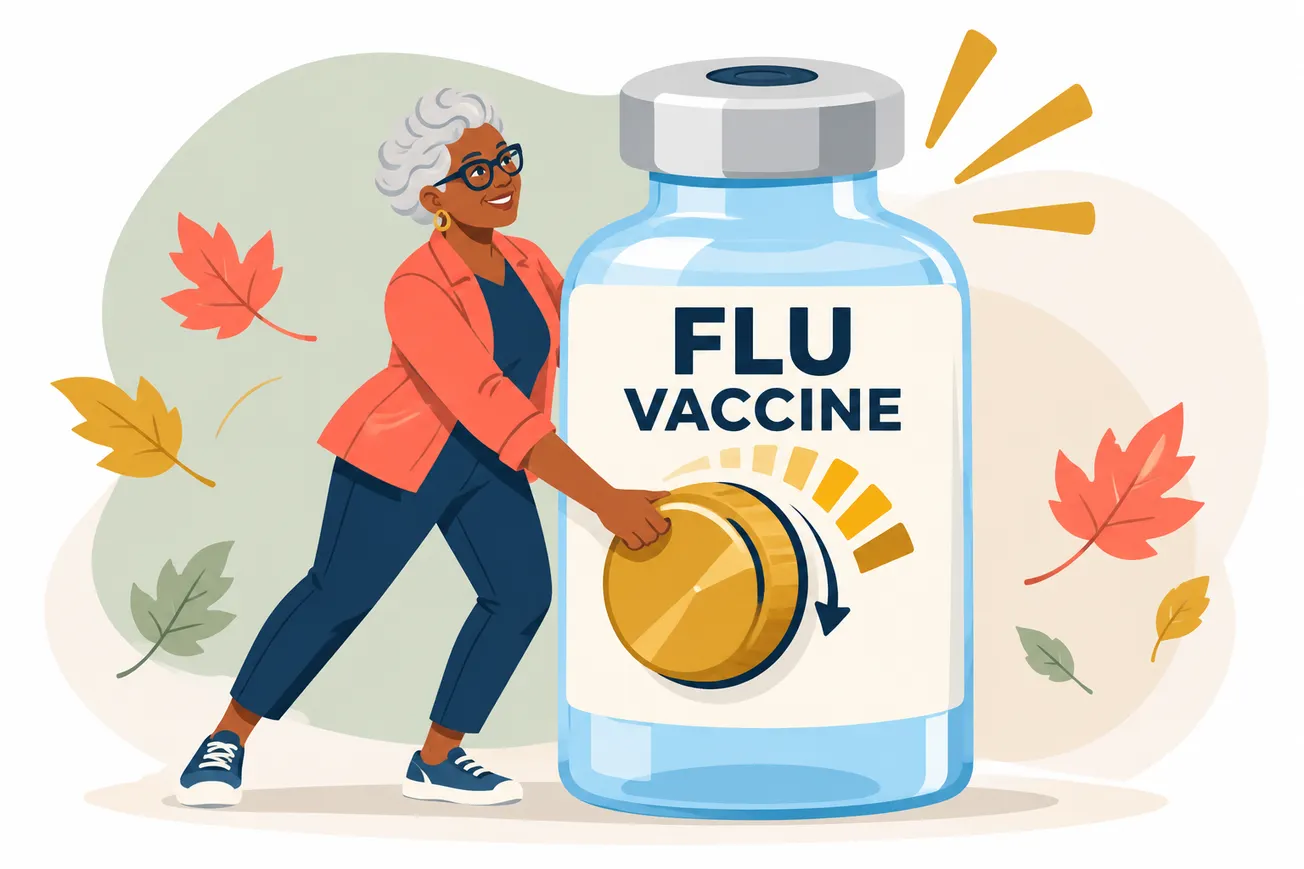
Think of your immune system as a car radio. At age 30, it pulls in the station loud and clear. By 70, the dial hasn't budged, but somebody turned the volume down a few notches. Think of the flu as the static you don't notice until it's in the room.
That's why this fall's flu shot menu looks different if you're over 50. Most of the options built for our age group exist for one reason. They turn the volume back up.
And there's a new one on the shelf this year, with some fine print worth reading before you roll up a sleeve.
The new kid: an mRNA flu shot
On August 5, the FDA approved Moderna's mFlusiva for adults 50 and older. It's the first flu vaccine built on mRNA, the same platform behind Moderna's COVID shot.
The selling point is speed. Most flu vaccines are still grown in chicken eggs, which locks in the recipe months ahead. mRNA skips the eggs, so manufacturers can update strains faster. Retuning the dial without pulling the radio out of the dashboard.
In a trial of more than 40,000 adults 50 and up across 11 countries, mFlusiva was about 27% more effective than a standard-dose shot at preventing lab-confirmed flu.
Now the fine print, because it matters.
That 27% was measured against a standard shot, not the beefed-up versions CDC already prefers for anyone 65 and older. For that age group, the FDA granted accelerated approval based on antibody levels compared with a high-dose shot, and Moderna owes the agency another trial proving real-world benefit. CDC's September flu guidance doesn't mention mFlusiva at all.
So here's the plain-English version. Between 50 and 64? A solid new choice. Over 65? A promising rookie, not a proven upgrade over what you got last year.
Major Drugstores & Retailers Offering Rewards If You Get Your Flu Shot There
- Walgreens: MyWalgreens members receive $15 in Walgreens Cash rewards on a future eligible in-store purchase of $5 or more, plus 10% back on eligible in-store purchases for 30 days after activation. (Note: Excludes AR, NJ, and NY; reward caps and short expiration windows apply).
- CVS Pharmacy (including CVS at Target): ExtraCare members receive a coupon for $5 off a $20 in-store or online purchase after getting a vaccination. (Note: Excludes AR, NJ, and NY).
- Publix: Eigible patients (18 and older) receive a $5 digital gift card for getting a free flu shot at the Publix Pharmacy, while supplies last.
- Kroger: Pharmacy customers can receive a $5 reward/coupon loaded onto their loyalty card for a flu shot, and up to $20 off if they receive a flu shot along with a second qualifying vaccination during the same visit.
This is for informational purposes only. Please confirm (either online or via a phone call) what you get from your pharmacy of choice before you make an appointment.
The Volume Knobs for 65+
CDC's advice for this season carries over unchanged. If you're 65 or older, ask for one of these three:
- Fluzone High-Dose packs four times the antigen of a regular shot.
- Flublok is a recombinant vaccine, made without eggs, with three times the antigen.
- Fluad adds an adjuvant, an ingredient that pokes your immune system awake.
Which one wins? Few studies have pitted them head-to-head, and none has crowned a champion. Dr. John Greene, an infectious disease specialist at Moffitt Cancer Center, leans toward high-dose.
It "could offer a better and longer immune response," he says, "but I do not have a preference," Greene commented.
Neither should you. Take whichever your pharmacy has in the fridge.
And if it has none of them, CDC says a standard shot beats no shot. Don't walk out empty-armed.
 Smart Senior Daily Staff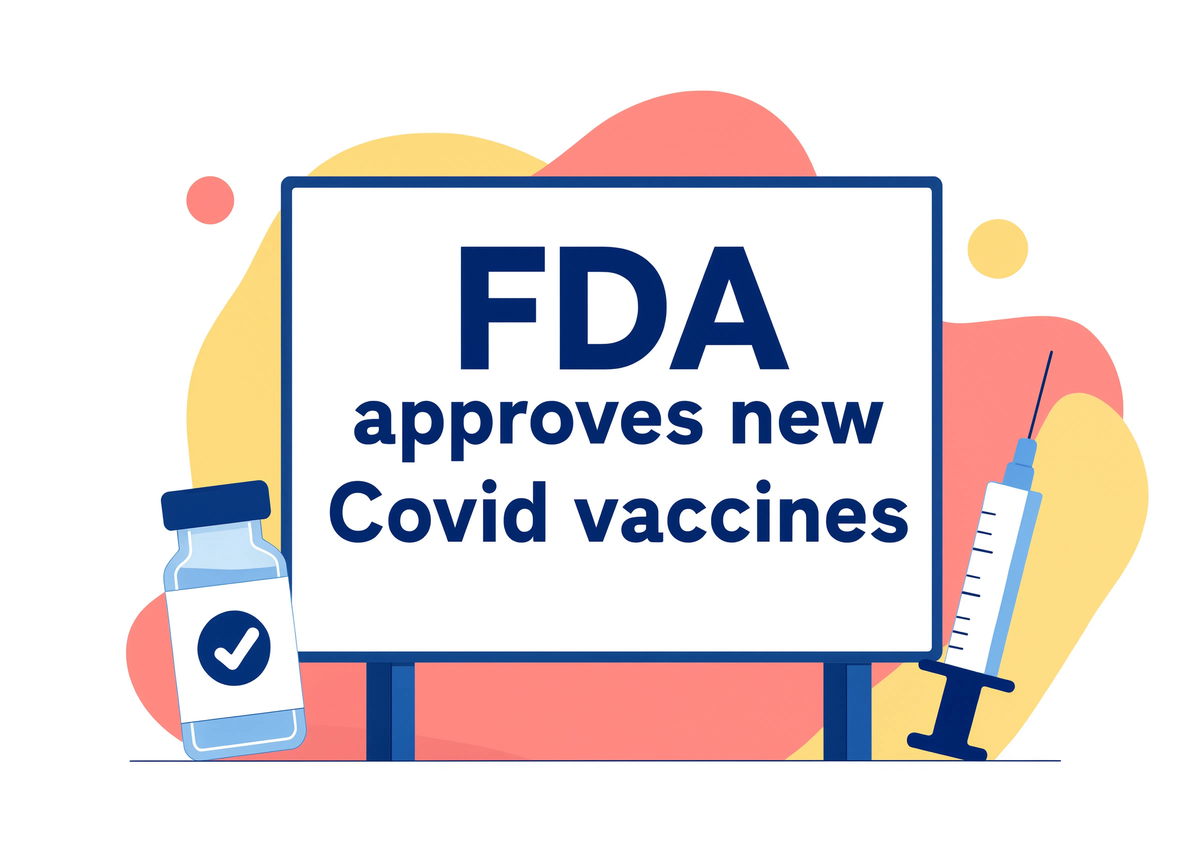
What It Should Cost You Nothing
Medicare Part B covers one flu shot per season with no deductible and no copay, as long as the pharmacy or doctor accepts Medicare assignment. Medicare Advantage plans have to cover it too.
⚠️ Here's where a surprise bill could sneak in. mFlusiva is brand new, and discount-card sites list its cash price north of $200. So before anybody uncaps a needle, ask two things. Which vaccine am I getting? Is it billed to Part B?
A good pharmacist answers both in about ten seconds. A shrug is your cue to ask again.
When to Go and What to Bundle
CDC says September or October. Greene's sweet spot is October. Protection takes about two weeks to build, stays strongest for three or four months, then fades, and it fades sooner in people over 65. If you haven't gone yet, this week works.
Bonus: You can get flu, COVID-19 and RSV shots at the same visit if you're due for all three, and there's no required waiting period if you'd rather spread them out. RSV is different from the other two. For most people it's a one-time shot, recommended at 75 and older or from 50 to 74 for people at higher risk. Already had one? You're done.
One option that's not for us: FluMist, the nasal spray you can now order for home use. It's approved only through age 49.
If your receiver's already weak from cancer treatment or immune-suppressing drugs, Greene says to stick with the playbook from past flu and COVID seasons:
"Avoid sick persons, make sure those in the home are vaccinated and wear a mask when in public places, especially crowds and poorly ventilated rooms," he told Smart Senior Daily
Turn the volume up. Then get back to worrying about the Thanksgiving seating chart.
This article draws on reporting from Healthline and HealthCentral.
Sources: Epocrates · NBC News · TruMed Systems · Immunize.org · NCOA · AHCA/NCAL · Medical Letter · SingleCare
Disclaimer: The content published on Smart Senior Daily is intended for informational and educational purposes only and does not constitute medical advice. Nothing on this site should be interpreted as a recommendation for a specific treatment, medication, or course of action, nor is it intended to diagnose, treat, cure, or prevent any disease or health condition. Always consult a qualified healthcare provider before making changes to your diet, exercise routine, medications, or other aspects of your health care. Never disregard professional medical advice or delay seeking it because of something you have read on this site. Smart Senior Daily makes every effort to present accurate, up-to-date health information, but we cannot guarantee the completeness or timeliness of any content. Health information changes frequently, and what is current today may be revised as new research emerges. Individual health needs vary widely. Information that applies generally may not be appropriate for your personal situation. Smart Senior Daily is not affiliated with any medical institution, health system, or pharmaceutical company.