by Francine Toder, Ph.D., www.doctoder.com
The Takeaway
- Once the kids are gone, take the temperature of your current partner relationship.
- Note your feelings, such as trepidation, excitement, loneliness, boredom, disappointment, or confusion.
- Decide whether to fine-tune or move on. People drift apart over time, and young love doesn’t always age well.
Parenting never ends, but when your kids are on their own, it’s time to sort out who you are now. It’s also time to assess your current partner relationship or consider what’s important in a new relationship.
During the child-rearing times, managing a home, maintaining a job, and social or community responsibilities, you probably had little time to nurture yourself or the relationship with your partner.
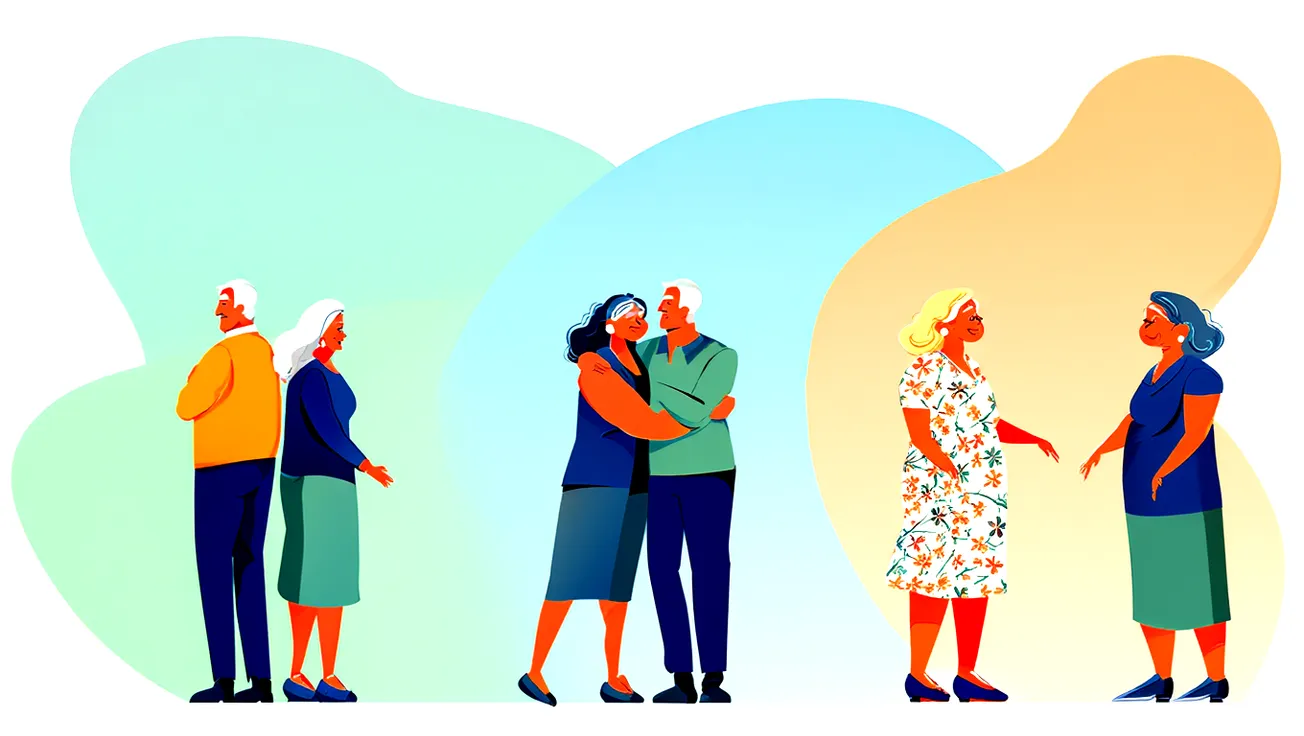
Or you may have gone your separate ways. These are common occurrences and not necessarily fatal to a relationship. People drift apart over time. Young love doesn’t always age well. A vacuum may now exist—or not. But here you are.
If you and your spouse have been together for decades and survived the coming-of-age of your children, that in itself is worth celebrating. But when the kids are no longer present day-to-day, you may feel as if you are living with a stranger.
If most of your conversations revolved around the kids over the years, there may no longer be much to talk about with your mate. While shared interests may have existed at the beginning of your time together, times have changed and so have you.
Hot, Cold, Lukewarm?
It’s time to take the temperature of your current relationship. Cold? Warm? Hot? Too hot? It’s time to take stock of your feelings.
Consider these: Trepidation? Excitement? Loneliness? Boredom? Disappointment? Confusion? Curious about a joint future? Pondering an exit strategy? Open to exploration? Something else?
Take time to sit with whatever feelings you’ve uncovered. Consider and contemplate, but don’t act on any of them. Hold your feelings in your awareness and take time to mull them over—for a month.
Why? Because your first thought or response will be colored by emotion and won’t likely be accurate. It won’t benefit from the careful consideration that comes when thinking is involved. At month’s end, ask yourself some hard questions:
- Did you stay together for the sake of your offspring? Once the kids are out of your home and on their own, you may realize that there’s not much left in common between you and your partner.
- If you were already feeling disconnected, has the day-to-day distress or discomfort intensified now that the kids are no longer your primary focus?
- How can you shift gears from a child-centered to a partner-focused relationship?
- What’s left? Ask yourself whether you want to continue as a couple, and why.
- If you want to preserve the relationship, what is your purpose as you go forward?
- If you don’t, what then?
Once you’ve done your homework and considered these questions, you might not have answers, but you may be at a starting point for considering what comes next. And what does come next?
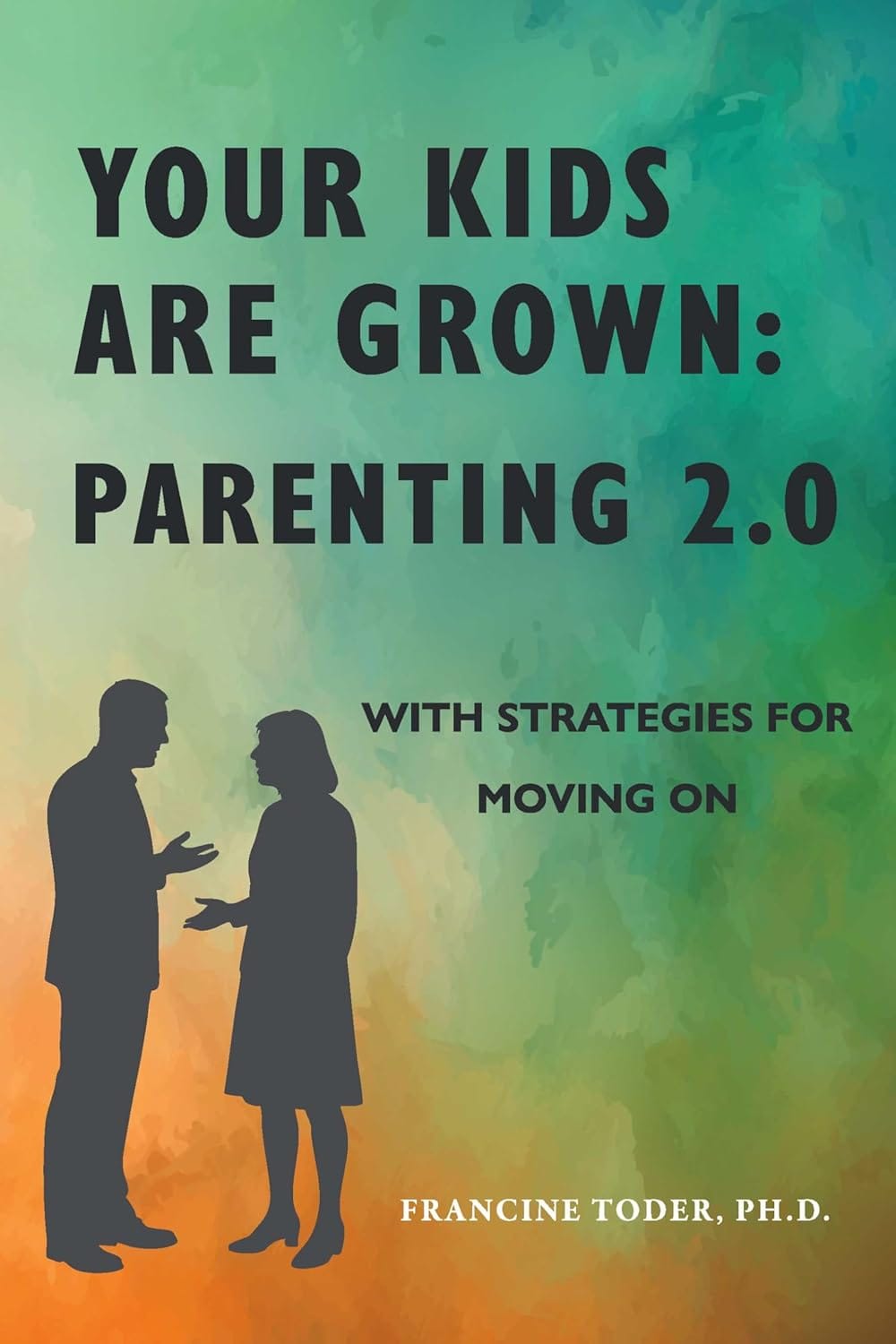
Based on material from the newly published book: Your Kids are Grown: Parenting 2.0 by Francine Toder, Ph.D. Available at Amazon and other booksellers.
Maintain, Enhance, or Let Go
Most couples in this situation are facing one of three scenarios. The first being the health of the relationship. Is your relationship okay? Then, carry on and maybe make some positive tweaks.
Maybe you want to enhance your relationship? Seek out novel, fun, and different activities, and schedule intimacy and be creative with your physical affection but remember that later-in-life physicality can’t compete with young love.
But, if all is not well: sort out some existing issues. Try to determine what’s left, and then decide if the relationship can be salvaged. Open up about your doubts. Listen to each other without criticism or judgment—nothing to lose at this point, and you would likely benefit from some couple counseling.
Making a decision about a long-term relationship is complicated. Whatever your thoughts or feelings at the moment, you have a partner to consider. Unless he or she sees things in exactly the same way as you, which is unlikely, the first step is to find a way to have meaningful dialogue—easier said than done.
Finding a Way Forward
If you have the determination and stamina to bring your discomfort to your partner, you may find that he or she shares your feelings to some extent—which forms the basis for a discussion.
Many old relationships have problems because people do change over time. Most individuals make some effort to repair or improve their floundering partnership—but some do decide to end it, and it’s not that uncommon among older adults.
According to an article in the American Psychological Association publication Monitor on Psychology, “In 1990, 8.7% of all divorces in the United States occurred among adults fifty and older. By 2019, that percentage had grown to 36%.”
Wherever your relationship stands, you have more options for maintaining, enhancing, or even ending it than ever before. Cultural taboos have lessened. Counseling is less stigmatized. The years that follow the empty nest will likely be plentiful and ought to be fulfilling and meaningful. You owe it to yourself to fine-tune or move on from your primary relationship because even the best of these get a bit stale over the long haul.
About the Author
Francine Toder, Ph.D. is faculty emeritus at California State University, Sacramento and is a clinical psychologist retired from private practice. She is the author of 5 books. Her newest book (August, ’25), is Your Kids are Grown: Parenting 2.0.
Her extensive writing about mindfulness and aging appears in magazines, professional journals, newspapers, blog sites and as edited book chapters. She resides in the San Francisco Bay area where she practices the cello in her spare time.