Most of us have tried at least one “diet” that left us tired, cranky, or staring longingly at a cookie.
The Mediterranean diet is different.
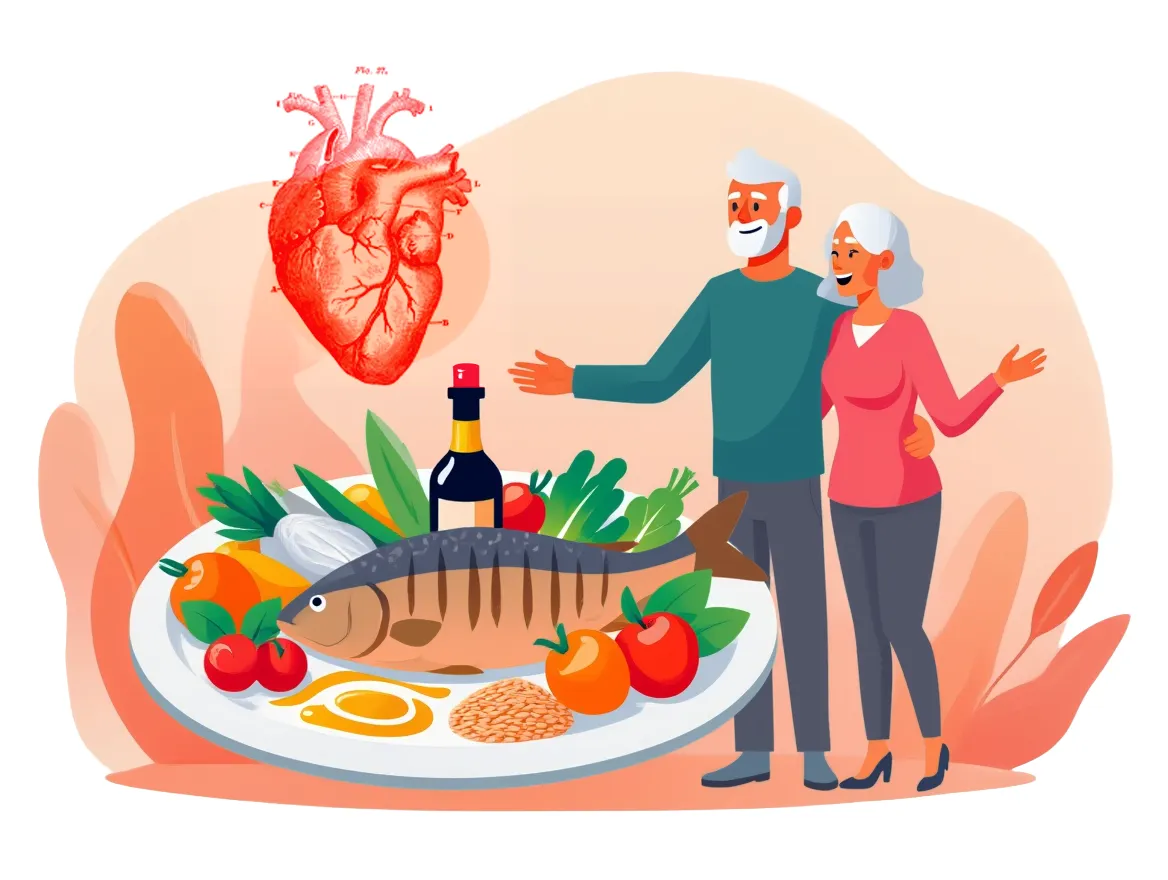
It doesn’t demand perfection. It doesn’t ban entire food groups. Instead, it nudges your plate toward vegetables, fruit, beans, fish, nuts, whole grains, and olive oil — and away from heavily processed foods and excess red meat.
Now, a large study suggests that shift may lower stroke risk.
The research, published in Neurology® Open Access by the American Academy of Neurology, followed more than 105,000 women for about 21 years. None had experienced a stroke at the start.
🔽 A One-Week Mediterranean Starter Grocery List
If you’re ready to try this way of eating, here’s a simple starter list. You don’t need to overhaul your entire pantry at once. Just begin here.
Produce
- Spinach or mixed greens
- Tomatoes
- Bell peppers
- Zucchini
- Broccoli
- Garlic and onions
- Apples or pears
- Berries (fresh or frozen)
- Oranges or clementines
Protein
- Salmon (fresh or frozen)
- Canned tuna or sardines
- Eggs
- Lentils (dry or canned)
- Chickpeas or black beans
Pantry
- Extra virgin olive oil
- Rolled oats
- Brown rice or quinoa
- Whole-grain pasta
- Low-sodium vegetable or chicken broth
- Walnuts or almonds
Dairy (optional, in moderation)
- Plain Greek yogurt
- A small wedge of Parmesan or feta
You could build a simple week around this:
- Oatmeal with berries and walnuts for breakfast
- Big salad with olive oil and beans for lunch
- Grilled salmon with vegetables and brown rice for dinner
- Fruit for dessert
Nothing dramatic. Nothing restrictive.
Just steady, nourishing meals that support your heart — and may, over time, protect much more than that.
The Numbers Don't Lie
Women who most closely followed the Mediterranean diet were 18% less likely to have any stroke, 16% less likely to have an ischemic stroke, and 25% less likely to have a hemorrhagic stroke.
“Our findings support the mounting evidence that a healthy diet is critical to stroke prevention,” said study author Sophia S. Wang, PhD, of City of Hope Comprehensive Cancer Center. She noted that it was especially encouraging to see the lower risk for hemorrhagic stroke, which has been studied less often.
The study shows an association, not proof of cause and effect. But it adds to years of research pointing in the same direction.
Not Something You Can Do in a Week, Though
On the “Harvard Thinking” podcast from Harvard University, nutrition researcher Miguel Ángel Martínez González explained that the Mediterranean diet isn’t meant to be a short-term weight-loss plan.
“When we say Mediterranean diet, we are not thinking of a slimming diet,” he said. “We are thinking of an overall food pattern that is mainly plant-forward.”
He has studied this pattern for decades. In the large PREDIMED trial, participants following a Mediterranean diet had about a 30% reduction in cardiovascular disease compared with those advised to follow a low-fat diet.
“There is no doubt whatsoever that the Mediterranean diet is able to bring down the rates of heart disease and diabetes,” Martínez González said.
🔽 Foods that are BAD for your heart
Foods That Can Work Against Your Heart
No one eats perfectly. But some foods show up again and again in research as troublemakers for heart health — especially when they become everyday habits.
Highly processed meats
Bacon, sausage, hot dogs, deli meats. These are often high in sodium and saturated fat. Regular intake has been linked to higher cardiovascular risk.
Refined carbohydrates
White bread, pastries, sugary cereals, and many packaged snack foods. They digest quickly, spike blood sugar, and can worsen triglycerides.
Sugary drinks
Soda, sweet tea, energy drinks, and even some “fruit” drinks. These add calories without nutrition and are strongly associated with heart disease risk.
Deep-fried foods
French fries, fried chicken, and many restaurant appetizers. They’re typically cooked in refined oils and can contain unhealthy fats.
Ultraprocessed snack foods
Chips, packaged desserts, fast food burgers. These often combine refined carbs, added sugars, unhealthy fats, and high sodium — a difficult mix for blood vessels.
Heavy cream-based desserts
Ice cream, rich cakes, creamy pastries. Fine for special occasions, but not everyday fare.
Notice what’s missing from this list: “all fat” or “all carbs.”
As the newer research from the Harvard T.H. Chan School of Public Health suggests, it’s not about slashing entire macronutrients. It’s about the quality of what you choose.
In other words, the Mediterranean pattern isn’t so much about what you must eliminate — it’s about crowding out the foods that quietly strain your heart.
Harvard Agrees
That message is echoed in newer research from the Harvard T.H. Chan School of Public Health, published in JACC. Researchers found that both low-carbohydrate and low-fat diets were linked to lower heart disease risk — but only when they emphasized high-quality, plant-based foods and limited refined carbohydrates and animal fats. Diets heavy in refined carbs and animal fats were associated with higher heart disease risk.
“Simply modulating carbohydrate or fat intake is [not] inherently beneficial,” said first author Zhiyuan Wu, a postdoctoral research fellow in nutrition. The quality of the foods, researchers concluded, matters far more than the quantity of carbs or fat.
Extra virgin olive oil plays a central role in that quality. It contains antioxidant and anti-inflammatory compounds that may help protect blood vessels and improve insulin sensitivity.
🔽 Heart-Helpful Foods to Keep on Hand
If your goal is to protect your heart, it helps to stock your kitchen with foods that make the healthy choice the easy choice.
These are staples of the Mediterranean pattern — and they’re widely available in most grocery stores.
Extra virgin olive oil
Use it for sautéing vegetables, drizzling over salads, or dipping whole-grain bread.
Leafy greens
Spinach, kale, arugula, romaine. They’re rich in fiber and nutrients that support blood vessel health.
Colorful vegetables
Tomatoes, bell peppers, zucchini, eggplant, broccoli. Aim for variety — different colors mean different protective compounds.
Fresh fruit
Berries, oranges, apples, pears. Try making fruit your usual dessert.
Legumes
Lentils, chickpeas, black beans, white beans. Affordable, filling, and heart-friendly.
Nuts and seeds
Walnuts, almonds, pistachios, chia seeds. A small handful makes a satisfying snack.
Fatty fish
Salmon, sardines, mackerel. These provide omega-3 fats that support heart health.
Whole grains
Oats, quinoa, farro, brown rice, whole-grain bread.
Notice that none of these are exotic. They’re ordinary foods — just chosen with intention.
But the benefits go beyond the heart.
Dr. Uma Naidoo, director of nutritional and metabolic psychiatry at Massachusetts General Hospital and Harvard Medical School, says inflammation is linked to depression, anxiety, and cognitive disorders.
“And the Mediterranean diet is an easy way to start fending off that inflammation,” she said.
Naidoo also encourages people to rethink how they approach food.
“We have to move Americans away from this obsession with their waistline,” she said. “I much prefer to make the focus how you can add these healthy foods to your diet than take anything away.”
That mindset may be the real secret. It feels less like punishment and more like care.
If you’re wondering where to begin, Martínez González suggests something simple: make fruit your usual dessert and save sugary treats for special occasions.
Small changes. Steady habits. A pattern you can live with — not just endure.
 Carolyn Ames
Health Disclaimer: This article is for informational purposes only and is not medical advice. Dietary changes may not be appropriate for everyone. Please consult your physician or a registered dietitian before making significant changes to your diet.