

The Takeaway
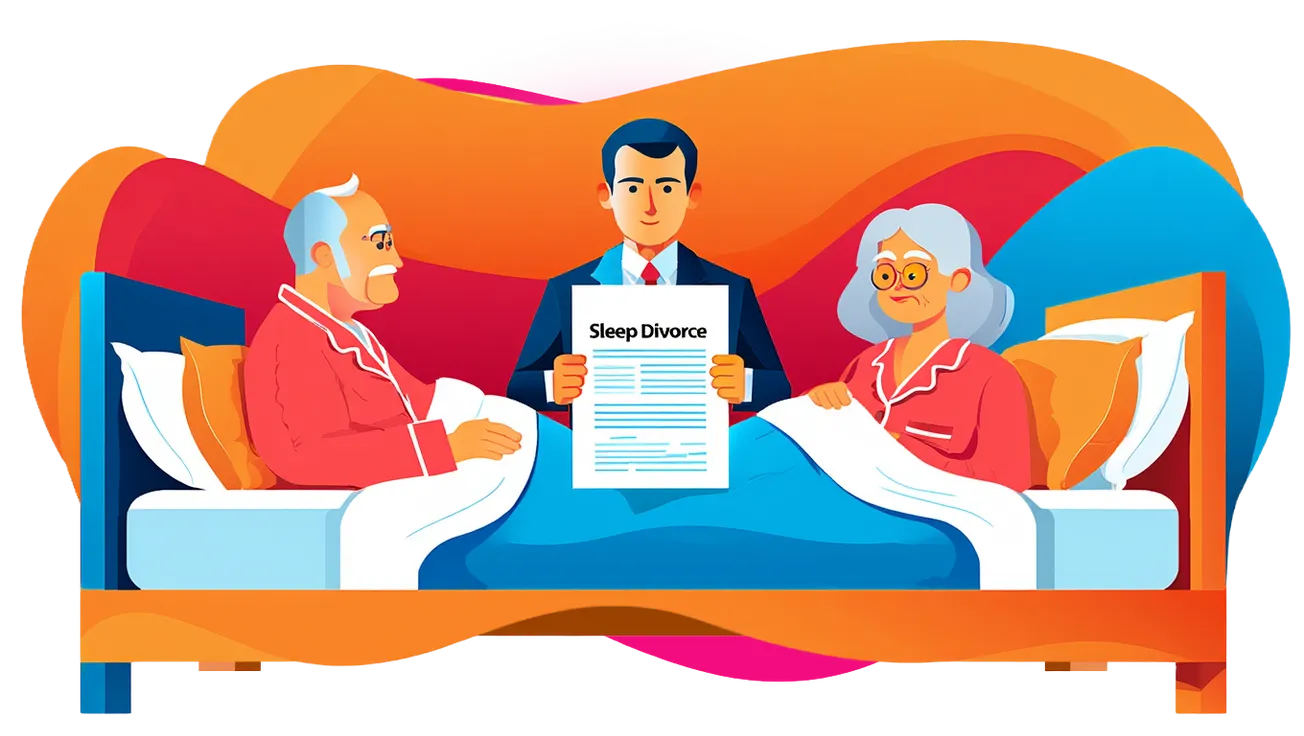
- “Sleep divorce” isn’t about quitting love — it’s about reclaiming rest.
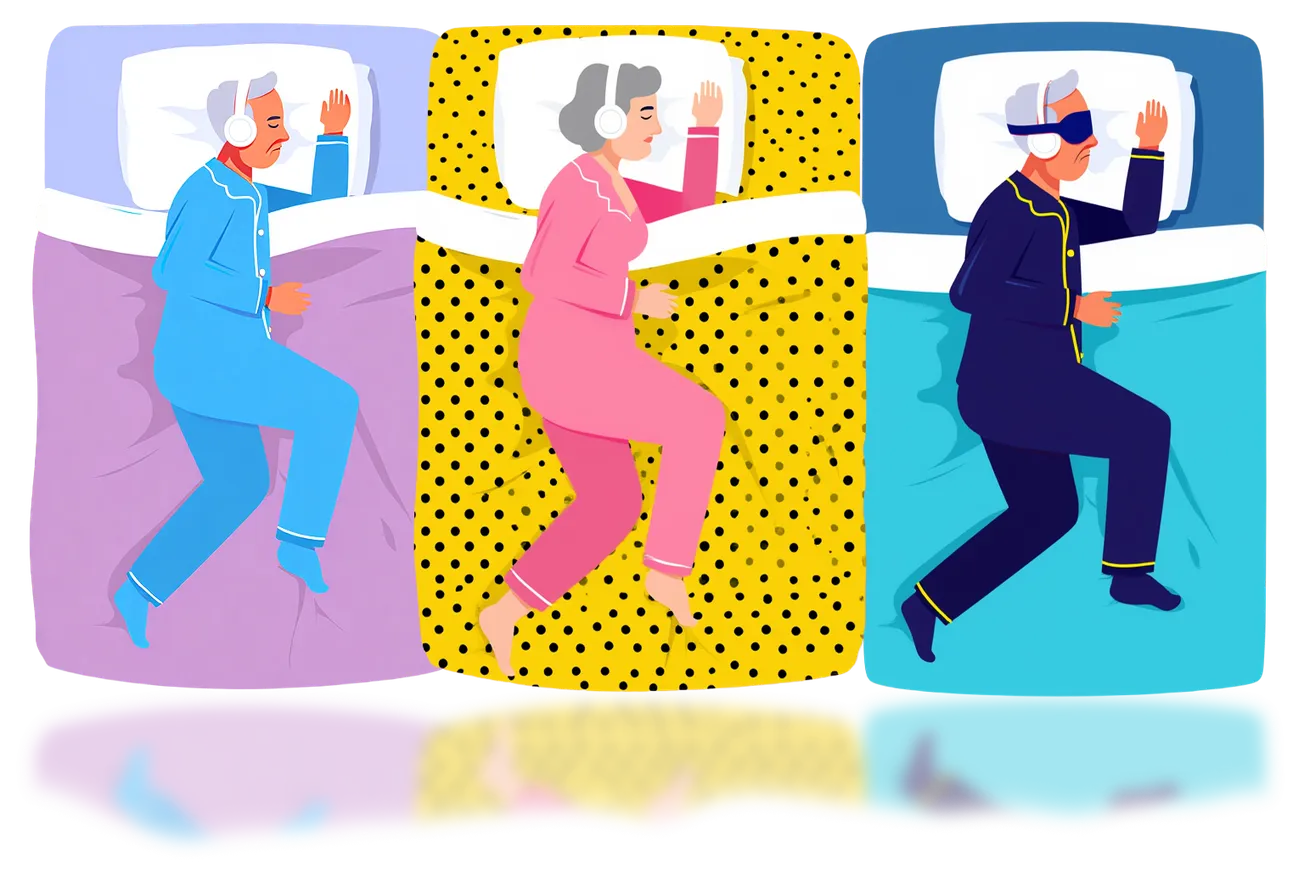
- For many seniors, separate bedrooms solve snoring, sleep apnea, and 2 a.m. sheet-tugging.
- But long-term emotional distance can creep in if couples don’t balance rest with connection.
- Experts say rituals like “tuck-in talks,” morning coffee dates, and shared wind-downs can keep closeness intact.
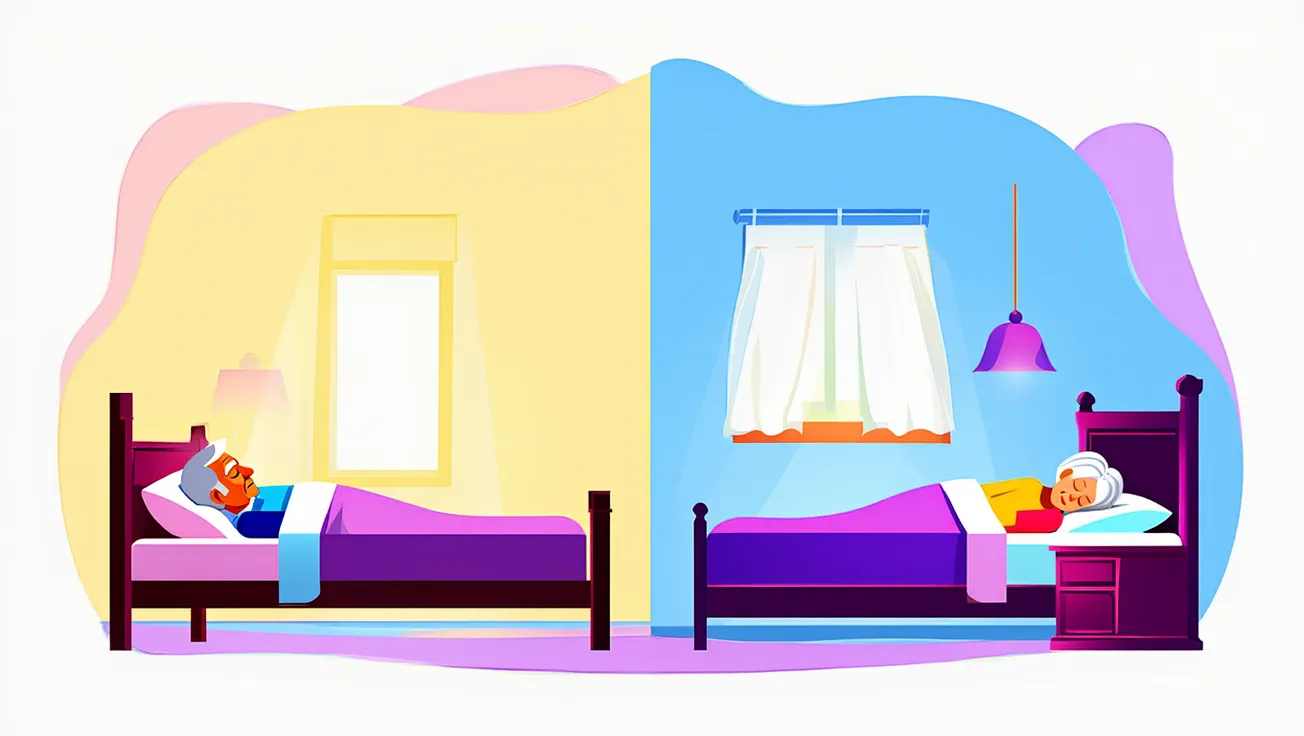
- The real trick: separate beds, shared rhythm.
When the Snore Wars Begin
Ask any longtime couple and you’ll hear some version of it:
“I love you — but I can’t sleep with you.”
After decades together, a lot of older adults are quietly filing for what the media now calls a “sleep divorce.” One moves to the guest room; another stays put with the CPAP machine or the dog. For many, it starts as self-defense.
Snoring, restless legs, late-night TV habits — small things that grow large when you’re chasing the elusive full night’s sleep.
According to the National Sleep Foundation, nearly 40% of couples report sleeping apart at least part-time. And among adults over 60, that number rises even higher.
Why It Feels Like Freedom — Until It Doesn’t
Sleeping separately can feel like a miracle cure. You wake rested, your Fitbit thanks you, and nobody kicks off the covers at 3 a.m.
But as a new study in BMC Public Health reminds us, it can also carry emotional side effects. Researchers in Taiwan found that older couples who slept in separate rooms reported lower life satisfaction and happiness than those who shared a bed — even when health and relationship quality were accounted for.
Does that mean you should race back to the same pillow? Not necessarily. It just means physical separation should come with intentional connection.
Five Ways to Stay Close While Sleeping Apart
- Keep the bedtime ritual.
Spend 10 minutes together before retreating to separate rooms. Talk, read aloud, pray — anything that says “we’re still a team.” - Schedule a “good-morning reconnection.”
Coffee, a walk, or even a daily text — something that replaces the pillow talk you’ve lost. - Use the tech to your advantage.
Shared playlists, white-noise apps, or synchronized alarms can keep a sense of shared rhythm. - Check the ‘why.’
If the move was driven by untreated sleep apnea, chronic pain, or anxiety, tackle the medical piece. Separate rooms shouldn’t mask a fixable health issue. - Name the new normal.
Talk openly about the change so it doesn’t feel like a silent retreat. Humor helps: “Same marriage, different zip code.”
What Experts Say
Wendy Troxel, Ph.D., author of Sharing the Covers, puts it plainly:
“The healthiest sleep arrangement is the one that supports both good rest and emotional connection.”
Physical closeness releases oxytocin — the “love hormone” — which can lower stress and even improve sleep quality. But so can peace and quiet.
If one partner needs silence and the other snores like a Harley, the compassionate choice may be the spare room — as long as you keep the relationship awake, even while sleeping apart.
Smart Senior’s Bottom Line
There’s no shame in separate bedrooms. Just don’t let them turn into separate lives.
Sleep is medicine, but so is companionship. The sweet spot lies somewhere between “I need my rest” and “I need my person.”
Sources:
- Lin & Chiao, BMC Public Health (2025)
- National Sleep Foundation: Sleep in America Poll
- Wendy Troxel, Sharing the Covers (2021)
Health disclaimer: Smart Senior Daily provides journalism and general information, not medical advice. Always consult your healthcare provider about sleep issues or changes in health.





)