A heat dome is baking much of the country this summer, and if you've noticed more ants inside your home, that's not a coincidence. And for older adults, it's far from being an "Ants go marching two by two, hurrah, hurrah" episode, as Smart Senior Daily found out.
"Summer heat doesn't just affect people; it drives ants indoors, too," says Dr. Jim Fredericks, a board-certified entomologist and senior vice president at the National Pest Management Association (NPMA),"
told Smart Senior Daily.
"Ants are opportunists, and environmental changes, like extreme temperature, can cause them to seek more hospitable locations for the colony's activities. They can squeeze through the smallest crack in a foundation or windowsill looking for cooler temperatures, food, and moisture, and that brings them directly into living spaces."
Annoyance? Yes... for most people. But for seniors, it can be something far more serious.
 Smart Senior Daily Staff
Why Ants Are a Bigger Deal for Older Adults
Pest experts and top health sources agree: older adults have a different risk profile when it comes to household infestations.
Seniors are more prone to infections, allergic reactions, and complications that may not seriously affect younger people. Depressed immune systems, chronic respiratory conditions, and thinning skin all have a hand in this.
Here's how ants can create problems where other insects may not:
Food contamination: Certain ant species (e.g., Pharaoh ants) have been linked to the spread of salmonella and other harmful bacteria. If ants get into your pantry or food storage areas, the risk rises quickly beyond being just an unpleasant sight.
Stings and bites: The stings of fire ants and Asian needle ants can attack older adults with compromised immune systems; a reaction that might be minor for a younger person can quickly escalate into situations like anaphylaxis.
There are documented instances of attacks on frail elderly folks, particularly those with limited mobility, from indoor fire ant colonies. This is not some theoretical scenario.
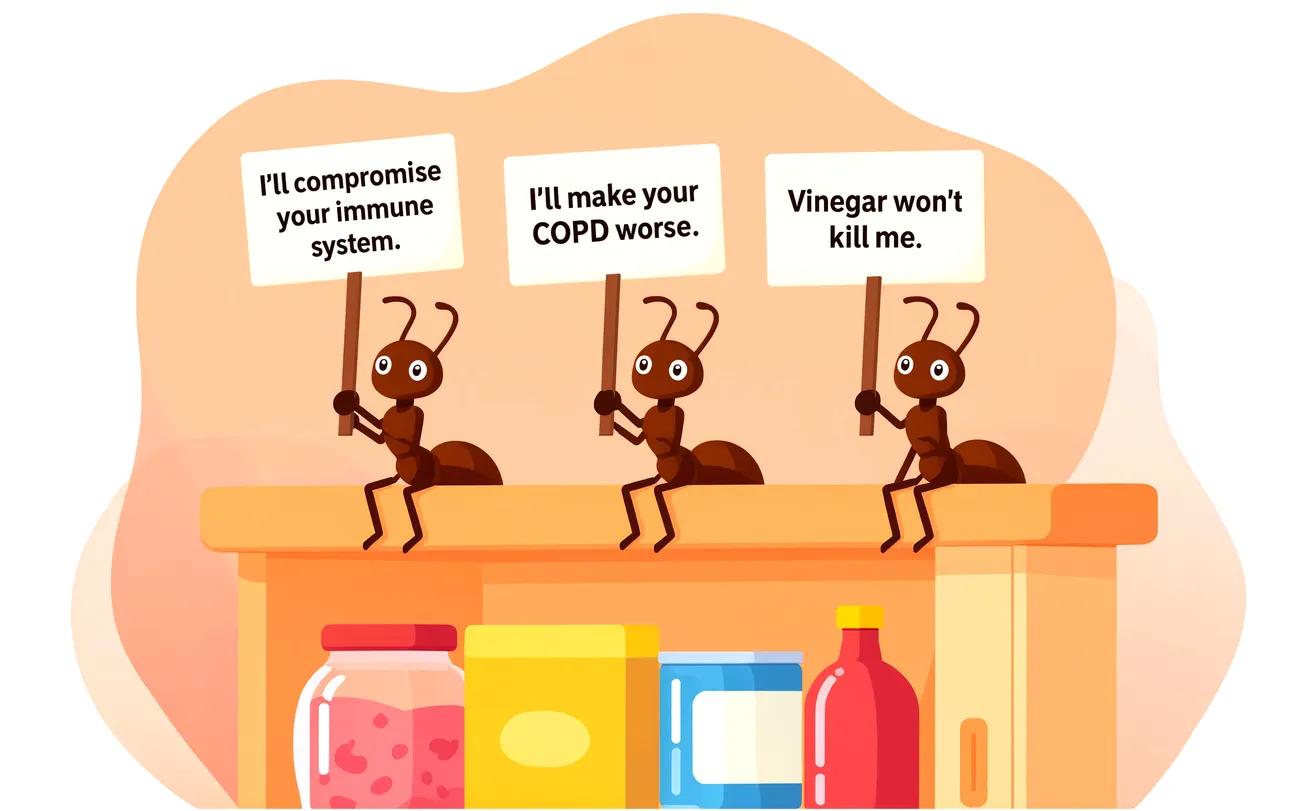
Respiratory irritation: Ant nesting materials, droppings, and shed skin can aggravate breathing conditions — a real concern for seniors managing asthma or COPD.
Emotional toll: The stress of dealing with an infestation is real, and research consistently shows that chronic stress has outsized health effects on older adults. This is especially true for seniors living alone or coping with cognitive decline, who may feel helpless or embarrassed about the problem.
25-piece Drawer and Cabinet Organizer Set
Organizer Trays and Storage Bins for Makeup, Bedrooms, Kitchen Gadgets, Utensils, and Offices. Many combinations under $20.
What the Internet Gets Wrong
If your first instinct was to Google a home remedy, count yourself among the third of Americans who have used natural or home remedies they read about on the web to get rid of ants.
The problem: most of them are duds, and some make things worse. Not dried bay leaves, not ground pepper, not vinegar spray, and not lemon juice. They've all been tested, and not a single one of them worked.
"Not one of them worked. Worse, they can scatter the colony, said Dr. Fredericks. "They drive ants deeper into your walls and turn a manageable problem into a much more difficult one."
A Senior-Specific Caution on DIY Treatments
There’s another reason older adults should think twice before reaching under the sink for a chemical spray. As the body ages, immune response changes, respiratory sensitivity increases and chemical tolerance decreases.
That means that certain over-the-counter pesticides — foggers and heavy residual indoor sprays in particular — may pose their own risks for seniors, especially those with existing respiratory conditions.
The better approach is targeted and low-exposure treatment, ideally handled by a licensed professional who understands how to apply products safely.
 Smart Senior Daily Staff
What Actually Works: Prevention First
Pest experts say the most effective strategy is keeping ants from getting in at all. Here's what they recommend:
Seal entry points. Caulk cracks around windows, doors, and your foundation. Ants can squeeze through gaps that seem impossibly small.
Eliminate moisture. Fix leaky pipes and address any damp areas in your home — ants are drawn to water sources.
Keep food sealed. Store pantry items in airtight containers and don't leave pet food sitting out.
Clean promptly. Wipe up crumbs and spills right away; even small amounts of food residue are an open invitation.
Trim vegetation near the house. Tree branches and shrubs touching your home give ants a bridge indoors.
Take out trash regularly. Don't give them a reason to come looking.
When to Call a Professional
If you're seeing ants in multiple rooms, spotting them repeatedly after cleaning, or if you or someone in your household has had a reaction to a sting or bite, it's time to call a professional. The NPMA's website includes a free directory to find a qualified pest control professional near you.
"The most effective thing you can do is call a qualified pest control professional," said Dr. Fredericks. "They have the skills, equipment and knowledge to identify and locate problems and prevent future ones. At any age, working with a professional is the smart call."
Sources: National Pest Management Association (NPMA); New LifeStyles; Redi National Pest Eliminators; Team Veterans Pest Control; American Journal of Medical Sciences.