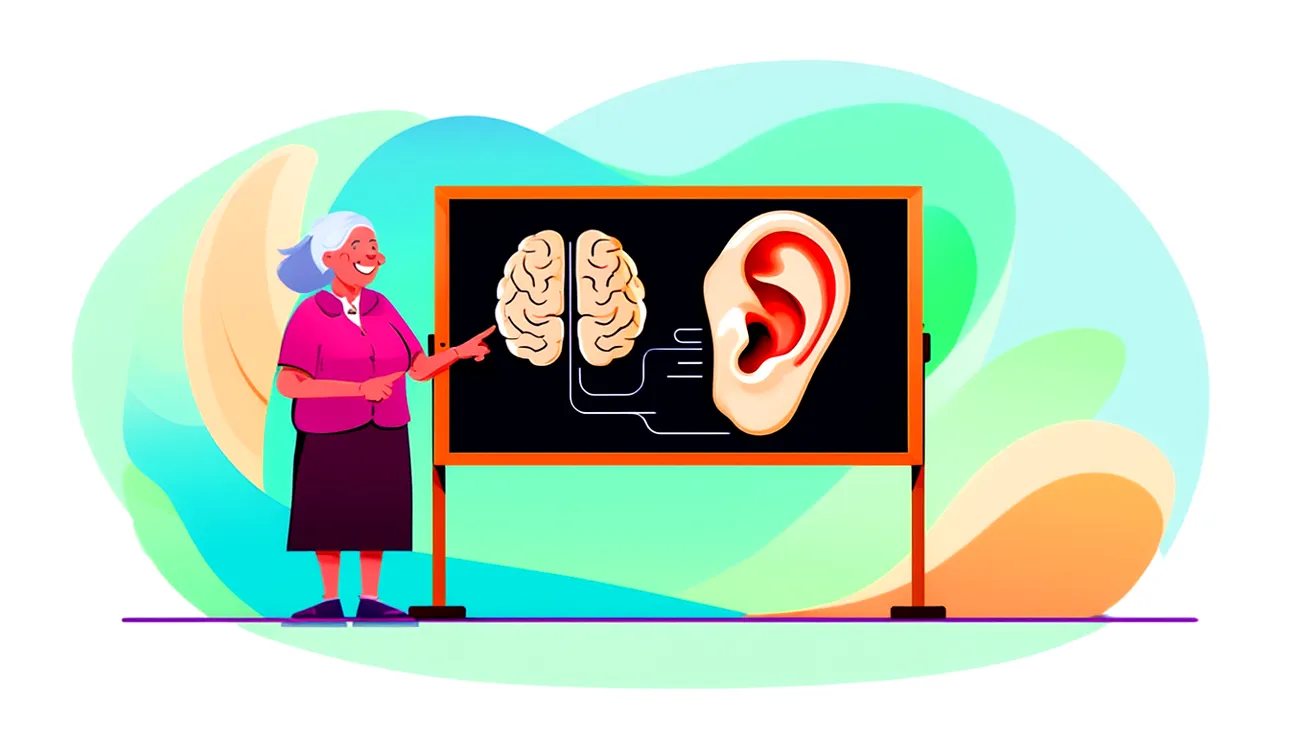
For years, the story around hearing loss and brain health sounded straightforward.
Lose your hearing, strain your brain.
Fix your hearing, fix your thinking.
That idea took hold for a good reason. Study after study linked untreated hearing loss to faster cognitive decline and higher dementia risk. It felt logical to assume hearing aids would reverse—or at least measurably improve—memory and thinking.
That was the old model.
A new study, published in Neurology, doesn’t reject that thinking. But it does force a rewrite of the last chapter.
Old thinking vs. what this study found
For years, researchers and clinicians largely assumed:
- Hearing loss increases cognitive strain
- That strain accelerates decline
- Treating hearing loss should improve cognitive test scores
In short, hearing aids were expected to act like a mental tune-up. Wear them, and memory, language, or processing speed should improve.
This new study complicates that assumption.
Researchers followed nearly 2,800 adults with moderate hearing loss for seven years, all dementia-free at the start.
What surprised them wasn’t what didn’t change—but what did.
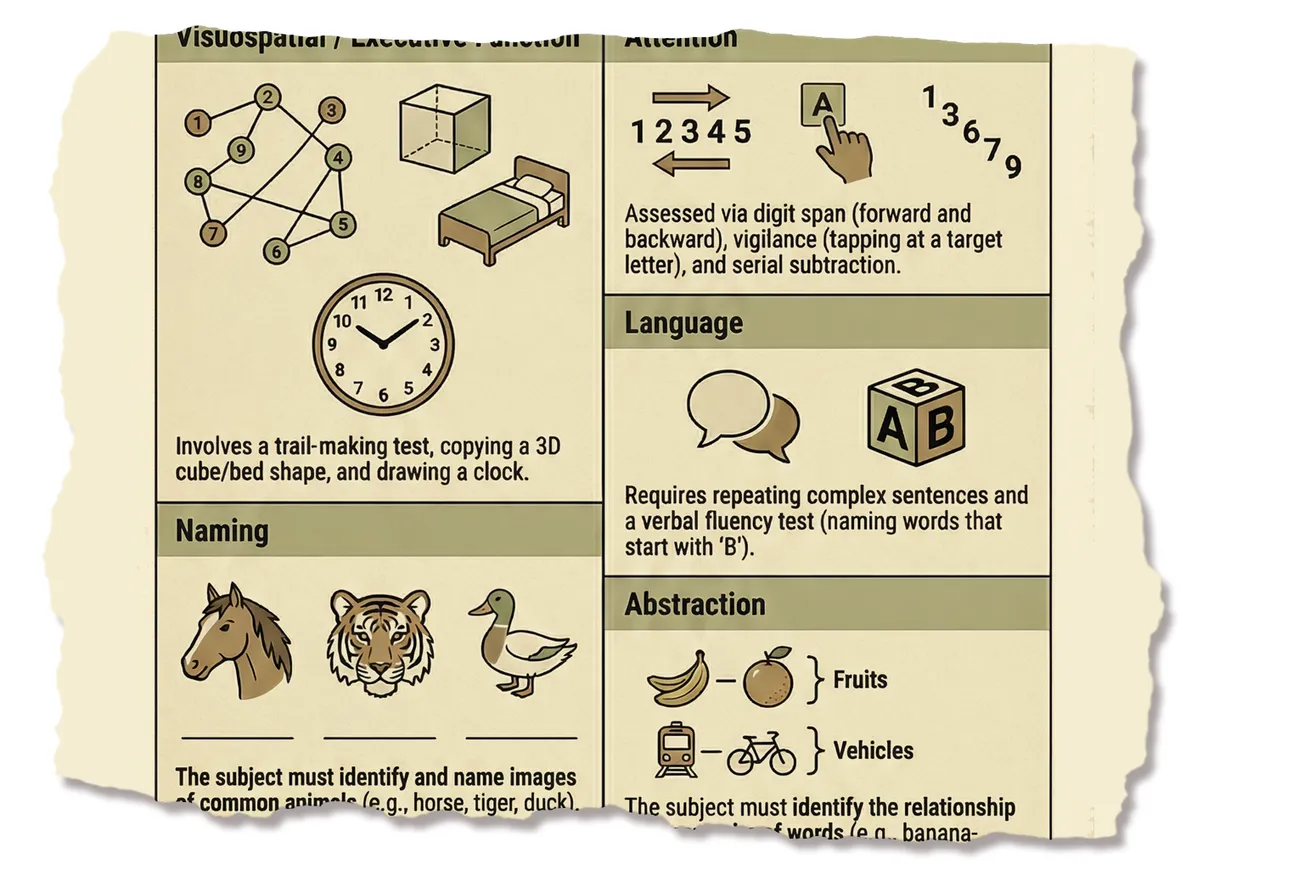
People prescribed hearing aids did not score higher on memory or thinking tests over time. But they were significantly less likely to develop dementia.
That combination feels counterintuitive—and it’s where many readers get stuck.
If hearing aids help the brain, shouldn’t the test scores go up?
Not necessarily.
 Smart Senior Daily Staff
The new thinking: protection, not performance
The emerging view is that hearing aids may work less like a booster and more like a buffer.
They don’t necessarily make a healthy brain perform better.
They may help keep it from breaking down later.
Study author Joanne Ryan, PhD, of Monash University, points to a key detail: most participants started the study cognitively healthy. There simply wasn’t much room for measurable improvement.
But outcomes still diverged.
During the study:
- Dementia developed in 5% of those prescribed hearing aids compared to 8% of those who were not
- That’s a 33% lower risk, even after adjusting for age and health conditions
The benefit showed up not in test performance, but in long-term risk.
A Reality Check From the Hearing Loss Community
While the new study refines how researchers think about hearing aids and cognition, advocates say it shouldn’t cool enthusiasm for addressing hearing loss earlier.
Barbara Kelley, executive director of the Hearing Loss Association of America (HLAA), says the growing attention to hearing health itself is a positive step.
“It’s exciting to see that hearing health is more frequently in the news and top of mind for people and health care professionals,” Kelley told Smart Senior Daily. “Preventing, screening and treating hearing loss is part of overall health and wellness.”
Kelley agrees with the study authors that caution is needed – as is further research to understand how hearing aids may support memory and brain health — and warns against jumping to conclusions about cause and effect.
But she also emphasizes what is already well established.
What we do know about untreated hearing loss
According to Kelley and HLAA, untreated hearing loss often leads to:
- Social withdrawal
People avoid conversations, gatherings, and activities because listening becomes exhausting or frustrating. - Isolation and loneliness
Isolation is strongly linked to depression and anxiety. In 2023, the U.S. Surgeon General formally declared loneliness a public health epidemic. - Reduced engagement with daily life
Treating hearing loss — through hearing aids, cochlear implants, or assistive listening devices — helps many people stay connected to family, community, and even the workplace.
In other words, even if the dementia connection remains complex, the quality-of-life impact is not.
Earlier care still matters
Kelley says the larger goal is awareness — and action.
“Our hope is that awareness about hearing health and its comorbidities will encourage people to seek treatment sooner rather than later.”
That perspective fits neatly with the study’s findings. Hearing aids may not raise test scores, but they can reduce isolation, preserve engagement, and support overall well-being — all factors that matter as much as any number on a cognitive exam.
 Gary P Guthrie
A useful way to think about it
Think of hearing aids like seat belts.
Wearing one doesn’t make you a better driver.
It doesn’t improve reaction time.
It doesn’t show up on a performance test.
But if something goes wrong years down the road, it can change the outcome dramatically.
That’s the shift in thinking this study supports.
Disclaimer: This article is for informational purposes only and is not intended as medical advice. Hearing loss, cognitive health, and dementia risk vary widely from person to person. The study discussed shows an association between hearing aid use and lower dementia risk, not proof that hearing aids prevent dementia or improve memory or thinking abilities.
Always talk with a qualified healthcare professional, audiologist, or physician about hearing concerns, cognitive symptoms, or treatment options that are right for you.