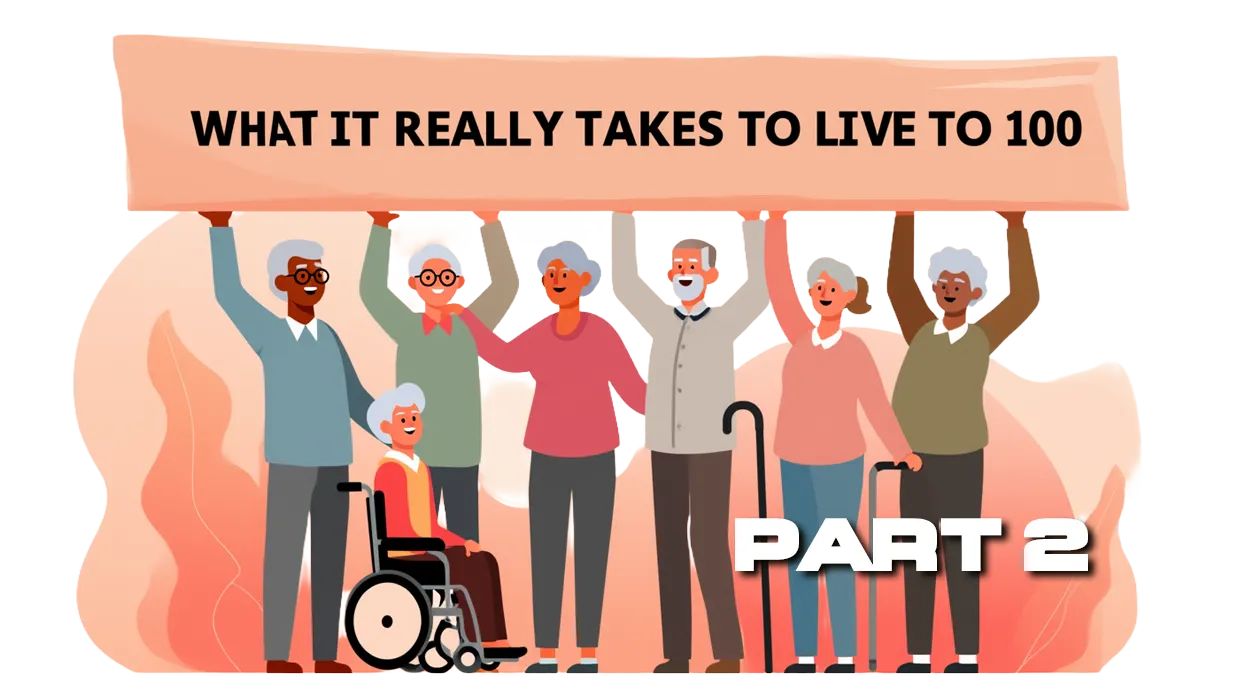
What does it actually take to live to 100? Not just surviving to hit 100, but getting there with vim, vigor, and independence intact?
Before we dive into the expert opinions, why don't you check to see how well you think you're doing in the nutrition department. Here's a little one-minute quiz to help you figure that out.
Are You Eating Smart Enough to Age Well?
A quick 8-question nutrition check for adults 60+, based on the latest expert research.
This quiz is for informational purposes only and is not medical advice. Consult your physician or a registered dietitian before making dietary changes.
Now, let's make room for the experts
Smart Senior Daily put that question — in three different ways — to three leading registered dietitians and senior nutrition specialists. Their backgrounds span clinical nutrition, geriatric dietetics, and functional medicine. But certain themes ran through all of them with striking consistency.
We spoke with: Jennifer Scherer, a registered dietitian nutritionist; Chad Larson, founder of The Adapt Lab; and geriatric dietician Lauren Dubuque, a degreed geriatric dietician and long term care management executive.
Here's what they told us.

According to the nutrition and aging experts Smart Senior Daily spoke with, healthy aging after 65 may depend less on eating less — and more on eating smarter.
And one problem keeps quietly surfacing in older adults: many simply aren’t getting enough nutrition to preserve muscle, energy, and independence.
That may sound surprising in a culture obsessed with dieting, but experts say the body changes dramatically after 60. Appetite often shrinks. Nutrient absorption declines. Muscle mass naturally decreases. And older adults who appear to be eating “light” or “healthy” can slowly drift into undernutrition without realizing it.
“We need to shift from thinking about eating less to thinking about eating smarter,” said Lauren Dubuque, a former geriatric dietician and Executive Director at Masonicare at Mystic.
“Every bite should be nutrient dense and purposeful, supporting strength, cognition, and quality of life over time.”
The Mediterranean diet has almost become cliché in health journalism — but experts say there’s a reason it refuses to disappear.
The evidence behind it is unusually strong.
Large long-term studies continue to associate Mediterranean-style eating with lower risks of cardiovascular disease, cognitive decline, frailty, inflammation, and overall mortality.
But experts say the power of the diet isn’t one magical ingredient.
It’s the pattern.
“The Mediterranean-style diet is one of the most well-researched patterns for longevity,” said Jennifer Scherer, a registered dietitian nutritionist and founder of Fredericksburg Fitness Studio.
“But what makes it powerful isn’t any one ‘superfood.’ It’s the overall pattern.”
That pattern typically includes:
- vegetables and fruits
- legumes and beans
- whole grains
- olive oil
- nuts
- fish
- fewer processed foods
- moderate portions instead of extremes
Experts say that combination appears to support both cardiovascular and brain health simultaneously, which are two of the biggest drivers of quality of life after 65.
“What is often overlooked is that the Mediterranean diet is also sustainable and culturally adaptable,” Dubuque said. “That matters because the best diet for aging is one that people can maintain consistently over time.”
 Carolyn Ames

One of the clearest themes from experts was this:
Aging changes how the body processes food.
And not always in obvious ways.
As people get older:
- nutrient absorption can decline
- muscle naturally decreases
- appetite often drops
- hydration becomes more difficult
- recovery from illness or injury slows
That means nutrition after 65 becomes less about “dieting” and more about preserving function.
“The big shift after 65 is that nutrition becomes less about calories and more about nutrient density,” Scherer said.
Several nutrients surfaced repeatedly in expert responses:
Protein
Experts overwhelmingly identified protein as one of the most important nutrients for healthy aging because it helps preserve muscle mass, strength, mobility, and independence.
Research increasingly links muscle preservation to lower frailty risk, fewer falls, and better long-term outcomes.
🔽 Good protein choices
- Chicken, beef, pork, fish, eggs
- Greek yogurt, cottage cheese
- Beans, lentils, tofu, edamame
- Nuts and nut butters
Vitamin B12
Absorption often declines with age, even among older adults eating reasonably well. Low levels can contribute to fatigue, neurological issues, memory problems, and anemia.
🔽 How to get your B12
Vitamin B12 is found almost exclusively in animal products:
Richest sources:
- Clams, oysters, and mussels (extremely high)
- Beef liver
- Fish — salmon, tuna, trout, sardines
- Beef and lamb
- Crab and lobster
Good everyday sources:
- Eggs (mostly in the yolk)
- Milk, yogurt, and cheese
- Chicken and turkey (smaller amounts)
Fortified foods (important for vegetarians/vegans):
- Nutritional yeast
- Plant-based milks (almond, soy, oat)
- Breakfast cereals
- Some meat substitutes
Since B12 is hard to get from plants naturally, vegans and vegetarians are often advised to take a supplement or rely on fortified foods. Older adults also absorb B12 less efficiently, so it's worth paying attention to intake after 50.
Vitamin D and Calcium
Both remain essential for bone health, muscle strength, and fall prevention.
🔽 Best choices for Vitamin D & Calcium
- Fatty fish (salmon, sardines) — D
- Egg yolks — D
- Fortified milk, orange juice, cereals — both
- Cheese, yogurt — calcium
- Leafy greens (kale, bok choy) — calcium
- Sunlight exposure — D (not a food, but the main source)
Fiber
Fiber supports gut health, blood sugar regulation, cholesterol control, and digestive function, all of which become increasingly important with age.
🔽 Best choices for fiber
- Oats, whole grain bread, brown rice
- Beans, lentils, chickpeas
- Apples, pears, berries
- Broccoli, carrots, Brussels sprouts
- Nuts and seeds
Hydration
Older adults often experience a reduced sense of thirst, making dehydration more common and more dangerous.
“Hydration is often underestimated,” Dubuque said. “Yet dehydration can directly impact cognition, energy, and overall health.”
🔽 Best hydration options
- Water (best option)
- Herbal teas
- Sparkling water
- Broths and soups
- Milk
- Fruits with high water content — watermelon, cucumbers, oranges, strawberries
- Coconut water
Carolyn Ames

This was perhaps the strongest point of agreement among experts.
Not overeating. Under-eating.
Especially protein.
Many older adults gradually eat less because:
- they live alone
- appetite decreases
- cooking feels like work
- medications affect taste
- digestion changes
- convenience foods replace balanced meals
But experts warn that the long-term effects can quietly accelerate physical decline.
“One of the most common and overlooked mistakes is under-eating, especially when it comes to protein and overall caloric intake,” Dubuque said.
That undernutrition can contribute to:
- muscle loss
- reduced strength
- impaired immunity
- slower healing
- balance problems
- falls
- loss of independence
Chad Larson, founder of The Adapt Lab, pointed to one surprisingly common issue: inadequate protein at breakfast.
“Many elderly adults consume 10 to 15 grams of protein during their first meal,” Larson noted. “The scientific literature suggests that 25 to 30 grams of protein at breakfast may stimulate optimal levels of muscle protein synthesis.”
That doesn’t necessarily mean eating enormous meals.
It can mean strategically adding:
- eggs
- Greek yogurt
- cottage cheese
- protein smoothies
- nuts
- fish
- legumes
- lean meats
…throughout the day instead of relying heavily on toast, cereal, or snack foods.

Despite the booming anti-aging industry, experts consistently pushed back against the idea that healthy aging comes from expensive supplement stacks.
Instead, they emphasized whole foods first.
“Food should always be the primary strategy for supporting healthy aging,” Dubuque said, “with supplements used as precision tools when needed.”
That doesn’t mean supplements are useless.
Vitamin D, B12, calcium, omega-3s, and others may be appropriate depending on medications, deficiencies, medical conditions, or lab results.
But experts repeatedly stressed that supplements work best when filling genuine gaps — not replacing a nutrient-rich diet.
“Healthy aging isn’t about extreme diets or restriction,” Scherer said. “It’s about eating enough protein, prioritizing whole minimally processed foods, and supporting muscle, bone, and brain health through consistent habits.”
The Bottom Line
No one we spoke to promised longevity through powders, detoxes, anti-aging hacks, or complicated food rules.
In fact, the advice was remarkably consistent — and surprisingly unglamorous.
- Protect muscle
- Eat enough protein
- Prioritize nutrient-dense foods
- Stay hydrated
And stop thinking nutrition after 65 is mostly about restriction.
The real goal, experts say, isn’t simply living longer.
It’s preserving the strength, mobility, cognition, and independence that make those extra years worth having.