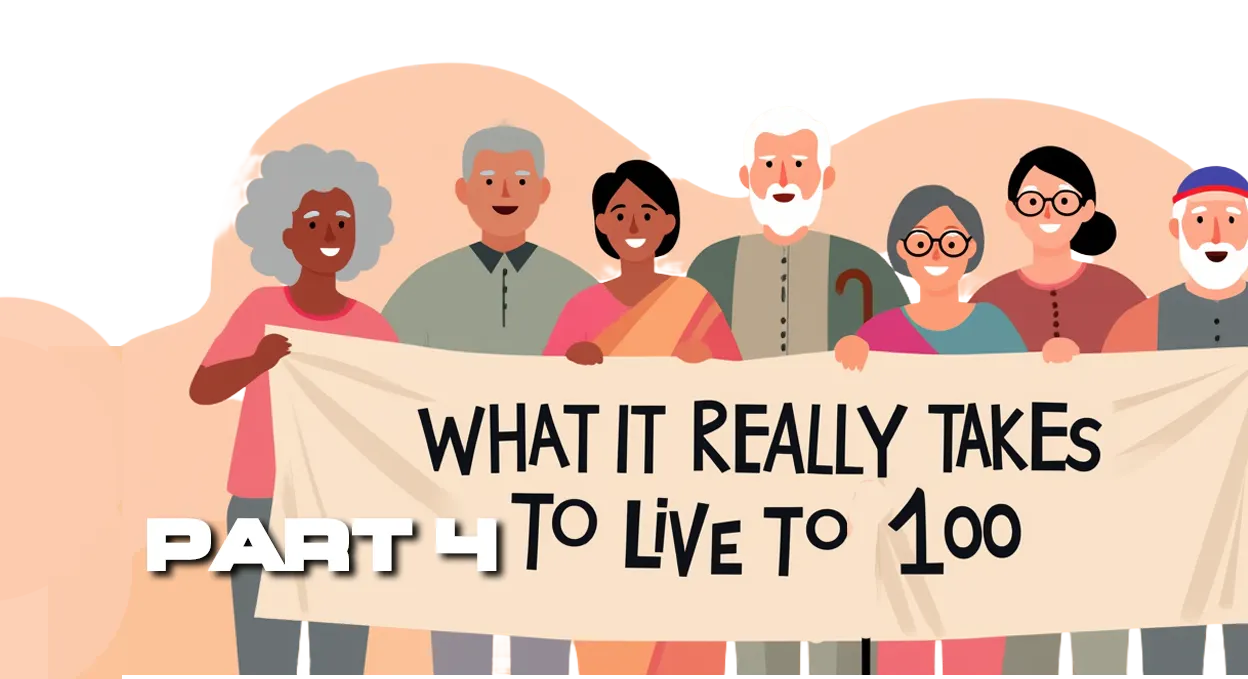
Hitting the magic 100 mark used to be a dream, but now with the advances there are in healthcare, it's far less of a longshot.
Smart Senior Daily has three parts of our "Live to 100" series done and in the books. For Part 4 – our final chapter – we asked neurologists and brain health specialists how they live their lives to hit that mark and how you might be able to do the same.
Let's start with this premise...
Most of us have watched someone we love slowly lose their sharpness, only to sit quietly and ask ourselves, "Self, are we next?"
The fear of dementia may be the deepest fear of aging. But according to Dr. Lynette Gogol, a triple board-certified neurologist and lifestyle medicine physician with more than 20 years of clinical experience, that fear is built on a myth.
"Dementia is not an inevitable part of aging," she says flatly. "Some changes in processing speed or word retrieval can occur normally — but significant cognitive decline is strongly influenced by modifiable lifestyle factors."
Here's what the evidence actually says both in her – and others' – opinions.
Tip 1: Move Your Body to Protect Your Mind
Physical activity is the single most powerful tool for brain protection — and you don't need to train like an athlete to benefit. Regular movement improves blood flow to the brain, strengthens the vascular system that feeds it, and stimulates the production of BDNF (brain-derived neurotrophic factor), a protein that supports the growth and survival of brain cells.
Patrick K. Porter, Ph.D., a cognitive health specialist, calls BDNF "Miracle-Gro for the brain" — and says that one of the most underappreciated threats to brain health is simply sitting too long. Breaking up prolonged inactivity with regular movement keeps that growth protein flowing.
✅ Do this
Aim for 30 minutes of moderate movement on most days. If that feels like too much, start with 10-minute walks after meals. And don't underestimate the value of simply getting up and moving every 30 minutes throughout the day.
Tip 2: Control What the Doctors Call "Vascular Risk Factors"
High blood pressure, diabetes, high cholesterol, and smoking don't just threaten your heart — they threaten your brain. The brain is the most blood-hungry organ in the body, and anything that damages blood vessels damages cognition.
Dr. Gogol puts it simply: "Protect the body that supports the brain."
✅ Do this
Know your numbers. If your blood pressure, blood sugar, or cholesterol is out of range, work with your doctor to get it managed. Treating these conditions is one of the highest-yield things you can do for long-term brain health.
Tip 3: Sleep Is When Your Brain Cleans House
During deep sleep, the brain activates a waste-clearance system that flushes out harmful proteins (but avoid scams like this), including the amyloid plaques associated with Alzheimer's disease. Chronic poor sleep doesn't just leave you groggy; it may allow metabolic debris to accumulate over years.
✅ Do this
Prioritize 7–8 hours of quality sleep. If you snore heavily, wake frequently, or feel unrefreshed in the morning, talk to your doctor about a sleep study. Untreated sleep apnea is a significant and underrecognized dementia risk factor.
 Smart Senior Daily Staff
Tip 4: Stay Socially Connected — Seriously
Chronic isolation is associated with accelerated cognitive decline. Social interaction isn't a luxury for older adults; it's a cognitive workout. Meaningful conversation requires attention, memory, emotional processing, and real-time problem-solving – all of which keep key brain networks active. Maybe think about taking a free college course, too!
✅ Do this
Make regular social engagement a non-negotiable part of your week. Phone calls count. So do classes, clubs, faith communities, and volunteer work. Don't leave anything on the table because the quality of connection matters more than the quantity.
Tip 5: Keep Learning Something Hard
Watching TV, casual scrolling have become well-worn passive activities and no longer build cognitive reserve the way active mental effort does. Learning something genuinely challenging forces your brain to build new connections, which creates a buffer against age-related decline.
✅ Do this
Pick up something that makes you a little uncomfortable, like a new language (again, the free college idea could take care of this), a musical instrument, maybe a complex card game (contract bridge for example). The difficulty is the point.
Tip 6: Eat to Feed Your Brain
Any food researcher worth a hoot will tell you that the Mediterranean and MIND dietary patterns win hands-down as the strongest evidence for cognitive protection. Both emphasize vegetables, fruits, whole grains, fish, olive oil, nuts, and legumes, while limiting red meat, bad-for-you processed foods, and added sugar.
✅ Do this
You don't need a perfect diet. You just need a better one. Add one more serving of vegetables per day. Swap processed snacks for nuts. Use olive oil instead of butter. Small, sustained changes add up.
Tip 7: Don't Overlook the Psychological Piece
Diet, exercise, and sleep hog the majority of the headlines, but Dr. Jo Holmberg, a cognitive neuroscientist and senior lecturer at the University of Central Lancashire, argues that stress regulation, social purpose, and a sustained sense of meaning are just as important, and far less discussed.
Holmberg says that the neuroscience is rock solid: chronic stress elevates cortisol, which over time is toxic to the hippocampus aka the brain's memory center. If you can create a clear sense of purpose in your daily life, you could show measurably greater cognitive resilience as you age.
✅ Do this
Anyone – especially Seniors – who thinks that stress is just a part of life's game, needs to rethink that. As Holmberg, Porter, and Gogol will tell you, serious stress is a brain health issue, not just a mood issue.
Just an honest look in the mirror could go a long way if you ask yourself honestly whether your days feel purposeful. Volunteering, mentoring, creative work, and community involvement all contribute to the psychological scaffolding that keeps the brain resilient.
 Smart Senior Daily Staff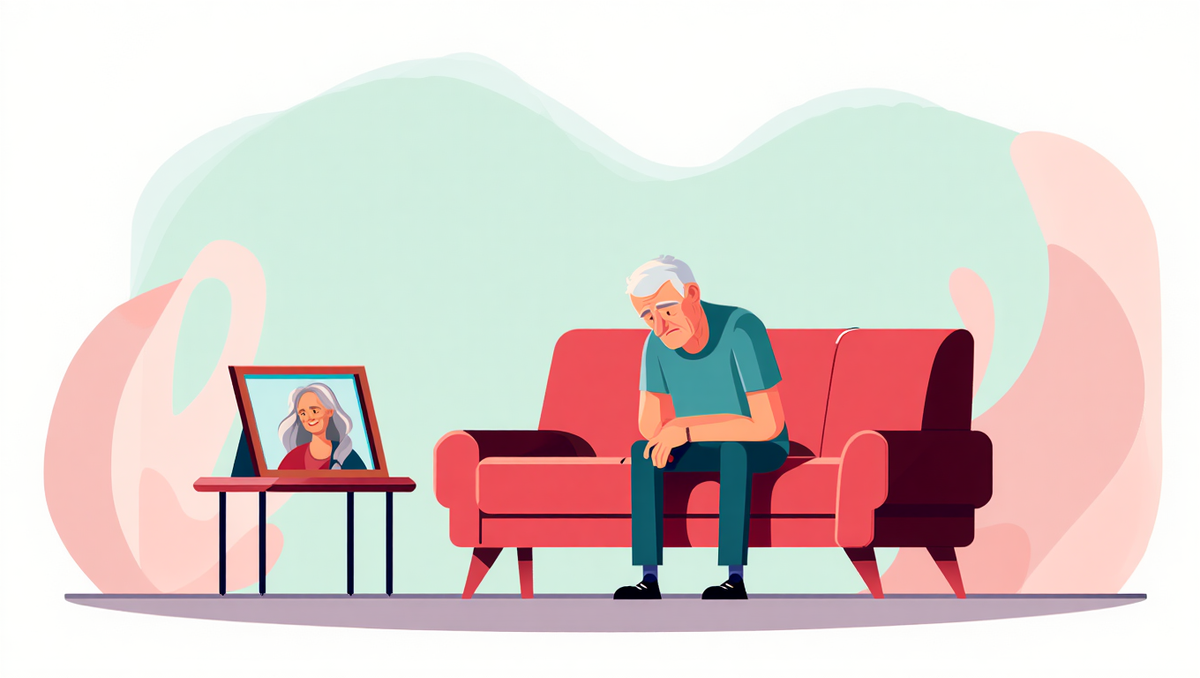
The Bottom Line
If you were sitting across the desk from Dr. Gogol, her message to patients is the same message the research delivers: it is never too late to start.
"Even simple, consistent habits can support cognitive resilience," she says.
The 2024 Lancet Commission on dementia prevention estimates that up to 45% of dementia cases are attributable to modifiable risk factors — meaning nearly half of all dementia could, in principle, be prevented or delayed.
Your brain has more fight in it than you think.
Dr. Lynette Gogol is a triple board-certified neurologist and lifestyle medicine physician and founder of Dr. Gogol Health and Wellness. Patrick K. Porter, Ph.D., is a cognitive health specialist. Dr. Jo Holmberg is a cognitive neuroscientist and senior lecturer in psychology at the University of Central Lancashire, London.