SCAM OF THE WEEK, JUNE 18, 2026
An SSD reader texted us a screenshot recently asking what our thoughts were on a social media post she read. The post talked glowing about a pillow with supporting narrative from two "well-known" doctors.
Short answer? Scam – but one that preys on seniors with Alzheimer's family histories. And that's a serious how-dare-you no-no.
The screenshot was a first-person essay, making the text message and social media rounds, written by someone identifying herself as Dr. Rebecca Lindholm, a "board-certified neuroradiologist at Columbia University with a NewYork-Presbyterian fellowship and 23 years of clinical practice reading brain MRIs."
The narrative leans heavily on a backstory of how both of her parents had died of Alzheimer's. Both had been faithful CPAP users. She had just read her own brain scan and found early hippocampal atrophy. A pillow had reversed it. Hallelujah!
Things like this (especially ones that reference doctors at places like Columbia) seem convincing on the surface—even to us. But, being the scam weasels that we are and don't like to see our readers get ripped of, we started pulling on the thread.
Dr. Rebecca Lindholm? Doesn't exist. She's a ghost—someone who doesn't appear anywhere in Columbia's faculty directories, published research databases, or hospital records—despite credentials specific enough to be instantly verifiable if real. That was the first flag. If only it were the last.
 Gary P Guthrie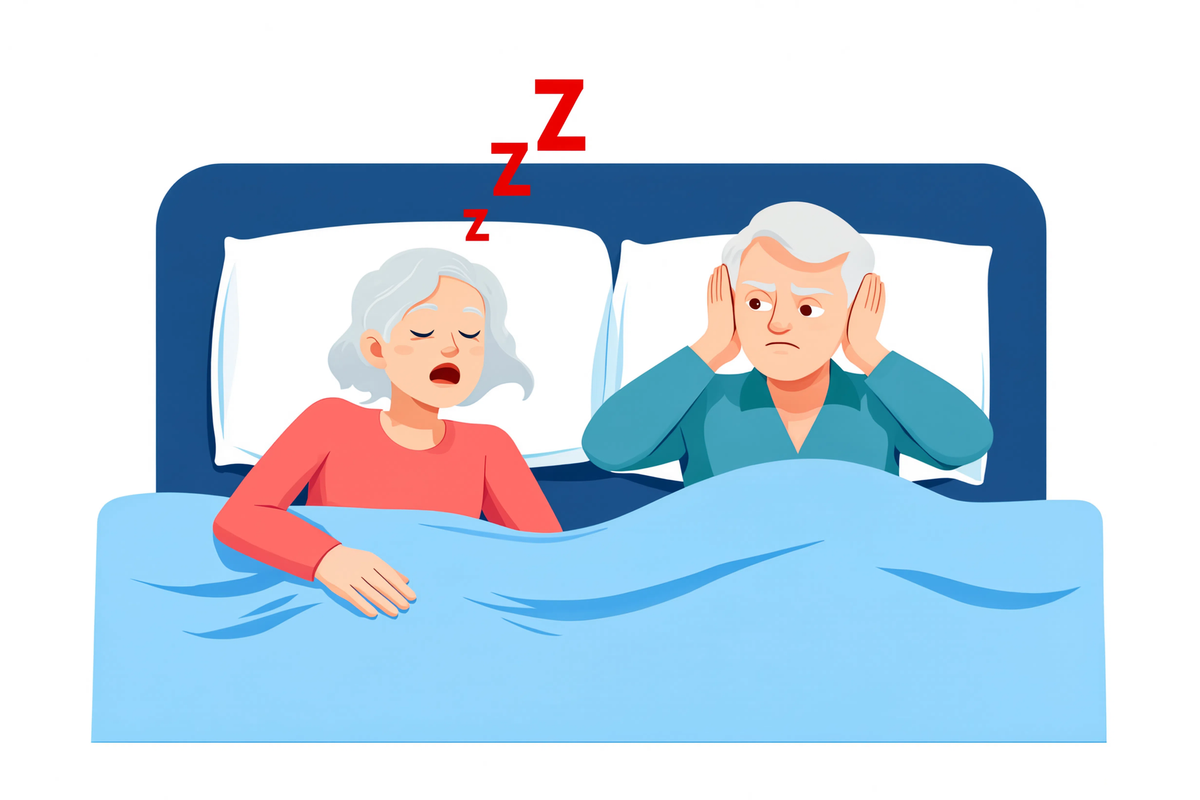
Where there's smoke...
The second was Dr. Marcus Heller, the UCLA-trained neurologist who appears in the Lindholm story as the expert who connects CPAP compliance to cognitive decline.
We searched his name and found him again — this time as the ICU neurologist counseling a family to remove a comatose police officer from life support. And again on Instagram, as a specialist in emergency response logistics explaining water deployment fluid dynamics.

Exact same name playing the role of three different experts on three different platforms and all coming from one bottom-feeding content factory.
How the scam works
The narratives are AI-generated and emotionally precise. A grieving neuroradiologist's daughter—both parents dead of Alzheimer's, both CPAP-compliant for decades—discovers her CPAP never gave her brain the deep sleep it needed to clean itself. A son unfolds and refolds a CPAP prescription for eleven mornings before his sister steers him to Dr. Heller instead.
Every version borrows the same piece of real science: a landmark 2013 study by Dr. Maiken Nedergaard at the University of Rochester*, published in Science, established that the brain has a nighttime cleaning system—the glymphatic network—that flushes toxic plaques during deep slow-wave sleep, the exact stage sleep apnea disrupts. That research is legitimate and important.
What the scam adds is a conclusion the science does not support: that a specially designed pillow can restore that deep-sleep stage, reverse hippocampal atrophy, and protect you from the disease that killed your parents. No peer-reviewed evidence supports that claim.
*The University of Rochester released this statement in response to Smart Senior Daily's findings:
"Claims that CPAP machines increase dementia risk, interrupt sleep in a way that harms brain health, or that a specific pillow can reduce dementia risk are not supported by Dr. Nedergaard’s research or other University of Rochester faculty.
The University of Rochester Medicine objects to the misuse of its research to advertise products on social media and elsewhere. We appreciate Smart Senior Daily for bringing this to our attention, and we intend to follow up with the company directly."
 Smart Senior Daily Staff
The products
The pillows that have been called into question change manufacturers, websites, and identities like a shell-and-pea game. After our first reporting on this concern, others started popping up. One minute, it’s one name at one site; the next minute, it’s another or gone altogether.
For example, one such pillow—sold through pillow.co.nz—was taken to task by regretful consumers who had lost $150 for a scam pillow. That was a year ago; today that store is “unavailable” on the web.
The Better Business Bureau’s Scam Tracker also shows a bevy of pillow-related scams (528 at last count)—with one company (Ornatera) going to the unspeakable lengths of asking a customer to return the pillow to China at a cost of $142.15.
The Doréve Cloudfaser Pro (sold on doreveluxury.com) is one of several pillows that have been called into question. The scam protection site, Gridinsoft, found the shop “suspicious” with “characteristics commonly associated with fraudulent online shops, including suspicious pricing and payment methods.” ScamAdvisor also discovered that this website is using an internal review system which allows the owner of the website to edit, prioritize, or remove reviews.
Additionally, researchers at MalwareTips found that the manufacturer was touting the pillow as being beneficial for the treatment of tinnitus in addition to other claims.
MP Ecommerce LLC, the company behind doreveluxury.com, is registered at 30 N Gould St., Sheridan, Wyoming—an address that serves as the registered office of Northwest Registered Agent Service Inc., a commercial registered agent company, according to Wyoming Secretary of State records obtained by Smart Senior Daily. No actual manufacturing or retail operation appears to be located at this address.
In fact, Georgia Lodewyk of The Sheridan Press writes that there are other businesses at 30 N Gould St. that "blur the lines" (take a look at the building and read all the other "stores" people have been conned by) and that the address "has reportedly been ... used for scams."
In the final analysis, the only real part about this pillow is that it is an actual pillow and that consumers “should treat it as a pillow, not a proven tinnitus [or other] treatment.”
MalwareTips also offers an excellent checklist of what to do if you’ve bought a pillow from companies such as these and have issues with it and want to return it (“not as simple as ‘try it risk-free and get every cent back no questions asked.’”).
What to do if you receive a pitch like these
If you received a similar pitch by text, block the number and report it to the FTC at www.reportfraud.ftc.gov. If you see this post on social media, please post a response with a link to this article so others aren't misled.
If it's a cervical support pillow that you are looking for, similar products are available through Amazon — where returns are free — or through a recommendation from your chiropractor or physical therapist.
Do not stop using your CPAP based on anything you read in these stories. The glymphatic research the scam borrows is real. The rest is fiction built around it.
Your CPAP is not hurting you. Drs. Heller and Lindholm do not exist.