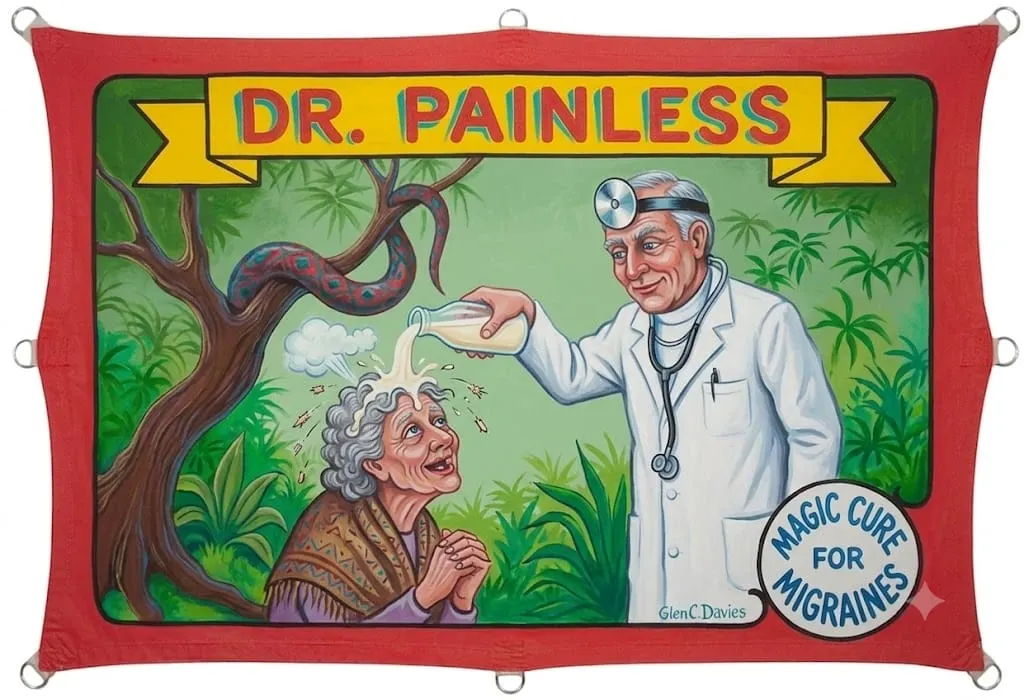
Over 50? Use email/text? No doubt you've gotten a message that swears up and down that some doctor "Big Pharma doesn't want you to know about" can "reverse" diabetes, make you pee like it was 1980, banish back pain, or restore "rock-hard" performance.
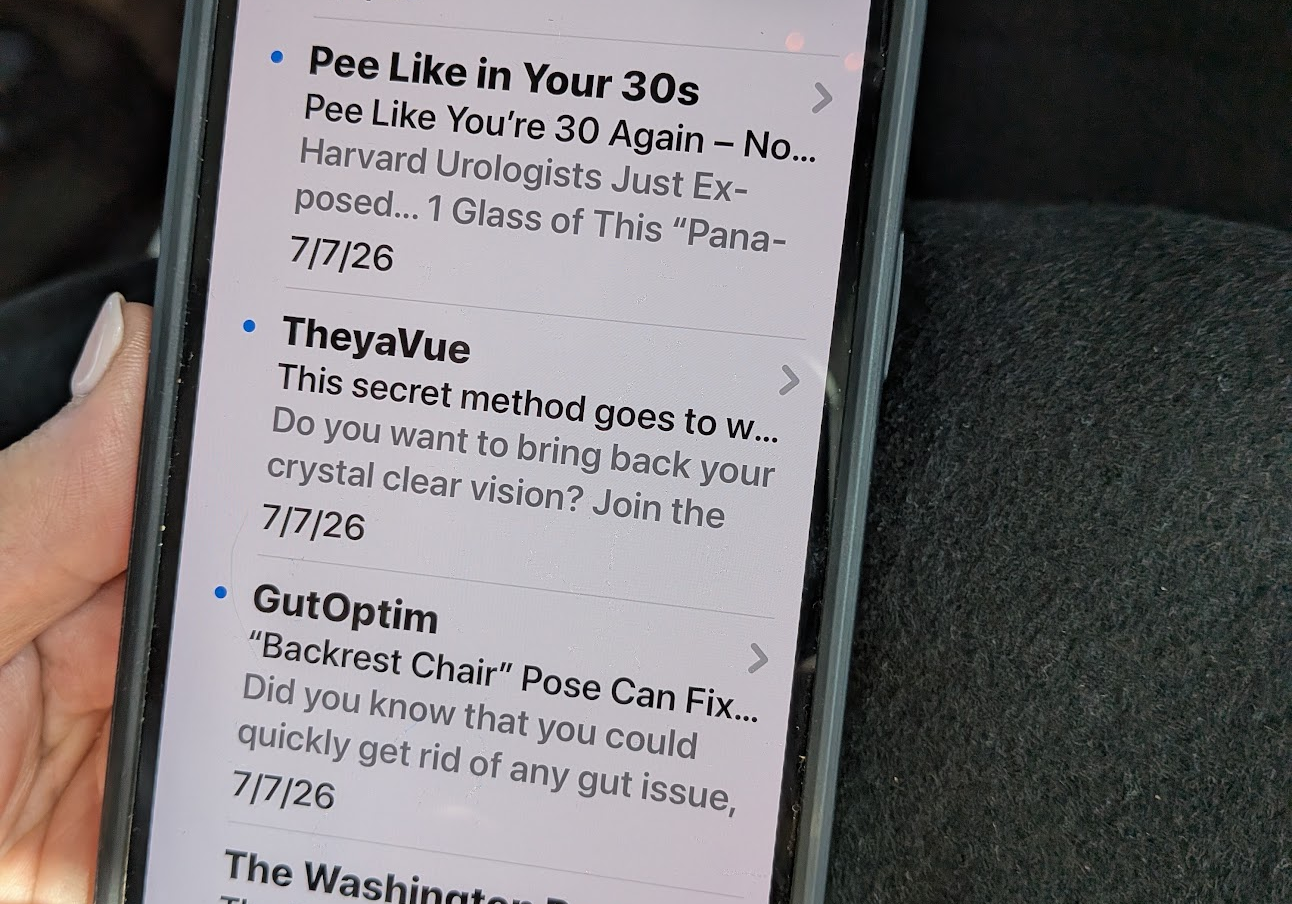
Scammers figure that seniors are like shooting at fish in a barrel because we've all got some sort of ailment. To prove our point, we recently got a firsthand peek into someone's (age 74) inbox that had been hit with more than a dozen of these in one 24-hour period. Coincidence? Not likely. It's a sign the recipient's information had been sold into a health-spam list that specifically profiles people by age and likely health concerns.
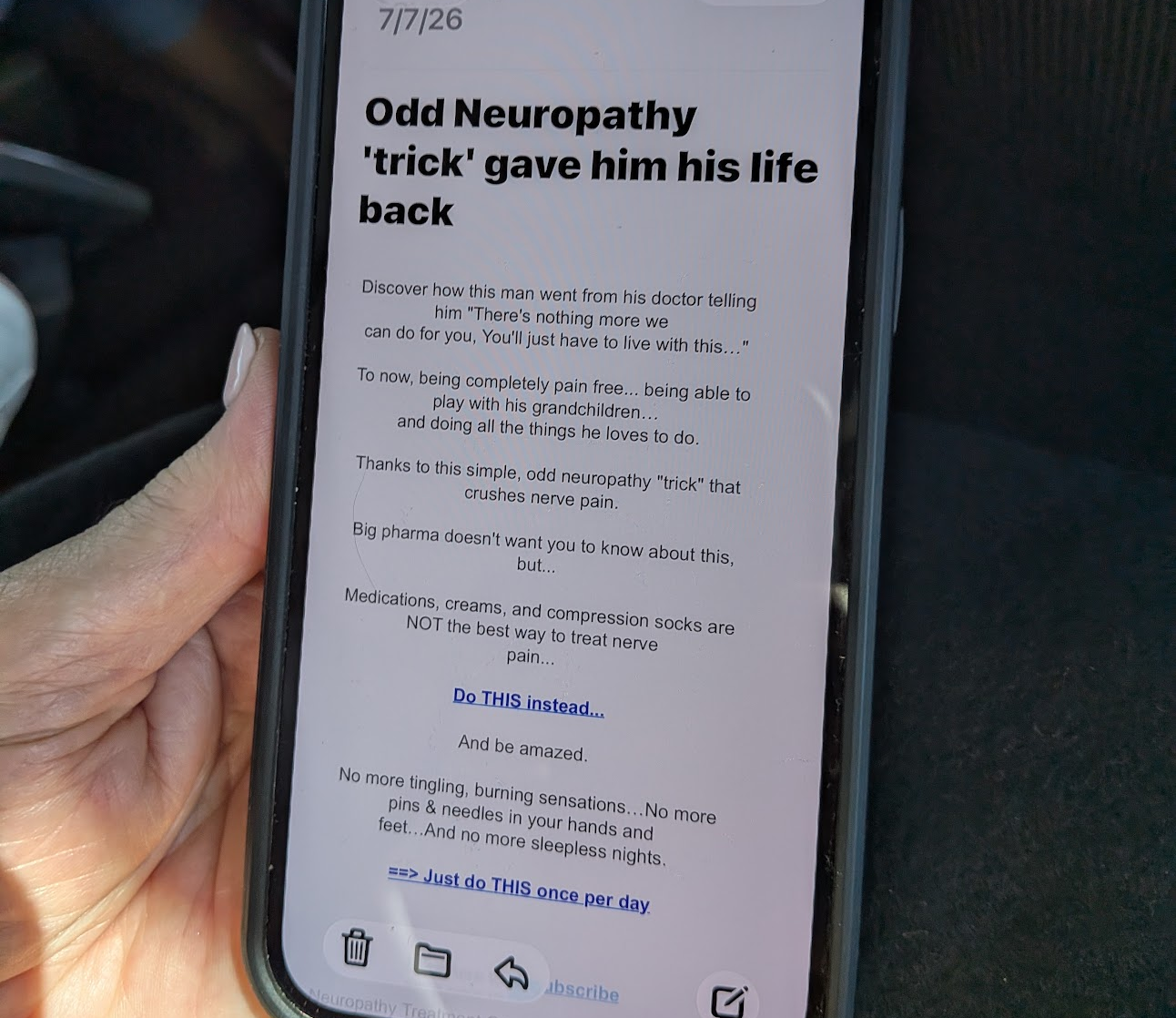
Here's a sample...
The good news: once you know the formula, these emails become almost comically easy to spot.
Here's what to look for.
1. Borrowed Authority
Just like the "fake doctor" scam we reported on recently, nearly every email leaned on a real, respected institution to sell a fake claim: "Kyoto University Backs This," "Harvard Urologists Just Exposed...," "Harvard: This Toothpaste Is Secretly Rotting Your Teeth."
But real universities and real doctors don't announce breakthroughs through spam email. If a claim is genuinely backed by research (like this), you'll find it published in an actual medical journal, not in an email or text.
The check: Search the university's name (e.g., "Harvard" AND "toothpaste") plus the claim. If nothing legitimate comes up, it's fabricated.
2. The "One Weird Trick"
All of these phony pitches rely on a gimmick. It may be a towel. May be a breathing pattern or glass of tap water. Like sideshows at a carnival, emails always reduce a complex medical condition to one absurdly simple fix that "doctors don't want you to try."
Real medicine is rarely this simple. Anyone who's had chronic pain, diabetes, vertigo, or nerve damage knows that these are complicated, individualized causes calling for treatments that can't be found in your fridge. Anything promising a universal one-step cure is a red flag by design.
 Gary P Guthrie
3. Fake Statistics With No Source
Claims like "92% of participants reverse type 2 diabetes" and "Wipe off more than 90% of the pain" appear with total confidence and zero citation. Again, no study, no journal—then, no go. If a number shows up with no source attached, treat it as invented.
4. Manufactured Urgency and Fear
Words like "shocking," "breaking," "the truth is finally out," and "trapped in a never-ending whirlwind" are there to short-circuit your skepticism. Genuine medical information doesn't waste time trying to scare you into reading further. It sticks to facts.
 Gary P Guthrie
5. Everything Funnels to a Video
Every single one of these emails ends the same way: a button or link pushing you to "watch this short presentation" or "click here." That's the real business model.
One click and you'll be whisked away into a fire drill of long-form video sales pitches designed to keep you watching past the point where you'd normally stop and think critically. Legitimate health information doesn't need to trap you in a video to explain itself.
6. Emotionally Manipulative Angles
Some of the ones we saw went beyond simple puffery, using language meant to trigger insecurity or shame—especially in emails related to sexual performance. That’s calculated escalation: misdirect the emotion, then sell the “solution.” This tactic deserves special mention because it’s often the most effective with people who are already anxious about a health issue.

Amazon Basic Allergy Relief
Similar to Claritin. 24-Hour Non-Drowsy Antihistamine for Sneezing, Runny Nose, Itchy Eyes, Hay Fever
One Thing to Never Do
In doing our research on these types of emails, we found one thing we didn't know about: Don't click "unsubscribe" on emails you never signed up for.
If it's a real company's newsletter, unsubscribing works fine. But if it's spam, the moment you click "unsubscribe," you just confirmed your email address is active and being read by a real person, and that will lead to an increase of the volume of junk you get, not a decrease. In the hands of a scammer, a confirmed address can be sold over and over and over again.