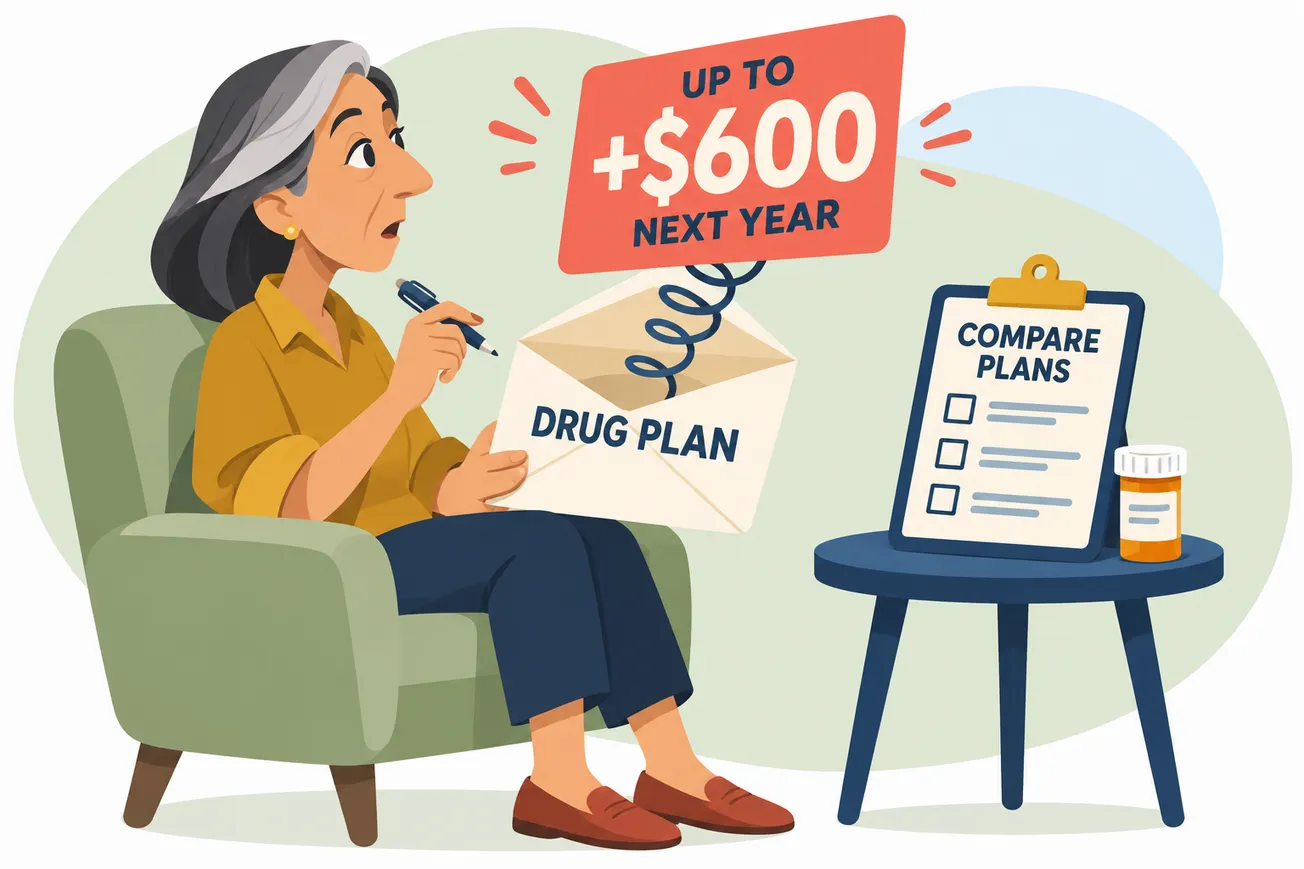
If you have Medicare prescription drug coverage, here's one more reason to pay attention to your mail: Your monthly premium could be going up by $50 or more next year.
According to an October 30 analysis by KFF, a nonprofit health policy research organization, 2.4 million Medicare beneficiaries could see their standalone prescription drug plan premiums increase by more than $50 a month in 2027 if they don't change plans.
And the problem extends much further. KFF estimates that 10.4 million enrollees without low-income subsidies — about 76% of that group — will face higher premiums if they stay put. Average monthly premiums could jump 50%, from $34 to $51.
Some AARP-branded UnitedHealthcare prescription drug plans are among those facing particularly large increases in many states.
The takeaway: Don't assume your current Medicare drug plan is still your best deal. You have until December 7 to compare plans and make changes for 2027.
Why Your Drug Plan May Cost More
Insurance companies can change their Medicare Part D premiums, deductibles, copayments, and lists of covered medications every year.
That means a plan that worked well for you in 2026 might become considerably more expensive in 2027.
KFF also reports that no standalone Part D plans will have a $0 monthly premium in 2027 for beneficiaries who don't qualify for low-income assistance.
And premiums are only part of the equation.
A plan with a lower monthly premium could actually cost more over the course of a year if your prescriptions have higher copayments or aren't covered.
Five Things to Do Before December 7
1. Find your Annual Notice of Change. Your insurer should have sent this document explaining what's changing in 2027. Look for increases in premiums, deductibles, and prescription costs.
2. Compare plans using Medicare's Plan Finder. Visit Medicare.gov/plan-compare. Enter your medications, dosages, and preferred pharmacy. The tool estimates your total yearly costs under available plans.
3. Check every medication. Make sure your prescriptions remain on the plan's covered-drug list, called a formulary. Also check whether new restrictions apply.
4. Compare pharmacies. Your neighborhood pharmacy might not offer the lowest price under every plan. A preferred pharmacy or mail-order option could save you money.
5. Get free, unbiased help. Your state's State Health Insurance Assistance Program (SHIP) offers free Medicare counseling. Find your local program at SHIPHelp.org or call 1-877-839-2675.
Why a Medicare Insurance Agent Could Save You Money
Comparing Medicare prescription drug plans isn't always easy. Premiums, deductibles, copayments and covered medications can vary considerably from one plan to another.
That's where a knowledgeable, licensed Medicare insurance agent or broker can help.
A good agent can:
- Compare your total costs. Rather than looking only at monthly premiums, an agent can help calculate what you'll likely spend on premiums, deductibles, and prescriptions over an entire year.
- Check your medications. An agent can help determine whether your prescriptions are covered, what they'll cost, and whether restrictions apply.
- Find pharmacy savings. The same medication may cost less at a different pharmacy under the same plan.
- Explain the fine print. Agents can help you understand coverage restrictions, enrollment deadlines, and changes from your current plan.
But there's an important catch.
Agents generally receive commissions from insurance companies, and not every agent represents every plan available in your area. Some may not receive commissions for certain standalone Part D plans.
Consider working with an independent agent who represents several insurers, and ask two questions:
“How many companies and plans do you represent?”
“Are there plans you don't offer that might cost me less?”
You generally shouldn't pay an agent an enrollment fee.
Want a second opinion? Your State Health Insurance Assistance Program (SHIP) offers free, unbiased Medicare counseling without insurance commissions. Visit SHIPHelp.org.
The takeaway: A good Medicare agent can make a complicated decision easier. Just remember to compare their recommendations against all the options at Medicare.gov/plan-compare before enrolling.
What If You Do Nothing?
If your current plan continues in 2027, you'll generally remain enrolled automatically.
But that doesn't mean your costs will stay the same.
And if your plan is being discontinued, you'll need to pay particular attention to notices explaining your coverage options and enrollment rights.
Medicare's annual open enrollment period ends December 7. Changes made during this period generally take effect January 1, 2027.
If You Don't Read Anything Else ...
A $50 monthly premium increase adds up to $600 a year. But the bigger mistake could be overlooking changes in what your plan pays for your prescriptions.
Spend 15 minutes comparing your current coverage with other available plans. You may discover a less expensive option—or confirm that the plan you already have still makes sense.
Either way, you'll be making an informed decision instead of getting an unpleasant surprise in January.