By Dr. Owen Campbell, PT, DPT, OCS. Dr. Campbell is a certified physical therapist and owner of Simplify Motion Physical Therapy in Phoenix, Arizona.
Everyone knows that as you age, moving around becomes more difficult. Even the most in-shape senior will lose a step or two, and mobility changes are even more drastic for seniors who do not exercise regularly.
A senior's mobility can deteriorate rapidly, often after a bad fall. A senior who breaks a hip can't move for weeks or months and then never moves well again.
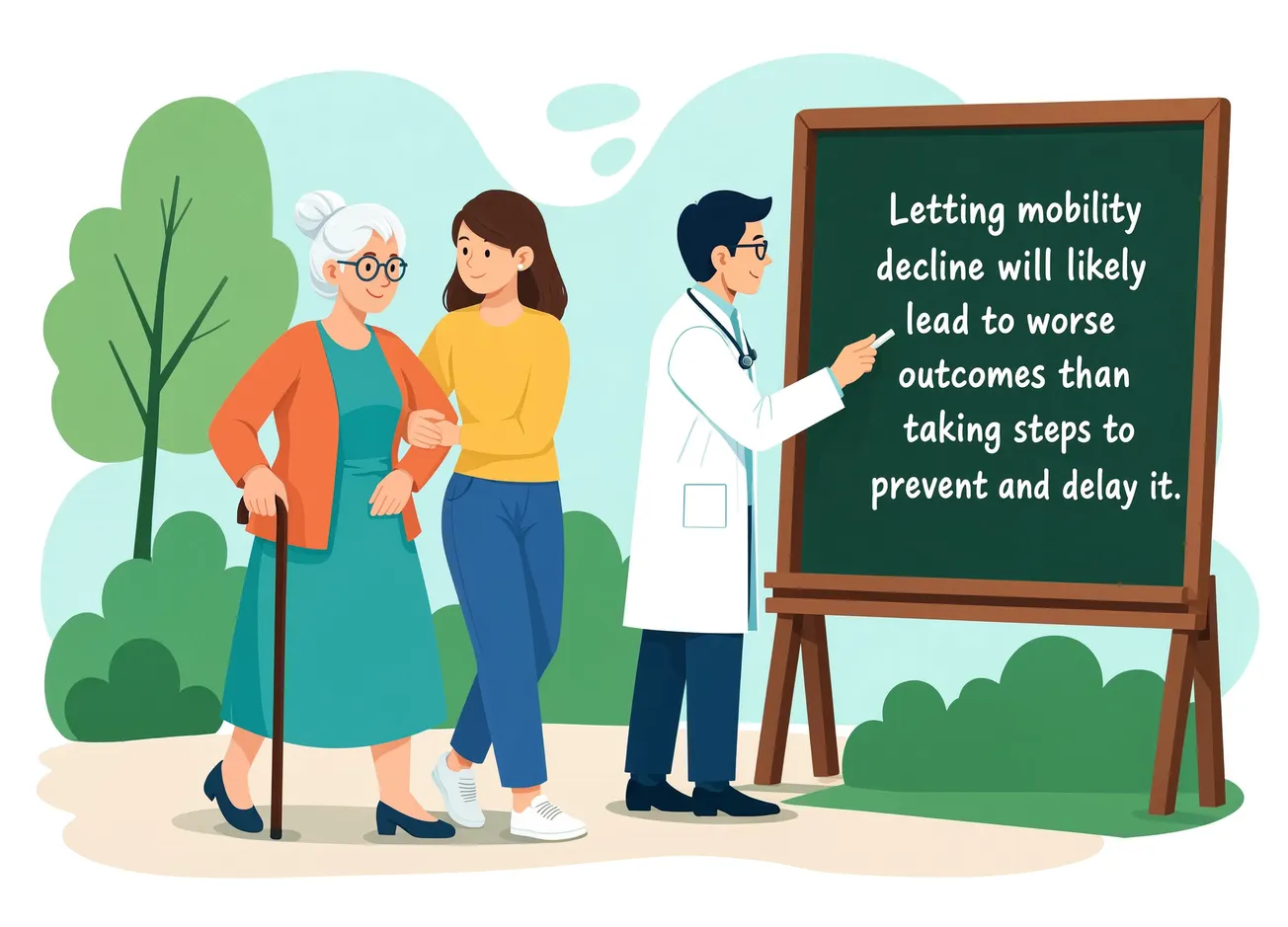
It can be hard to help a senior get moving after a fall or as they get older. However, caregivers must understand that letting mobility decline will likely lead to worse outcomes than taking steps to prevent and delay it.
Here are a few misunderstandings family members have about their loved ones' mobility decline.
Any Work Will Lead to Injury
Drastic mobility decline usually occurs after a traumatic incident such as a fall. However, caregivers tend to become overly cautious during this period and decide that no movement at all is better than moving and potentially getting hurt.
Caregivers must avoid the mindset that any movement will cause injury. This isn't true and is a major contributor to seniors losing mobility. Don't keep your loved one in a chair because you are afraid of hurting them.
This doesn't mean they have to do strenuous exercises or even walk around. All they have to do is move in some way. Put a walker in front of them and ask them to stand up and sit down in their chair. Doing this 50 to 100 times a day can do wonders for their mobility.
 Carolyn Ames
One-Size-Fits-All Approach
On the other end of the spectrum, you have caregivers who overgeneralize their approach to mobility. You Google "mobility exercises for seniors" and apply workouts meant for the general population to someone who may need a specific routine to improve mobility.
Caregivers must base their mobility exercises on the family member's status. I would not recommend starting a walking program for a senior with balance issues. I recommend hiring a physical therapist to design a mobility plan. If you cannot afford a physical therapist, I would at least recommend having a personal trainer craft a plan for you.
If your loved one can't stand up, start slow and do arm weights in a chair. Encourage them to do their routine exercises, and you can do more as they grow stronger.
Framing Mobility Work As a Chore
No one likes chores when they feel like an obligation, yet many caregivers frame mobility exercises as chores that must get done. Mobility exercises don't have to fit into a strict schedule or routine.
Many of these exercises are simple enough to integrate into your loved one's day-to-day activities. For example, if your loved one wants to get a snack, ask them to stand up and sit down five times before doing so. They are already moving, so just add a little extra to what they were already doing.
Show them how these exercises can be integrated into their daily lives and how they benefit them. When you do that, people are more willing to put in the work.
 prathap p
Not Acknowledging Fear
Far too often, caregivers don't acknowledge the genuine fear that follows a traumatic event like a fall. Such an experience can leave many seniors afraid to fall again. They may believe the best way to avoid falling is to avoid walking. They don't trust their own feet, so they sit in a chair all day.
Empathize with them and acknowledge that what happened was traumatic. Fear is okay, but stasis is not. Tell them it is okay to feel weaker, but they need to recover.
Let them know that if they decide to live in their chair, they won't live as long. Let them know that they can start slow and get stronger without walking before they need to walk. Let them know that walking will always carry a fall risk, but if they don't walk, they will lose use of their legs. Acknowledge their fear, but don't let them wallow in it.
They Don't Need Physical Therapy
Doctors often say physical therapy isn't needed when seniors fall. Seniors who are self-motivated and willing to move during recovery probably don't need a physical therapist. However, if a senior is too afraid to walk, they should meet with a physical therapist.
A PT can craft a treatment plan that acknowledges their current mobility and outlines how to improve it. A PT can also help patients stay accountable in ways many family members can't. A PT can serve as a third party who crafts a mobility plan and ensures the patient sticks with it.
Mobility can decline quickly, especially after a senior falls. Caregivers need to take mobility training seriously while avoiding pitfalls that keep seniors from sticking with it. Don't let your loved one stay immobile.
Acknowledge their fear, frame their exercise routine positively, and hire an expert to craft a proper mobility plan. Do these things, and you will avoid the downsides of mobility decline that hurt so many seniors.