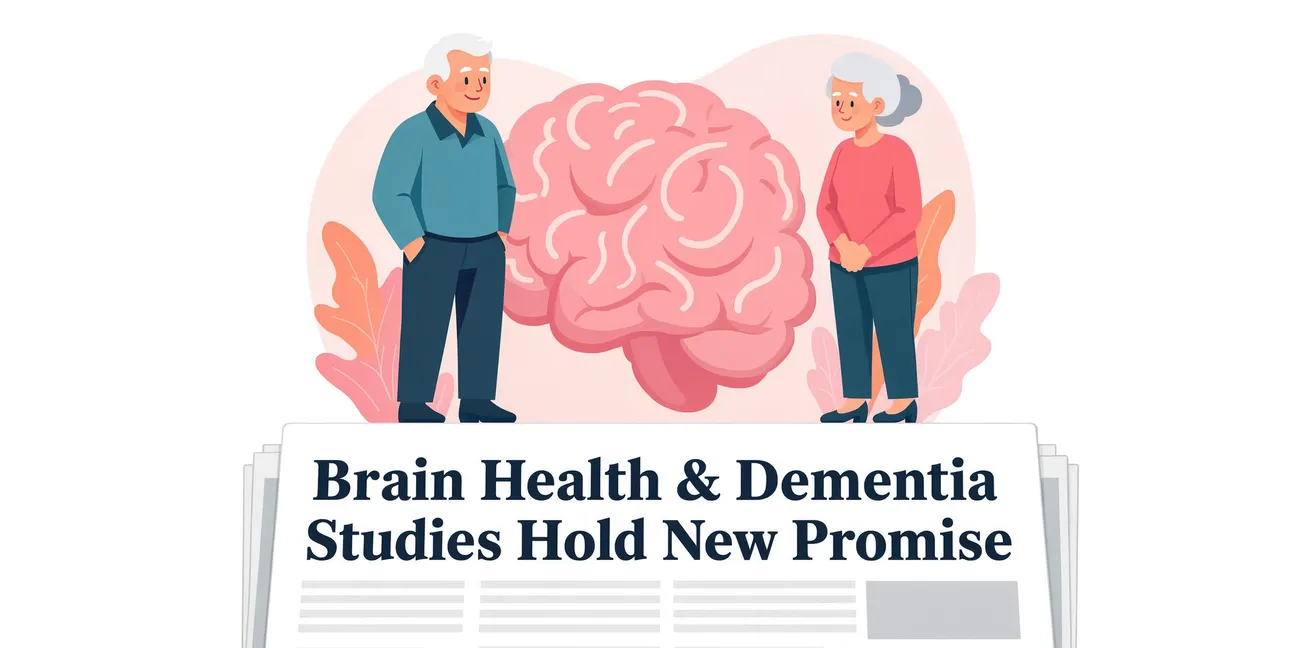
If you have a heart condition, you probably assume your cardiologist’s job is your heart, period. Blood pressure, cholesterol, EKG here and there, maybe a stent, med adjustment. That perspective is too limited, new national guidance says, and it could be ignoring real threats.
A formal scientific statement published this week in the American College of Cardiology’s flagship journal, JACC, argues that heart disease, problems with memory and thinking, and frailty (the medical term for a body that’s lost resilience: weaker grip, slower gait, and less bounce-back from illness) are not three separate issues that happen to show up in the same patient.
They share many of the same underlying mechanisms: chronic inflammation, stiffening blood vessels, and the slow loss of muscle that accompanies aging.
We May Be Getting Just Part of the Picture
The statement says that if you treat one without asking about the others, you are missing part of the picture.
The numbers tell you why this matters. The statement said that "in a typical cardiology clinic, about one-third of patients already have some degree of cognitive impairment." About half of older independently living adults and almost two-thirds of older patients undergoing a procedure such as a stent placement are frail. They are not isolated edge cases. They are an important proportion of the people who are currently sitting in cardiology waiting rooms.
This statement reframes cardiovascular care for older adults beyond a traditional disease-centered model to a more aging-informed, function-centered approach, said Karen P. Alexander, MD, FACC, chair of the scientific statement's writing committee and professor of medicine, Duke University School of Medicine
For many older adults, the most important outcomes are not prevention of cardiovascular events, but maintaining cognitive health, physical function, and independence."
How This Shakes Out for You & Your Doctor: 6 Questions to Ask
But what does that mean for you, sitting across from your own cardiologist? That means taking a short list of questions to your next appointment that go beyond your numbers on a lab report is worth it.
1️⃣ “Are you checking me for anything besides my heart?” That statement specifically recommends that cardiology practices build in screening for cognitive impairment and frailty, don’t leave it to your primary care doc by default. Ask if your clinic does any kind of memory or physical-function check, especially if you’re over 75, have had a recent hospitalization or are managing heart failure.
2️⃣ "How might my heart treatment affect my memory or my mobility?" Some heart medications and procedures come with trade-offs for older, more fragile patients. A blood thinner that is clearly appropriate for a 60-year-old might be more risky for an 85-year-old who already has balance problems. Ask your doctor to explain how a proposed treatment fits your specific situation, not just your diagnosis.
3️⃣ "Am I taking more medications than I should?" This one is pretty important. The new guidance explicitly recognizes polypharmacy, taking many different prescription drugs, as a factor in cognitive decline and frailty. Ask for a regular review of everything you’re taking, including over-the-counter supplements, to see what can be simplified or dropped.
 Smart Senior Daily Staff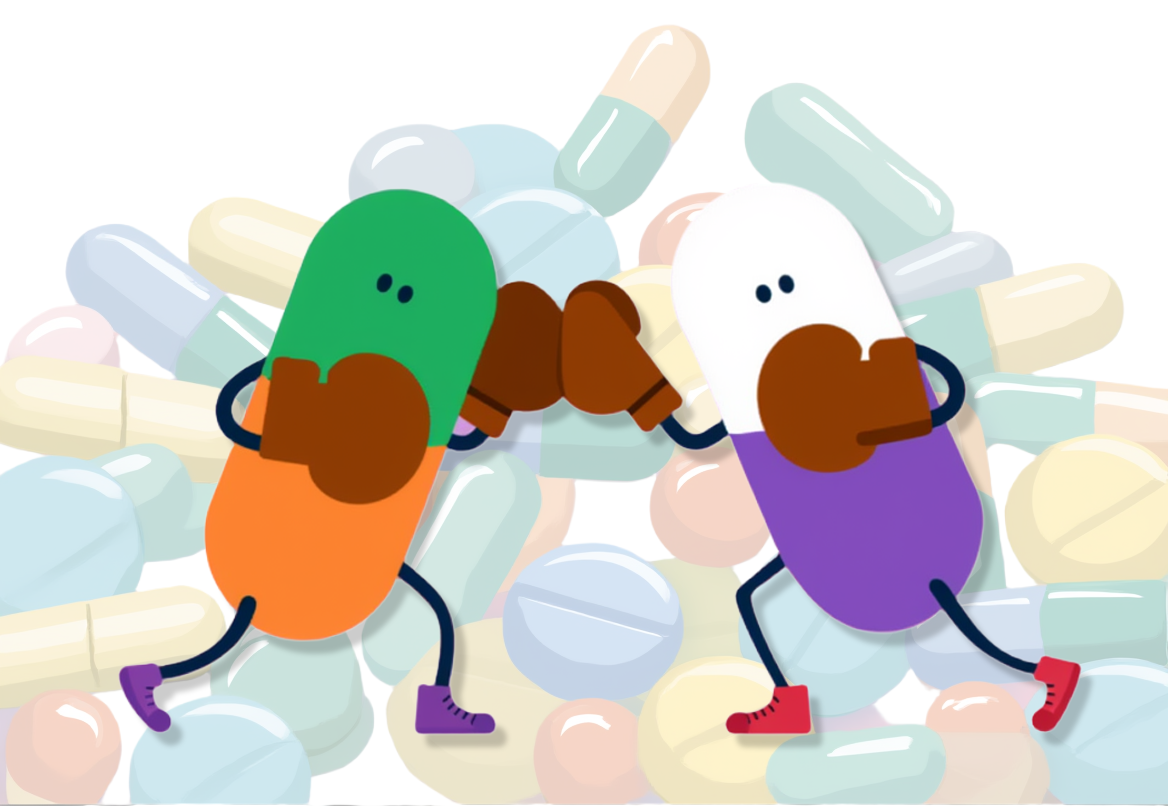
4️⃣ "Do I need to do structured exercise? What sort?" The statement acknowledges multidomain exercise (programs that develop strength, balance, and cardiovascular fitness simultaneously, not just walking on a treadmill) as one of the more promising approaches to building resilience to all three conditions simultaneously. Ask about cardiac rehab or a supervised exercise program to see if it’s right for you.
5️⃣ "What would a referral even look like if something’s flagged?" If screening raises a concern, find out what will happen next. Does your cardiologist work directly with a neurologist or geriatrician, or do you have to go out and get a referral? Knowing the answer before you need it saves a lot of frustration down the road.
6️⃣ "Are we measuring what matters to me and not just my numbers?" The statement’s authors specifically call for measuring outcomes that matter to patients: remaining independent, remaining mobile, remaining mentally sharp. That's a fair thing to ask your own doctor to put on a priority list with your cholesterol panel.
The Bottom Line
Not to say your cardiologist has been doing it all wrong. The traditional approach to cardiology has been to treat the heart as a system in itself. What’s changing is the understanding that in older patients the heart doesn’t work in isolation from the brain or the rest of the body. A straightforward way to ensure that your care truly does reflect that is to bring a few pointed questions to your next appointment.
This article is for general informational purposes only and is not intended as medical advice. Talk to your own doctor about the screening and treatment approach that is right for you.
Disclaimer: The content published on Smart Senior Daily is intended for informational and educational purposes only and does not constitute medical advice. Nothing on this site should be interpreted as a recommendation for a specific treatment, medication, or course of action, nor is it intended to diagnose, treat, cure, or prevent any disease or health condition. Always consult a qualified healthcare provider before making changes to your diet, exercise routine, medications, or other aspects of your health care. Never disregard professional medical advice or delay seeking it because of something you have read on this site. Smart Senior Daily makes every effort to present accurate, up-to-date health information, but we cannot guarantee the completeness or timeliness of any content. Health information changes frequently, and what is current today may be revised as new research emerges. Individual health needs vary widely. Information that applies generally may not be appropriate for your personal situation. Smart Senior Daily is not affiliated with any medical institution, health system, or pharmaceutical company.