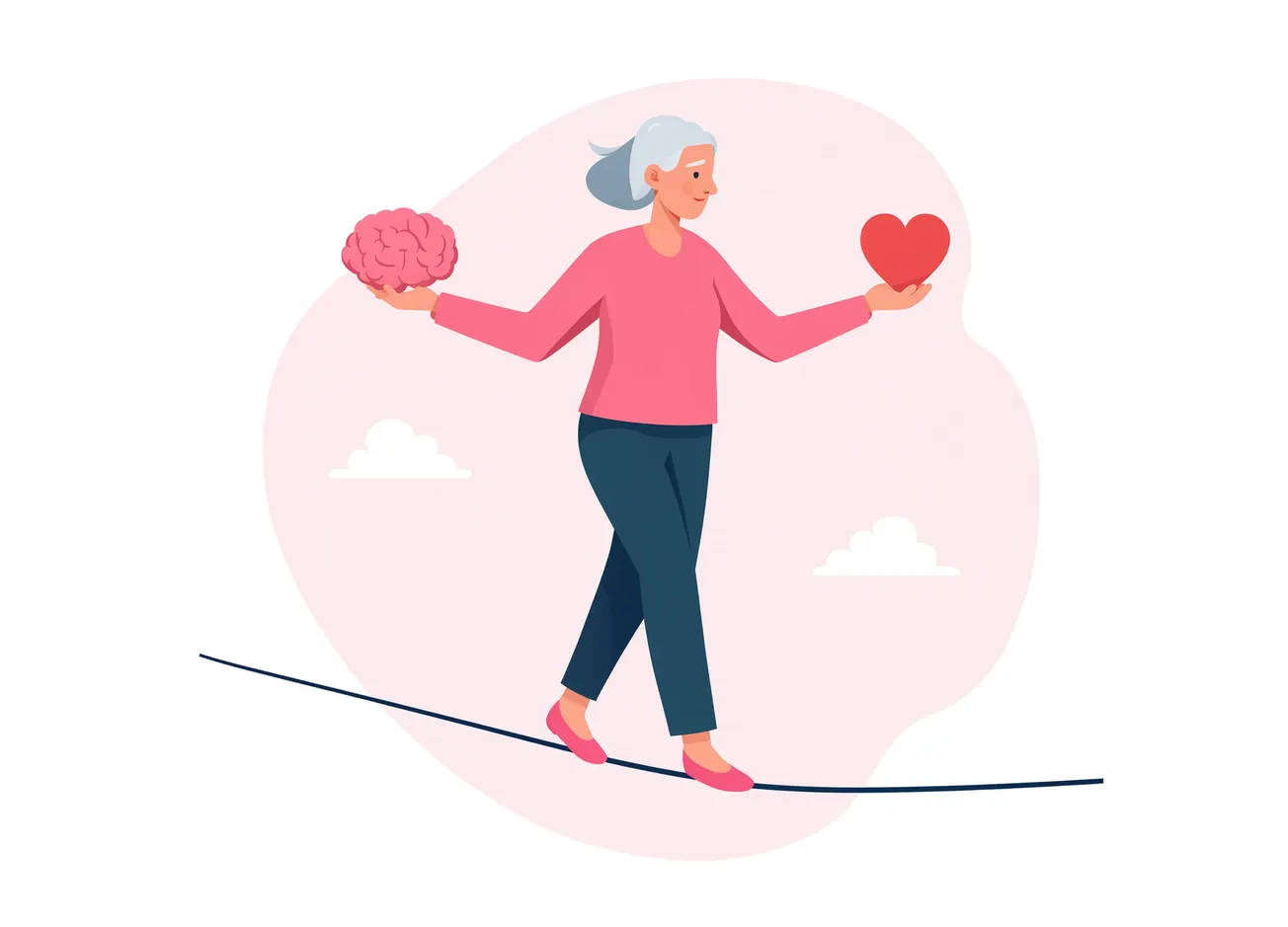
This week's research brought three findings worth your attention.
- One is about your waistline...
- One is about your sleep...
- And one involves a decades-old drug that may help people with a genetic risk for Alzheimer's.
Here's what scientists found and what it does and doesn't mean for you.
1️⃣ Extra weight may speed up memory decline
Researchers at the University of Georgia followed more than 8,200 adults over 50 for 24 years. People with a higher body mass index (BMI) saw faster declines in memory, overall thinking ability, and executive function, the skills you use to plan, focus, and stay organized. Each one-point rise in BMI tracked with a faster rate of decline, and the effect was strongest in adults over 65.
There is good news in the findings. Lead author Suhang Song says managing weight could noticeably slow cognitive decline within about two years. Scientists suspect inflammation, poorer circulation, and insulin resistance may explain the link.
Keep in mind: This was an observational study, so it shows a connection, not proof that extra weight causes decline. BMI is also a rough yardstick that doesn't account for muscle or where fat is carried.
Why it matters: Weight is one of the few dementia risk factors you can actually work on. "There are no cures for dementia," Song noted, which is why changeable risks get so much attention. The study appeared in the Journal of Neurology.
2️⃣ "Lonely" brain waves during deep sleep may weaken memory
Ever walked out of the grocery store and drawn a blank on where you parked? A UC Berkeley study published in Nature Neuroscience offers a clue about why that gets harder with age.
During deep sleep, slow brain waves normally travel together in coordinated groups across the brain, helping lock in the day's memories. The researchers compared healthy adults in their early 20s with people in their mid-60s to mid-70s.
In the older group, the waves traveled shorter distances and fired more on their own. The team calls these "lonely waves."
Brain scans showed that older adults with more tau, a protein tied to Alzheimer's, in the front of the brain had more of these lonely waves. Those same people also remembered fewer word pairs the morning after learning them. A separate group studied at Washington University in St. Louis showed a similar pattern using spinal fluid tests.
None of the participants had Alzheimer's, and their memory was normal for their age. "It's not just about age," said lead researcher Omer Sharon.
Keep in mind: The study links tau, sleep waves and memory, but it doesn't prove one causes the other.
Why it matters: Some forgetting we write off as normal aging may reflect early, silent brain changes. It's another reason to take deep, quality sleep seriously.
3️⃣ An old transplant drug boosted brain blood flow in people at genetic risk
Rapamycin* has been used for years to prevent organ transplant rejection, and it's also studied for its possible anti-aging effects. University of Missouri researcher Ai-Ling Lin tested it in healthy adults ages 45 to 65. *Note: Sirolimus and rapamycin are the exact same medication.
The focus was APOE4, a gene variant that raises Alzheimer's risk. Carriers can show reduced blood flow in parts of the brain years before any memory problems. After four weeks on a low daily dose, APOE4 carriers saw improved brain blood flow. People without the variant did not.
Women carriers saw the biggest gains. That stands out because women make up nearly two-thirds of people living with Alzheimer's.
Keep in mind: This was a short study that measured blood flow, not memory or whether Alzheimer's was prevented. Rapamycin is a prescription drug that suppresses the immune system. It is not something to try on your own.
Why it matters: It points toward a future where treatment could be tailored to your genes and started well before symptoms appear.
Also this week
- Peanuts and memory: Older adults who ate about two servings of unsalted, skin-roasted peanuts daily for 16 weeks showed better insulin response in brain regions that support memory.
- A repurposed drug in mice: King's College London reports that KCL-286, first developed for spinal cord injuries, repaired DNA damage and reduced brain inflammation in mice. It has already passed early human safety testing.
- The liver connection: A USC team found an experimental drug cut an Alzheimer's-linked protein in the blood of older rats by about half.
The bottom line
Two of this week's three main findings point to things within your reach: a healthy weight and good sleep. The third is a reminder that research is moving toward earlier, more personal prevention. As always, talk with your doctor before making changes based on new studies.
Sources: University of Georgia, UC Berkeley, University of Missouri, King's College London, and USC, via ScienceDaily.