The Takeaway
- Allergy season in the U.S. is now weeks longer than it was in the 1970s.
- Some cities have seen pollen seasons stretch by two months or more.
- Many common allergy medications can cause drowsiness or confusion in older adults.
If it feels like allergy season starts earlier every year — you’re not imagining it.
Researchers say pollen seasons across much of the United States are getting longer, and in some places much longer. Warmer winters and earlier springs give trees and grasses more time to release pollen.
According to research from Climate Central, pollen seasons across North America are now about 20 days longer on average than they were in 1970. In some cities, the increase is far greater.
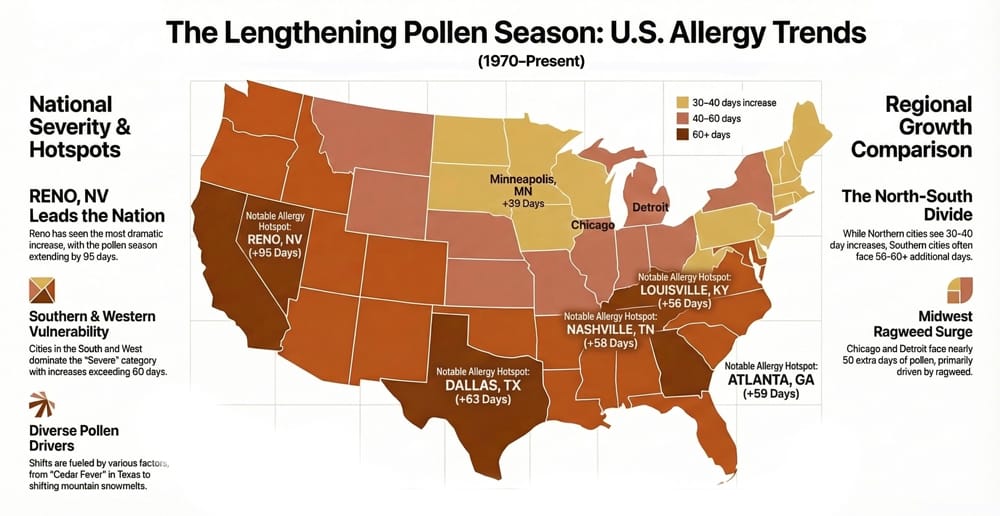
The pattern shows up clearly when you map it.
Cities in the West and South have seen the biggest increases, with some experiencing pollen seasons two to three months longer than they were decades ago.
But the Ohio Valley — including Louisville, Nashville, and Indianapolis — is also a strong allergy corridor because of its dense tree cover and humid climate.
Here's how much pollen seasons have grown since 1970:
Why seniors notice it more
Longer pollen seasons mean more weeks of sneezing, itchy eyes, and congestion.
For older adults, there’s another wrinkle: some allergy medications can create new problems.
Doctors often warn seniors about older antihistamines such as diphenhydramine (Benadryl) and chlorpheniramine because they can cause:
- dizziness
- confusion
- dry mouth
- increased fall risk
Newer antihistamines are usually considered safer, but it’s still wise to check with a doctor or pharmacist before starting any medication.
 Smart Senior Daily Staff
What helps
Many seniors say a few simple habits can reduce symptoms during peak pollen days:
- Keep windows closed during heavy pollen days
- Shower after spending time outdoors
- Run a HEPA air purifier indoors
- Check daily pollen forecasts (SSD's suggestion for a tracker)
Allergy season isn’t likely to shrink anytime soon. But knowing when pollen peaks — and how to manage symptoms safely — can make the season a little easier to live with.
Disclaimer: This article is for informational purposes only and should not be considered medical advice. Always consult a qualified healthcare professional before starting or changing medications or treatments.