You've seen them before. A webpage that looks like a news article — complete with a city dateline, an "updated today" timestamp, and logos from Forbes, ABC, and NBC splashed across the top. It reads like a journalist stumbled onto something remarkable. But something nags at you.
Recently, a good friend asked my opinion about a site claiming to offer seniors deals on high-priced hearing aids. He figured my urgh-anomic filter might save him some money.
He was right.
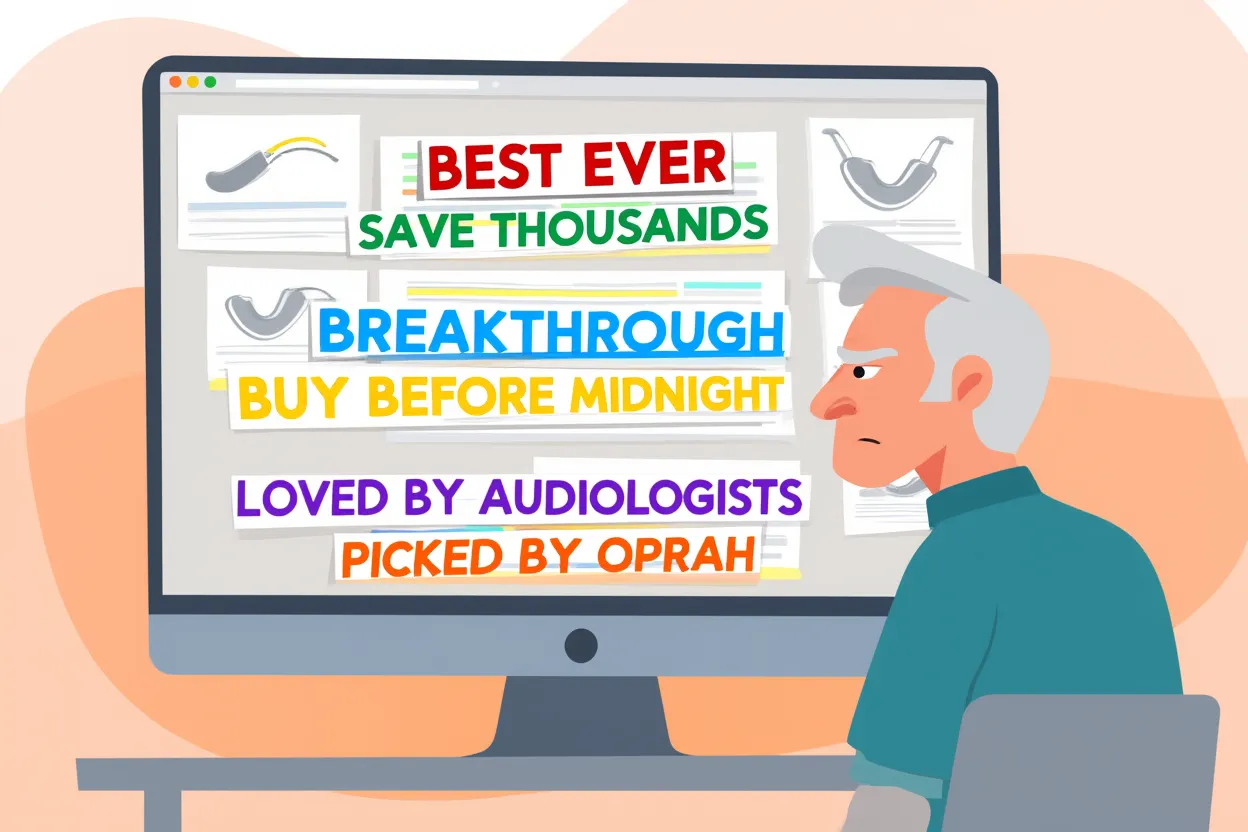
Pages such as this use words like "miracle," "shocking experts," and "unprecedented clarity." I pasted the promises one such site was making into three major AI tools — ChatGPT, Google Gemini, and Claude — and asked each one: Is this legitimate?
All three came back with essentially the same answer – the answer my friend wasn't looking for.
 Smart Senior Daily Staff
Product? Real. Website? Something Else.
To be clear, this does not mean the specific site we reviewed is operating illegally — but it follows a pattern widely used in aggressive marketing funnels targeting seniors.
The hearing aid we found being promoted is a genuine, medical-grade device — not a $39 amplifier in a beat-up overseas envelope. The technology they're crowing about is legitimate, too – sold through audiologists nationwide. And the company that this marketing site is funneling potential customers to is also trustworthy. So, given that, we can check the "legitimacy" box in good conscience.
But websites like these are what's called a lead-generation funnel. The product here is hearing aids, but it's not the only Senior-oriented product in this come-on (see the full list below).
Their entire purpose isn't to sell you a product. It's to get you to enter your phone number and email and hand yourself over to a sales team. Expect aggressive follow-up calls.
None of that is technically illegal. But none of it is great for consumers – and companies that focus on the balance between trust and gaining a sale will win in the long run.
🔽 FAQs: Senior products fueled by marketing funnel
Based on patterns well-documented by the FTC, AARP, and consumer advocates, here are the biggest categories:
Medical devices & health
- Diabetes supply programs ("free meters," then aggressive upselling of supplies)
- Mobility scooters and stair lifts
- Walk-in tubs and bathroom safety equipment
- CPAP machines
- Medical alert systems (Life Alert-style devices)
- CBD/supplement products marketed for pain, memory, or joint health
Financial & insurance
- Medicare Advantage and supplement plans (massive lead-gen industry)
- Final expense/burial life insurance
- Reverse mortgages
- Annuities
- Debt relief programs
Home services
- Solar panels (especially "government program" framing)
- Home security systems
- Roof repair and gutter protection
- HVAC systems
Technology
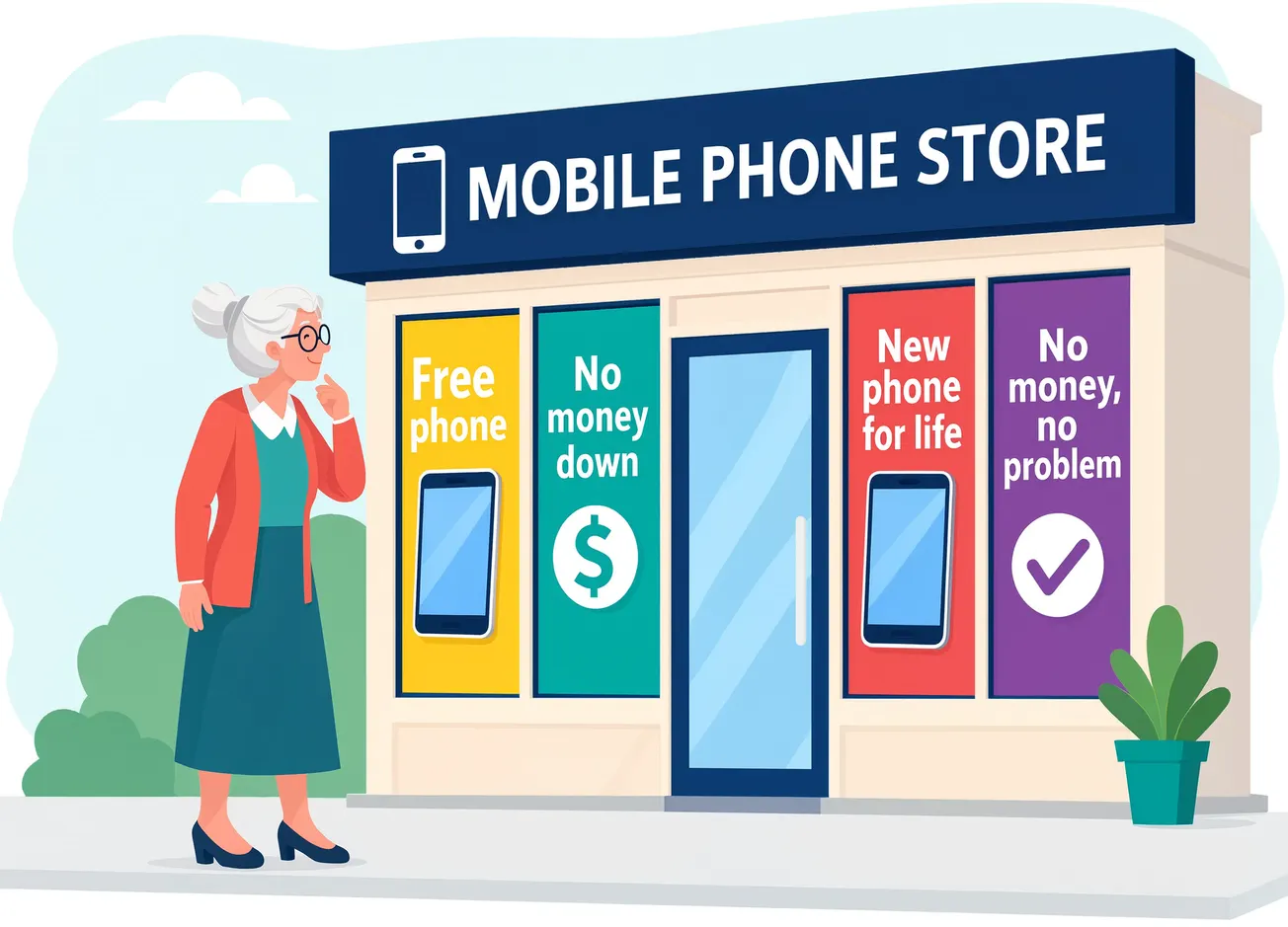
- Cell phones for seniors
- Computer tech support (often shades into outright scam territory)
What the AI Tools Flagged Immediately
A page designed to resemble editorial content
The page in question is built to look like journalism — expert quotes, a freshly "updated" timestamp, the AI models noted. Buried at the top, though, a tiny word, "Ad." Everything around it is designed to make you forget it's there.
The missing price tag
The AI models found that hearing aids like the ones being promoted typically cost $3,000–$6,000 per pair. The website mentions none of this. Sticker shock kills leads.
May create the impression of independence
The "experts" quoted appear to be real people verified by our research — but, in this instance, they appear to be affiliated with the very company the site is funneling you toward.
That probably doesn't qualify as independent expertise — but more marketing presented alongside expert credentials. Meanwhile, media logos imply editorial endorsement that doesn't exist, and claims of being recommended by "thousands of audiologists" cite nothing.
Gary P Guthrie
Why Hearing Aids Are a Favorite Target
High prices drive desperate deal-hunting. OTC rules that changed in 2022 created confusion about what's legitimate. And the technology is easy to describe in jargon most shoppers can't verify. That combination makes it easy to fake credibility.
There's also a product confusion trap worth knowing about. Rafael Sarim Oezdemir, Head of Growth at EZContacts and an expert in auditing digital marketing funnels, warns that some of these sites push personal sound amplifiers — cheap devices that legally can't be called hearing aids — while implying they're the real thing.
"The target audience is huge, highly emotional, and usually deprived of a younger relative who could verify the information before purchase," he told Smart Senior Daily.
Remember: your data is the real product.
Filling out their form often means consenting to share your contact information with telemarketers and data brokers. In the case we reviewed, the privacy policy appeared to link to a different company’s site — a potential red flag.
Oezdemir's rule of thumb: if the site doesn't clearly display an editorial team, a physical address, and a customer support phone number, treat it as a funnel, not a resource.
How to Run Your Own AI Check
The next time a "news article" raves about a miracle product, paste the URL or key claims into ChatGPT, Gemini, or Claude and ask: "Is this legitimate? What red flags do you see?" Then search the company name plus "complaints" or "BBB." What comes back will tell you a lot.
Better Ways to Shop for Hearing Aids
I'm a hearing aid wearer and I've been down this road – even pulling back the curtain on rogue manufacturers claiming that their over-the-counter (OTC) "sound amplifiers" were real hearing aids on Amazon. A finding that resulted in Amazon pulling off hundreds of those products from its site.
My advice is simple: Skip any site that shies away from important factors like price. IMHO, Costco Hearing Centers is the best way to go. They carry comparable technology for roughly $1,500–$2,000 per pair (and you get a 6-month return policy as part of the deal). OTC brands like Jabra Enhance or Sony CRE work well for mild to moderate hearing loss. Or go directly to a local audiologist — you'll know exactly what you're paying.
But, be prepared...
Before you go, get your act together with some Q&A. This checklist of questions from the Hearing Loss Association of America is the perfect starting point.
The Bottom Line
"Super Savings for Seniors" sites aren't always scams in the traditional sense. But at best, they're usually no more than marketing funnels. At worst, they're collecting and potentially sharing your data. Either way, you deserve better.
Oezdemir puts it simply: "Refuse to buy a device from the same webpage where you started your search." That one rule alone will keep you out of most of these traps.
A note on how this article was reported: Smart Senior Daily submitted the website in question to three AI tools — ChatGPT, Google Gemini, and Claude — and synthesized their findings for this report. AI analysis was reviewed and verified editorially before publication.
Our review is based on publicly available information and observable site features and should not be interpreted as a determination of any company’s intent or business practices.
Disclaimer: This article is for informational purposes only and is not legal, medical, or financial advice.