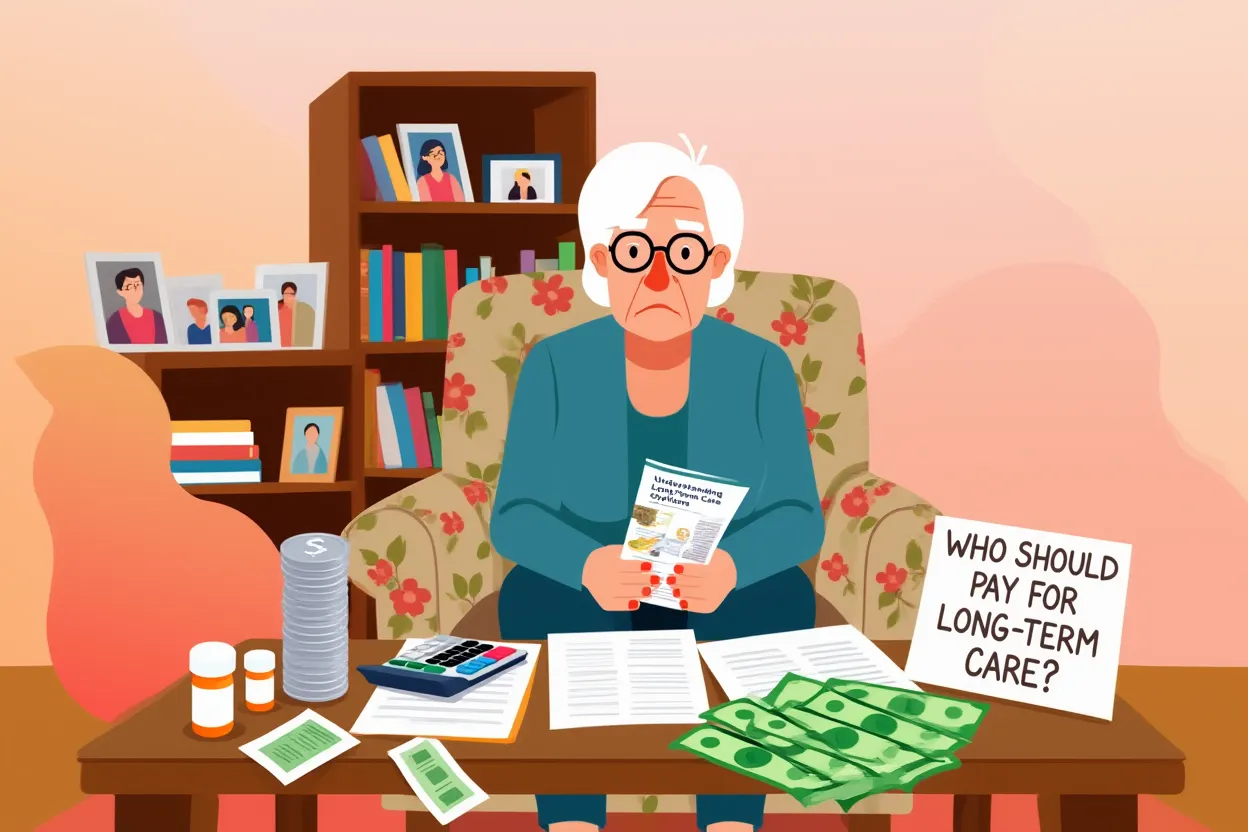
Government support for long-term care costs, whether in a nursing home, assisted living or at home, has long been based on the ethos that everyone should pay their own way unless they can’t afford to do so. This is why Medicaid only kicks in when applicants have spent down the bulk of their savings other than their homes.
According to a recent study published by The Journal of the American Geriatrics Society, “Older Americans’ Attitudes Toward Caregiving Cost Responsibility and Long-Term Care Access and Costs by Caregiver Status,” about half of older consumers responding to University of Michigan’s National Poll on Healthy Aging believe that this is the right approach.
However, a majority of those already providing care to family members feel that the government should step in and provide support.
More specifically, 45% of respondents said the government should be the primary payer for long-term care and an equal 45% thought primary responsibility should fall on the shoulders of older adults themselves and their families. The remaining 10% felt that employers, nonprofit organizations and other entities should be the primary payers.
Among caregivers, 51% of respondents thought government should take primary responsibility for payment as compared to 39% of non-caregivers.
In terms of their future care needs, nine out of 10 respondents, all of whom were age 50 or above, were concerned the likely cost and eight out of 10 were worried about the availability of high-quality care.
 Carolyn Ames
Changing Attitudes?
The researchers point out that the even split between those who view paying for care as a governmental responsibility and those who don’t is a new result. In prior surveys of adults aged 65 and above, only 35% supported government as the primary payer for care.
The researchers believe that the difference is explained by the fact that their study includes younger adults, those between 50 and 64, and that this group is more likely than the older cohort to favor government support. This may reflect an ongoing transition with more younger Americans supporting government assistance in contrast with older adults stressing individual responsibility.
With respect to more caregivers than non-caregivers favoring government assistance, the researchers opine that:
“Caregivers, given their personal experience and potential for greater likelihood of interacting with government programs and formal care systems in their caregiving activities, may be more aware of, and thusly concerned about, the caregiving costs given their own experiences with caregiving and its physical, psychological, and financial consequences.”
They point out, however, that other studies do not show this difference between caregivers and non-caregivers. Again, this may reflect changing attitudes about government assistance with older studies showing less support.
Harry S. Margolis
What Sort of Support?
While the pendulum may be swinging towards more government support of long-term care costs, this does not tell us what form that might take.
It could simply mean:
- Loosening the rules for Medicaid eligibility so that more people can qualify more easily or expanded Medicare coverage, similar to the introduction of prescription drug benefits.
- Or it could involve an entirely new program of universal long-term care insurance, which is what I support.
While the Medicaid eligibility rules and application process should be made less draconian, we really need universal long-term insurance to cover the middle class. Long-term care is the type of risk for which insurance is the ideal situation. Just as with homeowner’s insurance, while individual need is hard to predict, need on a population level is highly foreseeable.
However, the private market has not functioned well because the premiums are not affordable for most consumers. This is in large part due to adverse selection. With younger people not buying insurance, those who do are more likely to use the product, thus driving up the per person cost. If that cost were distributed over a larger population, the premiums would not be as high, thus the need for a universal program in which everyone participates