- Friendship after 60 starts with connection — not effort
- The best places to meet people are where interests are shared
- Libraries, tours, and classes create natural conversation
- You don’t need a plan — just proximity and repetition
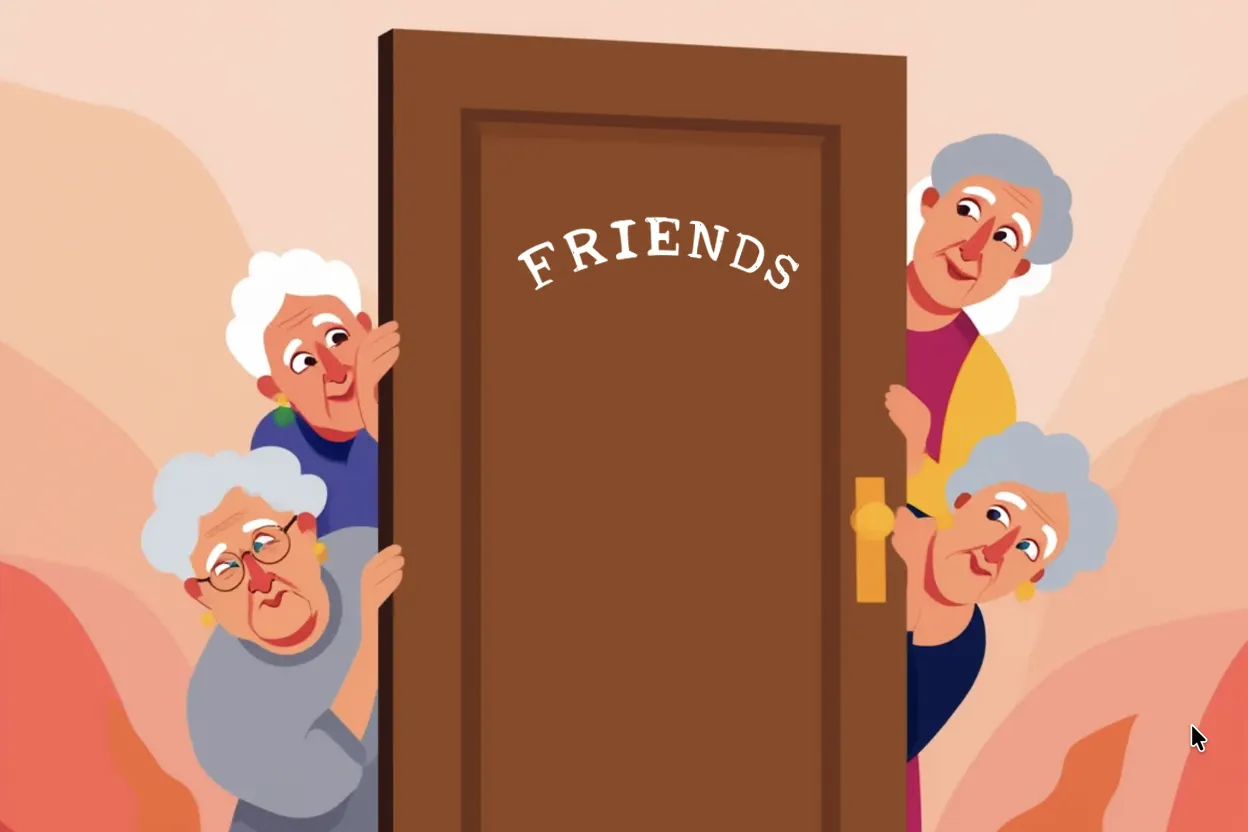
- Your next friend may already be in the room — you just haven’t met yet
For a lot of people, making new friends after 60 doesn’t just feel hard — it feels unlikely.
The old pathways start to fade — work, kids, even neighborhoods.
And somewhere along the way, friendship stops being something that “just happens.”
But in a recent keynote for Road Scholar, journalist Jane Pauley discussed "Reimagining the Rest of Your Life" and offered a simple idea that flips that thinking on its head: You’re probably looking in the wrong place.
It’s not about finding friends
Pauley didn’t talk about apps or networking.
Instead, she described something which was a lot more natural — and a whole lot more doable.
The CBS Sunday Morning host told a story about a small group of people who gathered for a planned outing to a specialty bookstore. But, when they arrived, the store was – you guessed it – closed.
Well, there went that plan!
But instead of going home, someone found a nearby coffee shop and came back to corral the others she had met in line to join her there. They sat down together — strangers, with nothing in common except being there at the same time.
And something happened. Something very natural.
They talked.
They laughed.
They ... connected.
“It was more fun just being with those eight strangers,” Pauley said.
No agenda. No pressure. No forced introductions.
Just proximity.
 Francine Toder
The real starting point for friendship
Buried in that story is a line that may be more important than it sounds:
“In order to have friendships, you have to start with connections.”
Experts say this aligns with how social bonds actually form later in life.
"Shared environments are great friendship starters because they give people something immediate to connect around," Krista Walker, LCSW, J.D., Clinical Director at The Ohana Addiction Treatment Center, told Smart Senior Daily.
"This instantly lowers the pressure. When there is a shared activity, it helps conversations feel more natural and less forced. This can help reduce social anxiety."
That’s the shift.
Most people think: I need to find friends – whether it's as a traveling companion or shopping partner or just someone to hang out with and enjoy the company of others.
But Pauley’s experience suggests something different: You need to put yourself where connections can happen.
Friendship isn’t step one.
It’s what grows out of something else.
"At 71, I find it easier to just show up to organized activities," Smart Senior Daily reader and public relations specialist Samuella Becker said.
"There's a senior center two blocks away with free meals, classes, and a gym/pool. I'm always struck by the people I meet — former fashion designers, lawyers, professors, even actors."
Walker added that these connections can't be hit & miss if you're serious about making this work.
"Repeated exposure is the key from a mental health perspective," Walker says. "Seeing the same people over time builds safety because they are familiar. This is the key to trust and can deepen relationships over time."
Pauley said that some of the most overlooked (and accessible) options were places we pass by all the time:
- Libraries (check these ideas out)
- Museum tours (and there's a bunch with free admission, too)
- Community talks and lectures
- Group outings
- Educational travel programs
These places have something in common: Everyone there already shares an interest.
That’s what makes conversation easier — and more natural.
You’re not starting from zero.
Smart Senior Daily Staff
Why this works (and feels easier)
There’s a reason these environments matter, especially later in life.
They remove the pressure.
You’re not there to make friends.
You’re there because you’re curious about something.
- No awkward "getting to know you" moments
- No need to impress anyone
- No expectation beyond showing up
Instead, connection builds sideways — through shared experience.
The part no one likes to admit
Pauley also acknowledged something a lot of people feel but don’t say out loud – something she admitted about herself:
“It takes a crowbar to get me out of the house.”
That line lands because it’s true.
The biggest barrier to new friendships after 60 isn’t opportunity.
It’s inertia. It’s comfort. It’s routine. It’s the pull of staying home.
And the longer that goes on, the harder it becomes to change.
Walker: "This makes sense psychologically. That is because, as we age, the brain craves things that are familiar and low effort. our routines become more reinforcing.
This is comforting. However, over time it can be limiting. This is why tiny, intentional disruptions to our routine can be very powerful."
Gary P Guthrie
A simple way to start (no pressure required)
If there’s a takeaway from Pauley’s message, it’s not to overhaul your life.
You don't need a new wardrobe or anything else to make you stand out. You just need to make one itsy bitsy shift:
Go where people gather — around something you care about.
That’s it.
All you need to do is just show up.
Once.
Then maybe again.
Because familiarity — not effort — is what turns strangers into something more.
The bigger idea
What Pauley is really describing isn’t just about friendship or relationships.
It’s about how life continues to open up — even in stages where it might feel like things are narrowing.
Your next friends aren’t missing.
They’re just not where you’ve been looking.
Disclaimer: This article is for informational purposes only and is not a substitute for professional mental health or medical advice. If loneliness or social isolation is affecting your wellbeing, a qualified counselor or your primary care physician is a good place to start.