Another week, another scam finding its way into seniors' mailboxes – this time from ... "ATNT"?
Yes, someone's trying to pull the wool over the eyes of real AT&T customers. And they have plenty to work with. AT&T has had multiple major breaches, and phone numbers were absolutely part of what leaked.
All told, AT&T has reported 73–176 million affected customers across multiple incidents. What was stolen during those breaches included everything from names to birthdays to passwords to Social Security numbers.
Data points like that are prized assets for cybercriminals because they can make scams believable.
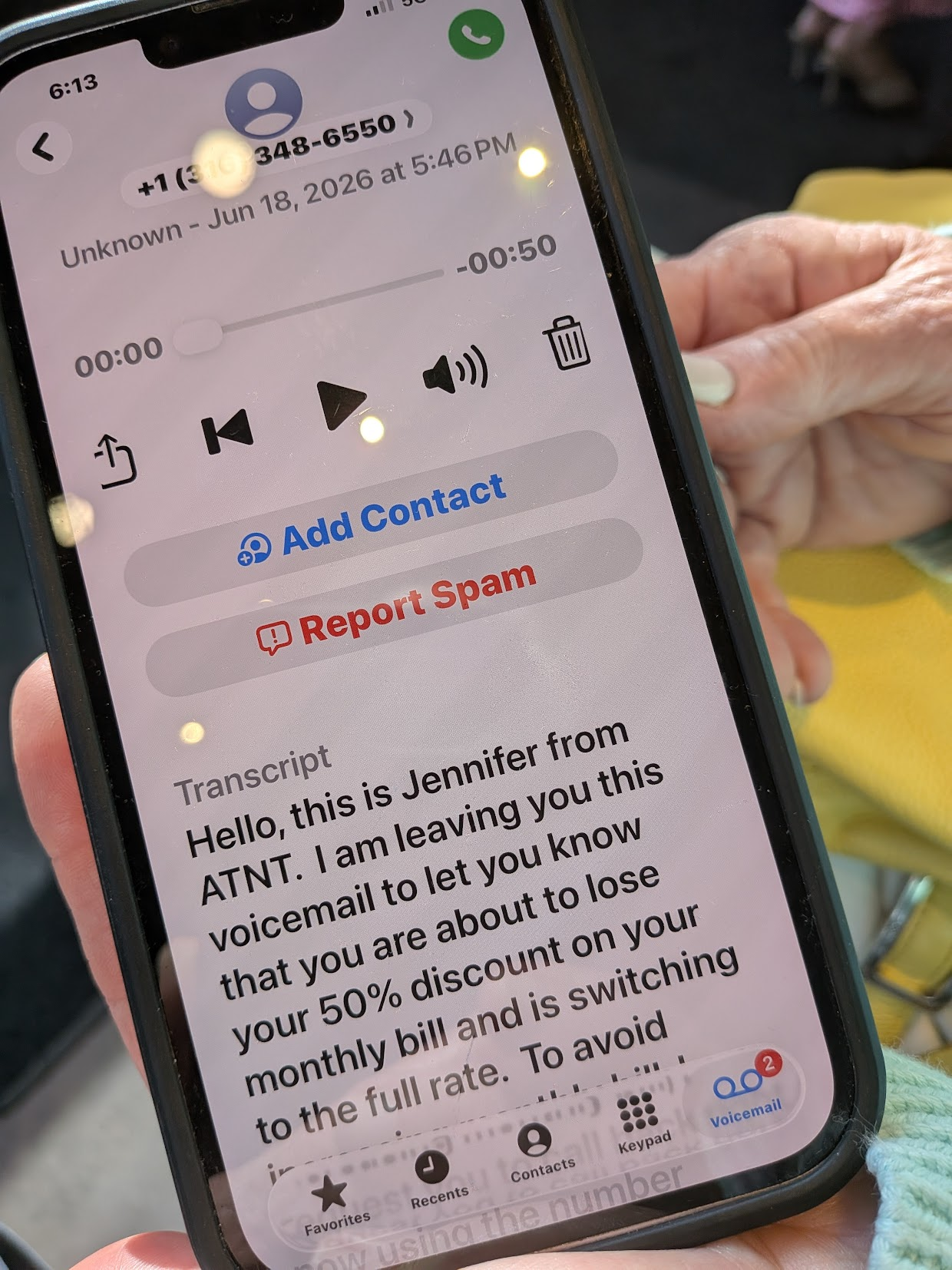
In this situation, "Jennifer from ATNT" called a Smart Senior reader, warning the recipient they're about to lose a 50% discount on their monthly bill and it's switching to the full rate.
Enter "Ringless Voicemail"
Using something called ringless voicemail (also known as RVM or "voicemail drop"), "Jennifer" was able to bypass our reader's phone network's ringing system entirely and deposit the audio message directly into the carrier's voicemail server.
Our reader's phone never rang and never showed a missed call in the traditional sense—the voicemail just appears. In the screenshot below, note it shows the call as "Unknown" with no missed call notification context—consistent with this method.
What Unfolds
This is a textbook impersonation + urgency scam and had our reader taken the bait and not contacted us first to ask if this was real, here's what would have happened:
- She would get a fake "AT&T rep"
- Be asked to verify account info or pay a fee to "lock in" her discount. Some versions harvest credit card numbers directly.
How Seniors Can Beat This
Seniors are a deliberate downstream target for many cybercrooks and finding seniors is relatively simple. All a crook has to do is crunch the data and do a simple sort based on birth dates. After that, Social Security numbers, phone numbers, etc. just fall into place.
AT&T is somewhat of an anomaly here. Typically, scammers are going to cosplay as the IRS, Social Security Administration, or Medicare—all agencies seniors interact with regularly. The reason why AT&T was used for this scam is because with nearly 200 million possible victims, the temptation was too good to pass up.
How can you protect yourself better? Other than good old-fashioned common sense, using AI to ferret out what's what can be very helpful. Here's our article on how to do that.