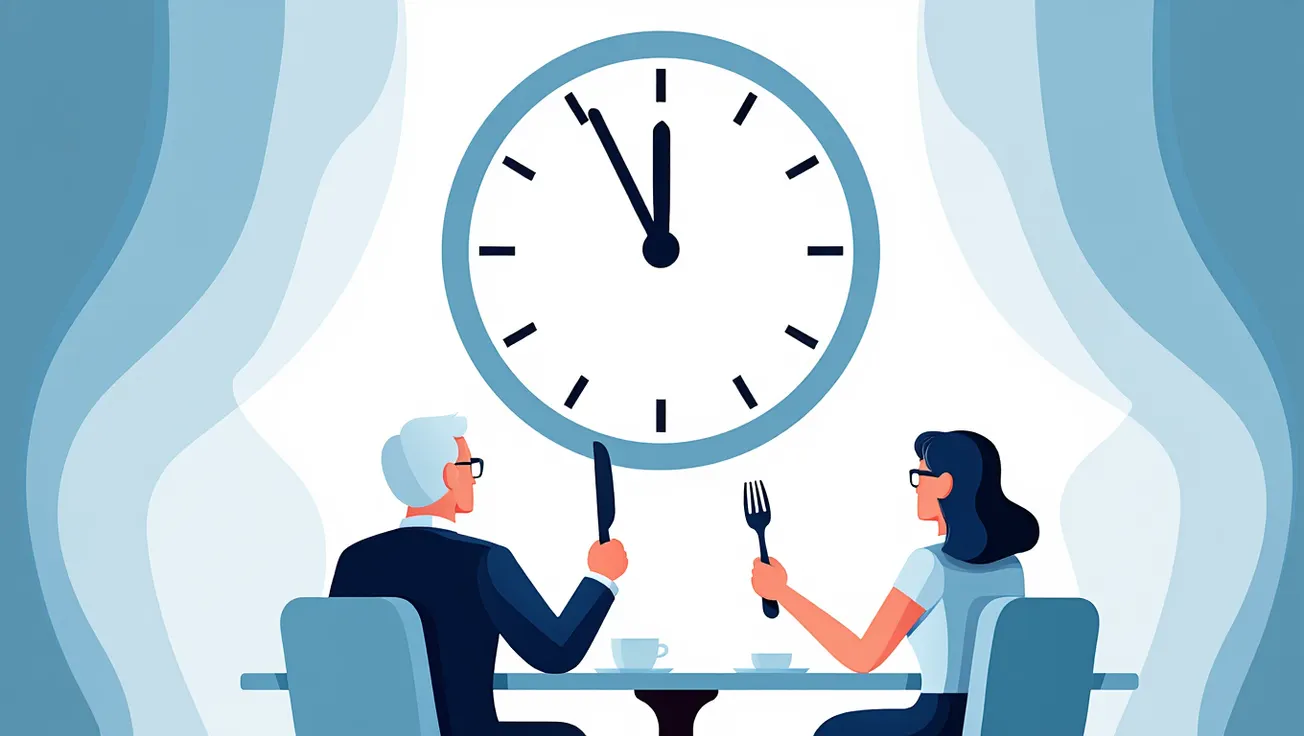
The Takeaway
- Breakfast is best between 7:00 a.m. and 8:00 a.m. to kickstart energy and metabolism
- Lunch should be between 12:00 p.m. and 1:00 p.m. for blood sugar stability
- Dinner ideally lands between 5:30 p.m. and 6:30 p.m., with no big meals too close to bedtime
- Keeping meals on a consistent schedule supports digestion, sleep, and weight management
It’s 6:45 a.m., and Edna’s already sipping her coffee, flipping through her crossword puzzle, and waiting for her oatmeal to finish bubbling on the stove. "If I don’t eat by 7:30, I start feeling woozy," she says.
Turns out Edna’s on to something. According to experts, when older adults eat can matter just as much as what they eat. Your digestion, energy, weight, and even cognitive function can take a hit if meals are too far apart—or too close to bedtime.
A consistent meal schedule helps regulate your body’s internal clock, known as the circadian rhythm, which plays a big role in metabolism and hormone production as we age.
Let’s break it down.
Best Time for Seniors to Eat Breakfast: Why 7:00–8:00 a.m. is the Sweet Spot
After a night of fasting, breakfast helps stabilize blood sugar and gives your brain and body the fuel it needs to get moving.
“The ideal time for seniors to eat breakfast is within an hour of waking,” says Amy Shapiro, RD, in an interview with The Healthy. For most, that’s between 7:00 and 8:00 a.m.
Older adults are also more prone to early waking hours and changes in appetite. If you’ve been up since 5:00 a.m., skipping breakfast until 10:00 can lead to energy crashes, shakiness, or irritability – and no body likes an hangry nana or gramps. 😛
A good senior breakfast should include lean protein (like eggs or Greek yogurt), fiber (like oats or fruit), and healthy fat (like avocado or nuts). That combo helps keep blood sugar stable and your appetite in check until lunch.
Best Lunch Time for Seniors: How to Avoid the Blood Sugar Crash
Experts agree that lunch should fall about 4 to 5 hours after breakfast. For most seniors, that’s between noon and 1:00 p.m.
If you wait too long, you risk entering what some dietitians call the “hangry zone”—where blood sugar drops, and you’re more likely to overeat or grab processed snacks.
Shapiro notes that predictable, balanced meals and nutrition are key for seniors. They help reduce strain on the digestive system and keep energy levels stable for the rest of the day.
Lunch is also a great time to load up on vegetables and whole grains, since digestion is typically strongest mid-day. Think grilled chicken salad, a tuna sandwich on whole-grain bread, or a lentil soup with a piece of fruit.
 Smart Senior Daily Staff
Best Time for Dinner: Why Eating Before 6:30 p.m. Matters
You’ve probably heard it before: eating dinner too late can mess with your sleep. For older adults—whose digestion naturally slows down in the evening—it’s especially true.
Most experts, including the National Institute on Aging, recommend eating 2–3 hours before bed. That means a dinner between 5:30 and 6:30 p.m. is ideal for those heading to bed by 9 or 10.
Later dinners can cause acid reflux, poor sleep, or next-day grogginess—especially if the meal is heavy on fats, red meats, or alcohol.
Seniors tend to sleep better when they eat a lighter dinner: think baked fish with steamed vegetables, a veggie stir-fry with brown rice, or a small bowl of soup and a side salad.
And if you’re still hungry later? A small snack, like a banana or a cup of warm milk, is perfectly fine and may even help you sleep.
 Smart Senior Daily Staff
Why Meal Timing and Metabolism Change as Seniors Age
As we get older, our metabolism slows, and our digestive systems become more sensitive. Hormones like insulin and melatonin shift, too—which means blood sugar spikes and poor sleep are more common.
That’s why timing meals to support your body’s natural rhythms—not just your schedule—can make a difference. Regular meals can improve everything from:
- Weight management
- Energy levels
- Heartburn prevention
- Mental clarity
- Mood stability
 Smart Senior Daily Staff
Final Thoughts
Eating on a schedule isn’t about being rigid—it’s about being kind to your body. Seniors like Edna who prioritize well-timed meals often find they sleep better, move easier, and stay sharper.
Here's a complete set of FAQs to help you gain a better understanding of how to manage this change.
FAQ: Best Meal Times for Seniors — Your Questions Answered
Disclaimer: This article is for informational purposes only and is not intended as medical advice. Please consult your healthcare provider for personalized dietary guidance.