Living forever might be nice if you didn't fall apart, but most people don't want to live forever if falling apart is part of the deal.
That's the takeaway from new National Geographic polling tied to the magazine's September cover story, "Are We on the Brink of Ending Aging?" Nearly two-thirds of Americans, 64%, say they'd rather live a shorter life free of physical and mental decline than a longer one marked by deteriorating. Only 10% would bite the bullet and opt for the extra time if those years come with declining health.
It's a clear signal about what people value. But it also raises a question that hits closer to home for anyone caring for an aging parent or looking in the mirror and thinking about their own future: if science actually delivers more healthy years instead of just more years, what happens to the system built around caring for people who don't get that?
We put that question to two people close to the research. David Sinclair, the Harvard geneticist whose lab has spent years studying cellular reprogramming, and D.T. Max, the National Geographic writer who reported the cover story.
The Pitch: It's Definitely Not Too Late at 70
Sinclair's lab doesn't have a go of slowing aging before it starts. The bigger target is restoring functionality that's already been lost, and they're taking that idea and testing it directly with people, not lab animals.
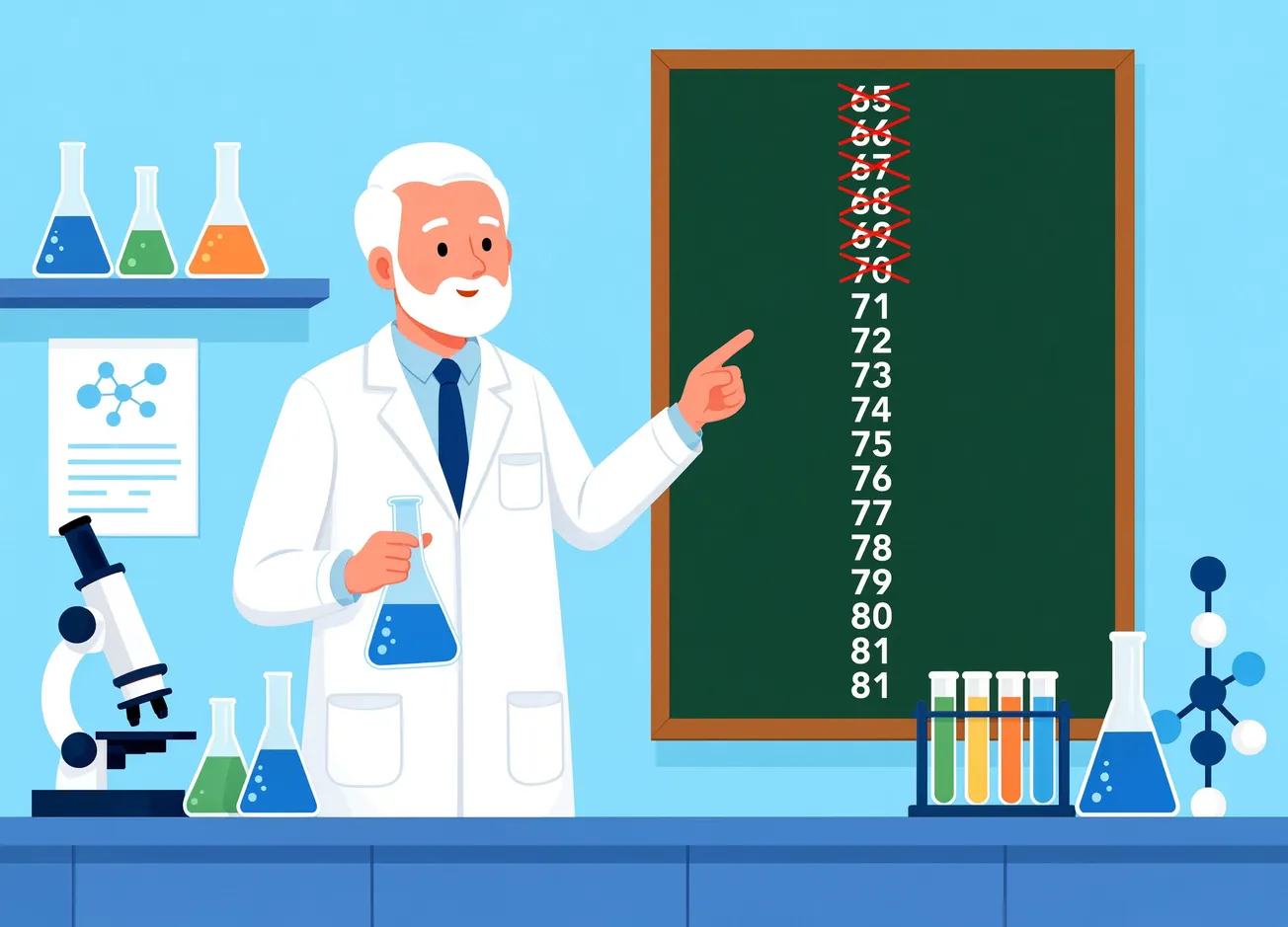
ER-100, an epigenetic (non-inherited) reprogramming therapy based on his lab's work, is in a Phase 1 trial for older patients with glaucoma. If it or similar approaches go as planned, Sinclair says, being 65 or 70 would no longer be a dealbreaker.
The next obvious hurdle is cost, and the polling backs that up as 63% of Americans fret that longevity treatments could drain their retirement savings—and given how expensive early-generation gene therapies tend to be, it's nothing to be taken lightly.
Sinclair points to a second product from his lab, SL-100, as a cheaper alternative: a small-molecule pill rather than a gene therapy, designed with wider access in mind. "The goal should be longevity for all, not just for the wealthy," he told us.
That's his vision, anyway. But whether a pill actually hits that mark, and at what price, is a different question. One that's years from being answered. Not light years, but probably not next year either.
The Reality Check: One Patient, One Trial
Here's where it's worth taking a breath. D.T. Max didn't sugarcoat things when he was asked whether the "healthspan over lifespan" instinct people show in surveys actually holds up once real treatments are on the table.
He said that when they're talking informally about extending lifespan, cover-story framing aside, both researchers and investors in the field still talk about extending lifespan. And on the patient side, there isn't much to go on yet. As of his reporting, there's exactly one patient in a safety trial.
But that shouldn't be scoffed at. Somebody has to be first or else ideas like this would never get off the ground. But it's still a long way down the road and a way from "the brink of ending aging."
Max described meeting that patient as a turning point in how he viewed the science behind this endeavor:
"I saw that something was possible that maybe was just theoretical before."
One data point can shift how a story feels without changing how far the science actually has to go.
Now, the Part Nobody's Planning For
Science, trials, labs—all that is essential in moving something like this from "what if" to "now is"—but the question we kept returning back to: what happens to senior care itself if this works? We're talking assisted living, memory care, home health aides, and the entire infrastructure built around the assumption that most people eventually need a lot of help for a long stretch of time.
That's the million-dollar question.
Max said that it's hard to find someone in the field who's actually talking about that yet. The one exception he pointed to is Shinya Yamanaka, the Nobel laureate who's not afraid to take risks and whose stem cell research underpins much of this work. But despite being fear-proof, he has publicly urged more careful thinking about the downstream consequences. The idea that a huge share of caregiving jobs could eventually be less necessary is real, Max says, but it's "way beyond the horizon."
For now, our families are left to making care decisions the old-fashioned way: sitting down and taking a hard look at someone's next steps based on how their loved one is genuinely doing, not on what a lab might make possible in twenty years.
There's no denying that the science is intriguing, and polling shows people are already forming strong opinions about what they want from it. What isn't happening yet is anyone in senior care actually planning for a future where the demand for their services looks different than it does today.