Although worthy, there'll be no champagne toast for this good news: if you're a woman over age 55, a new study suggests you're doing much better bending an elbow at the bar and making smarter choices about alcohol than the generation right behind you. You may not know exactly why that matters for your health, but you're going in the right direction.
University of Houston researcher Dr. Dipali Rinker recently presented findings at the Research Society on Alcohol's annual meeting that paint a surprising picture. Her study found that middle-aged women showed both the highest levels of problematic alcohol use and the lowest awareness of the link between drinking and breast cancer risk.
Women 55 and older? Like we said, a different story entirely.
The 55+ Group Is Actually Ahead of the Curve
Smart Senior Daily reached out to Dr. Rinker directly, and she shared some findings specifically about older women that didn't make the main headlines.
"The 55-plus age group had the highest proportion of those who reported abstinence and reported the lowest levels of hazardous drinking," Dr. Rinker told SSD.
This is news that deserves to be heard, given that national studies show that middle-aged and older women have been throwin' em back more since 2000, including increases in binge drinking and alcohol-related health problems. And here we have women in their late 50s, 60s, and beyond bucking that trend.
Why Are Younger Women Hitting the Bottle Harder?
Millennial and Gen-Z women don't have it easy. High levels of chronic stress related to caregiving, work demands, financial strain, and social isolation, Dr. Rinker says, are pressures that only got worse during and after the pandemic.
Add to that the relentless "wine culture" marketing aimed squarely at women, framing alcohol as socially acceptable self-care, and you have a blueprint for a generation caught in a jug-sized blind spot.
Women 55 and older have, in many cases, moved past the most acute version of those stressors. The kids are grown. The career peak has passed. The frantic middle years are behind them. That life stage shift appears to matter.
The One Cloud in the Silver Lining
Here's where Dr. Rinker's message gets a little more pointed for SSD readers. While older women are drinking less, they're not necessarily better informed about why that matters.
Dr. Rinker told us that women 55 and older were less familiar than younger and middle-aged women with the U.S. Surgeon General's statements linking alcohol to cancer risk.
Along with middle-aged women, many in the older group incorrectly believed that regular alcohol use had no meaningful impact on cancer risk — and fewer believed that cutting back would actually reduce that risk.
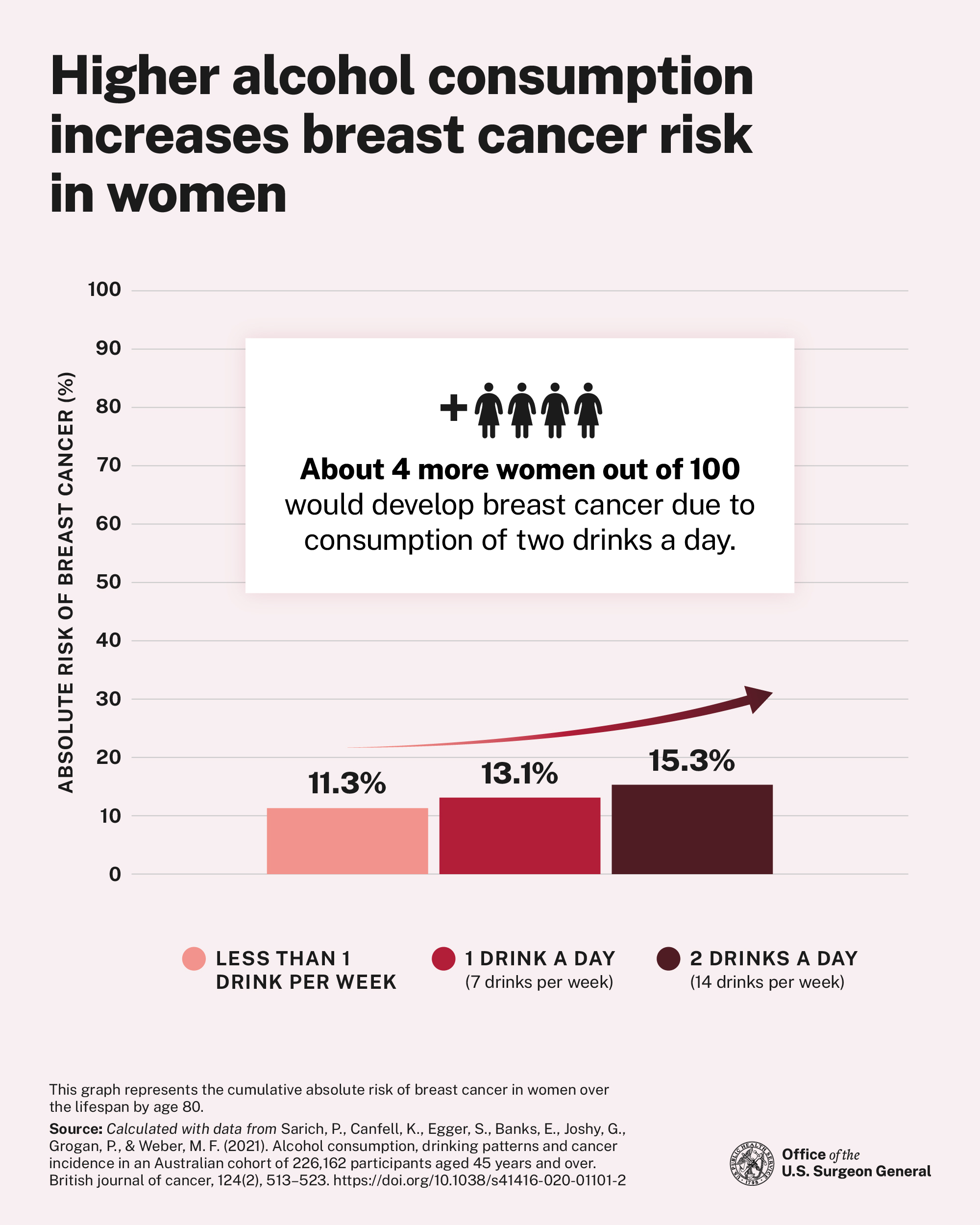
The science is clear: breast cancer risk increases as alcohol consumption increases, and there does not appear to be a completely "safe" level of alcohol use when it comes to cancer risk. As Dr. Rinker puts it, it's dose-dependent with this result: the more you drink over time, the greater your cumulative risk becomes, even if it's just moderate social imbibing.
What This Means for You
The takeaway isn't alarming — it's empowering. If you're already drinking less or not at all, you're doing something genuinely protective for your health, perhaps without even realizing it. But knowing why it matters gives you one more reason to stay the course.
And if a glass of wine with dinner is a regular part of your routine, this is a good moment to have an honest conversation with your doctor. Not a lecture — just information. Dr. Rinker recommends messaging that is practical, relatable, and nonjudgmental, and that's exactly how we'd put it: you've earned the right to make informed choices. This is what "informed" looks like.