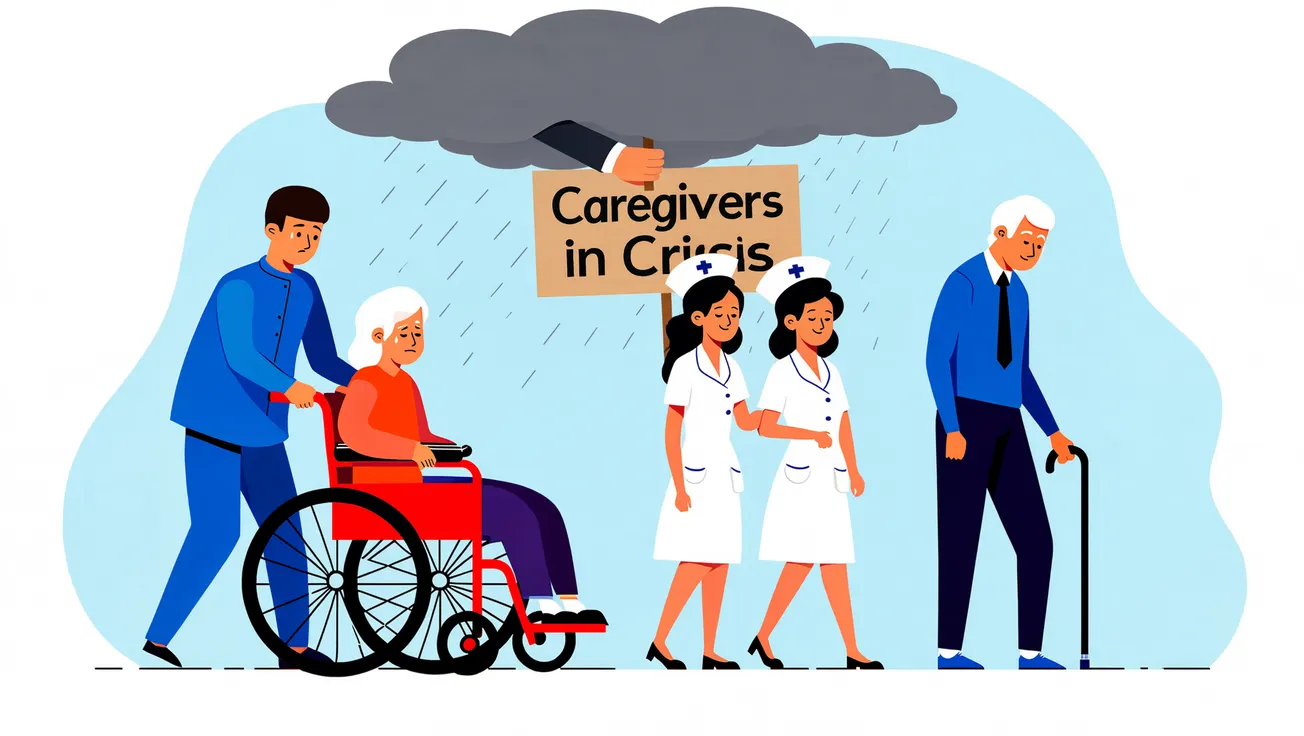
The early stages of a caregiving crisis Smart Senior Daily reported on earlier this year has now blossomed to the point of serious concern.
One new set of data suggests that more than three-quarters of unpaid family caregivers across the country say they've been financially overwhelmed by the cost of providing care. That's according to a new survey from Aeroflow Urology, a nationwide provider of incontinence care supplies through insurance.
The survey, conducted in April 2026 by a third-party firm, polled more than 1,000 Americans who provide regular, unpaid care to someone due to a disability, medical condition, or older age. The results paint a stark picture: caregiving in America has become a long-term, largely unsupported commitment that's quietly draining families' finances and mental health.
The Financial Toll Is Real and Growing
One look at the chart below will tell you just how weighty of a problem this is. Nearly 25% of caregivers reported spending more than $500 a month on caregiving supplies alone. That's just supplies.
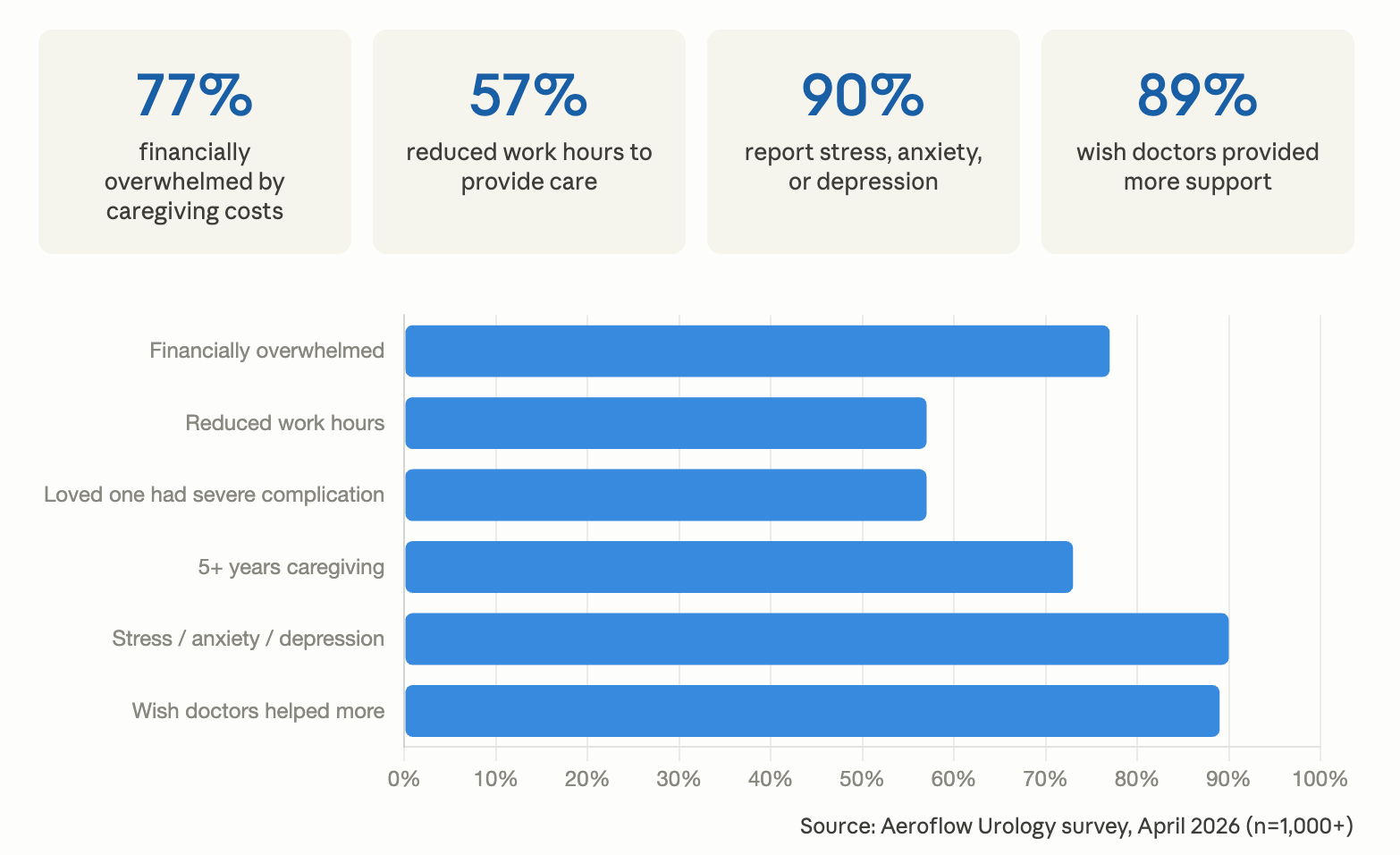
Notice that another 57% said they've had to cut back their own work hours to make time for caregiving duties, compounding the financial strain with lost wages.
And 73% of respondents have been providing care for more than five years, meaning this isn't a short-term hardship for most families.
When you add all of those losses and expenses together, it's easy to see that taking this on by yourself can be a large burden.
When asked what would help, caregivers were clear about their needs: 70% said additional financial assistance would improve their ability to provide care, and 55% put their finger on expanded insurance coverage as a meaningful way to ease the load they're having to carry.
When Resources Run Short, Patients Suffer
The stakes don't stop at personal finances. More than half of caregivers (57%) reported that things had gone further downhill because their loved one had experienced a more severe medical complication due to sufficient resources or assistance not being available.
"The caregiver crisis is not simply a family stress problem," said Dr. Saravanan Thangarajan, a visiting scientist at Ariadne Labs at Brigham and Women's Hospital and Harvard T.H. Chan School of Public Health, and an expert reviewer at the World Health Organization.
"It is a care coordination failure that has been pushed into the home. Health systems often see the patient, but not the caregiver carrying the care plan behind the patient."
Dr. Thangarajan says physicians should routinely screen for caregiver burnout at predictable pressure points — after hospital discharge, a new dementia diagnosis, stroke, major surgery, or repeated emergency visits.
"These are the moments when families are suddenly handed complex care responsibilities and expected to manage them safely."
His practical advice to caregivers: don't just ask for resources. Ask the healthcare team to turn your caregiving role into a clear plan. Here are 5 questions Thangarajan suggests every caregiver should ask their doctor.
If the caregiver is invisible in the chart, they are often invisible in the follow-up system too. Getting formally documented means you are part of the care team — not an afterthought.
Don't accept vague instructions. Ask for the full job description: medications, meal preparation, bathing, mobility, wound care, oxygen, symptom tracking, fall prevention, transportation, and appointment scheduling. Clarity upfront prevents crises later.
Watching a nurse demonstrate something once in a busy hallway is not training. If a family member is expected to provide care at home, they should be properly taught — with time to practice and ask questions before leaving the facility.
Every caregiver should know which symptoms mean call the clinic, which mean urgent care, and which mean 911. A general phone number is not a support system. Ask for a named contact and a clear plan that covers nights, weekends, and post-discharge.
Ask specifically about home health services, respite care, transportation support, medical equipment, benefits navigation, caregiver training, support groups, mental health support, and local aging or disability services. Don't wait until you're exhausted to have this conversation.
 Nikki Patton
The Mental Health Cost Is Just as High
Three out of four caregivers said their mental health has been negatively affected since taking on caregiving responsibilities. Ninety percent reported experiencing stress, anxiety, or depression.
Then there's taking care of themselves. On top of financial pressure, about two-thirds said their personal time and self-care was so limited that it became their own personal biggest emotional burden.
And yet, caregivers say the medical community isn't stepping up. A remarkable 89% of respondents said they wish their doctors provided more assistance and resources.
A System Under Pressure With More Strain Ahead
The timing matters. With people living longer, projections show that by 2030, at least 20 states will have populations where one in five residents is 65 or older. More than 62% of adults over 65 already live with three or more chronic conditions, creating a growing demand for exactly the kind of unpaid caregiving this survey documents. Ongoing cuts to programs like Medicaid are expected to make an already difficult situation worse.
"Caregiving is the ultimate, often invisible, sacrifice that serves as the backbone of American healthcare," said Mica Phillips, VP of Aeroflow Urology. "These results indicate the country is failing our caregivers."