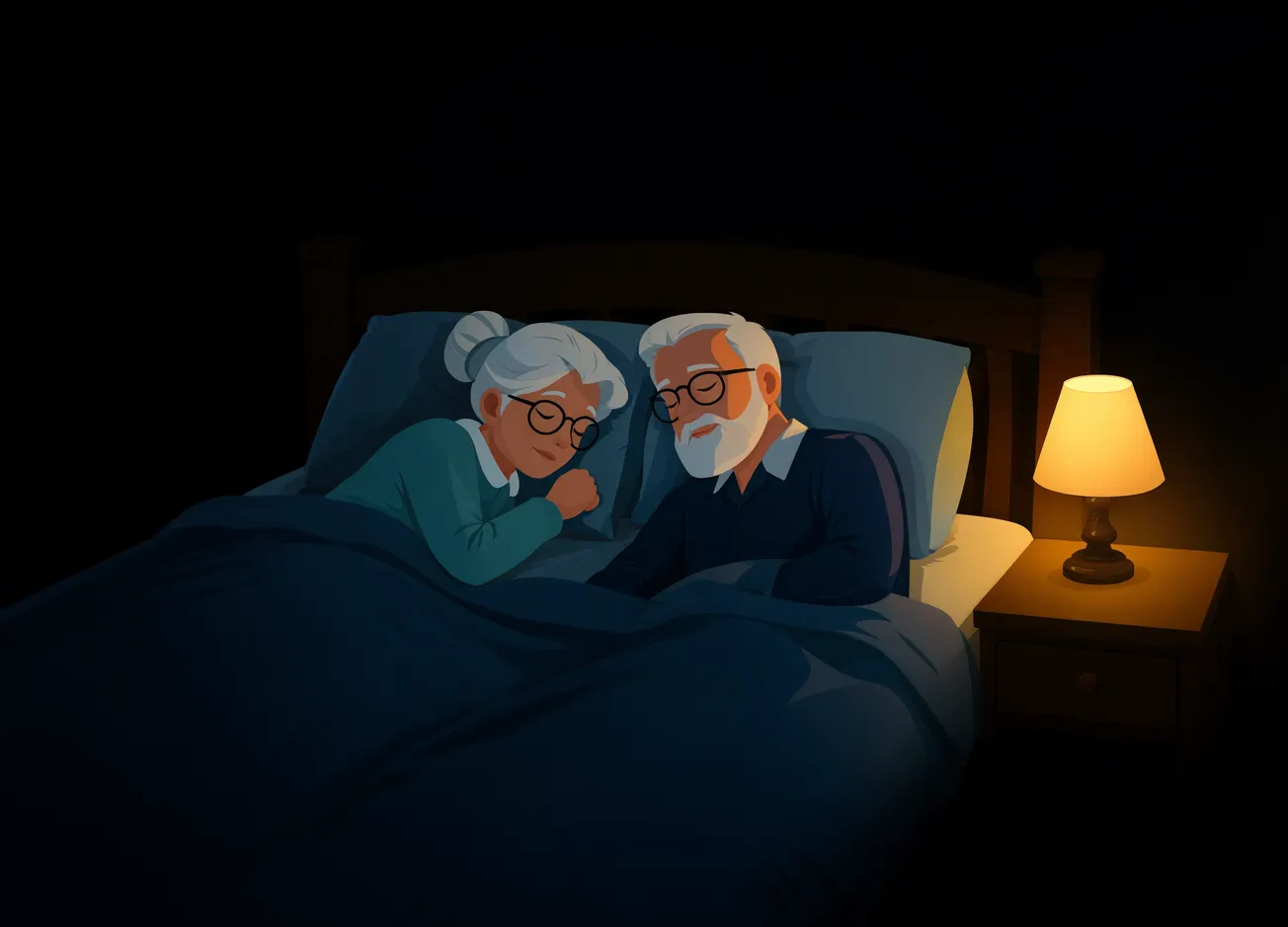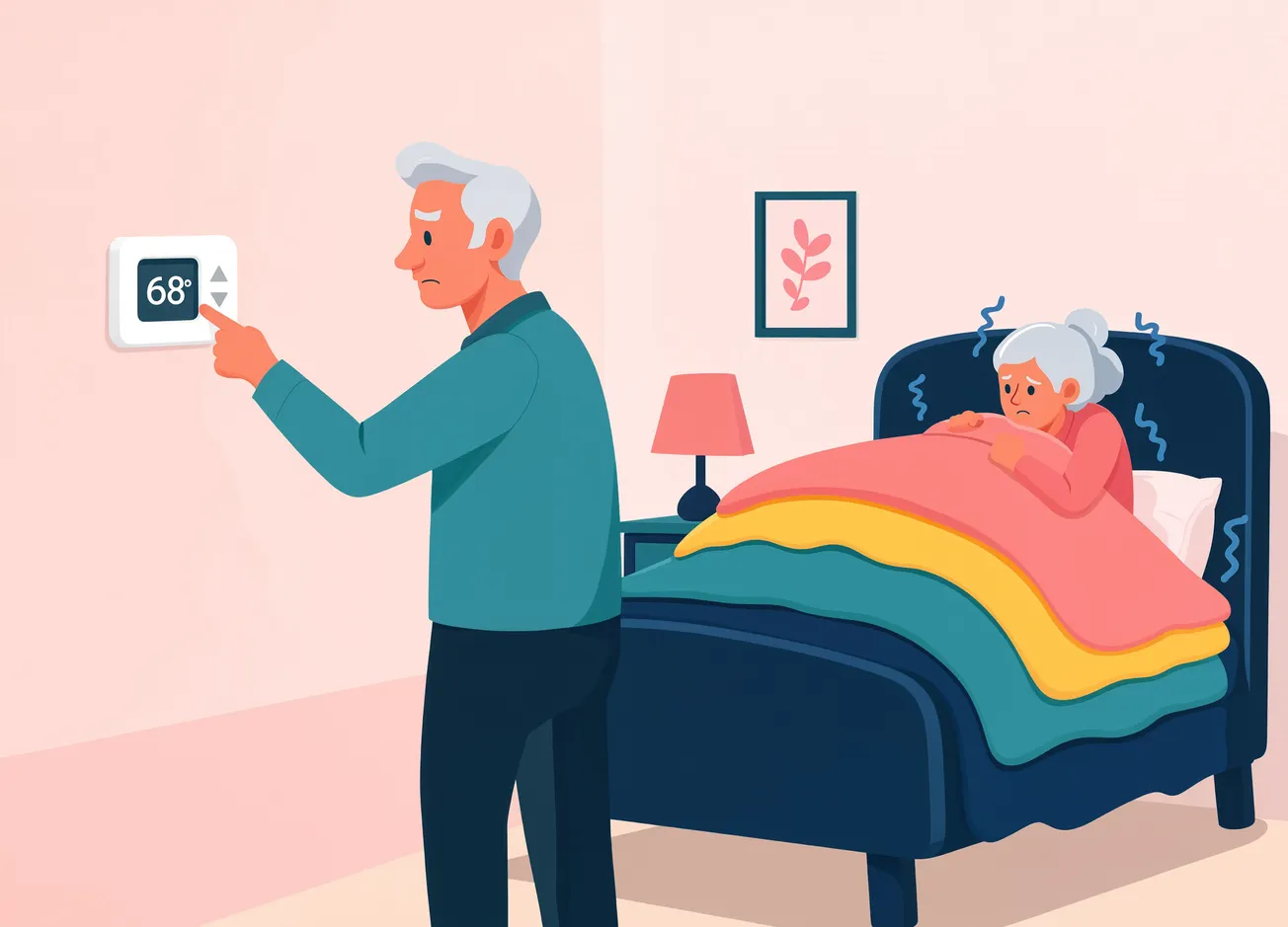
What did you set the thermostat at last night, before you went to bed? If you're one of the norm in a new study, you probably locked in 67 degrees. That's the "ideal sleep temperature" according to a new survey from mattress maker Bear Mattress, and it's a big breakaway from the 78 degrees the Department of Energy recommends for keeping your electric bill in the afforability category.
But there are some outliers: people in Massachusetts like it coldest, at a bracing 63.2 degrees. Those who like it hot? Hawaii runs the warmest, at 69.5.
 Smart Senior Daily Staff
What Actually Changes After 50
As we grow older, our bodies get less—well, efficient—at regulating their own temperature. Circulation slows down to a gurgle. The layer of fat under the skin that used to help hold in warmth thins out. If you wonder why a room that felt perfectly cool at 35 can feel genuinely uncomfortable, even achy, at 65 or 75, that's your answer.
Researchers have actually studied this directly, rather than just assuming older adults should follow the same advice as everyone else. A different study published in Science of the Total Environment tracked 50 community-dwelling older adults, measuring their sleep duration, efficiency, and restlessness against the temperature of the room they slept in. The sweet spot they found wasn't 67 degrees. It was a range: 68 to 77 degrees, a 9-degree swing.
That is a much wider, and warmer, range than the 67-degree figure that made headlines this week. That also means the low-to-mid 60s, the temperature a lot of general “best sleep temperature” advice pushes, may actually work against good sleep once you’re over 50.
Interesting wrinkle: The same research found sleep efficiency dropped noticeably, by 5 to 10 percent, once the room climbed above 77 degrees. So the goal isn't to crank the heat either. It's landing in that window.
Practical wrinkle: a colder bedroom that feels fine to fall asleep in can still cause problems overnight. Joint stiffness and achiness, already more common with age, tend to get worse in cold, especially if you toss off the covers at some point in the night. A too-cold room can also mean more trips out from under warm blankets to use the potty, which is its own sleep disruptor for a lot of people over 50.
 Gary P Guthrie
Ok, So What Do You Do With This Information?
If your bedroom currently runs in the mid-60s because that's what you've always heard is "correct," it's worth a little experiment where you test a few degrees warmer (the 68-72 range is a reasonable starting point), and see whether you fall asleep just as fast but wake up less achy or restless.
A programmable thermostat might be a good investment because it holds steady overnight matters more than chasing an exact number; temperature swings, not the number itself, are often what wake people up.
A few other things worth knowing if you're troubleshooting your own bedroom:
- Regional climate genuinely shapes what feels "normal," so don't assume your neighbor's thermostat setting should be yours.
- A fan can let you feel just as cool at a slightly higher, more joint-friendly temperature, while using less energy than cranking the AC.
- Cool the bedroom specifically rather than the whole house. It's cheaper, and it's the room that actually matters for sleep.
Curious where your own bedroom lands? Try the temperature slider below to see how your setup compares to both the general "ideal" and what research says actually works best after 50.