It was only a matter of time. Social Security numbers have been exposed by breach after breach. There was the infamous Equifax hack that hit nearly half the U.S., to the Anthem attack, the federal employee records stolen from the Office of Personnel Management, Capital One, Marriott, and repeated leaks tied to T-Mobile.
Now, we can add the Medicare (CMS) to that list.
The Washington Post reports that the government's new "Find a Doctor" tool may have leaked your doctor's Social Security number, too!
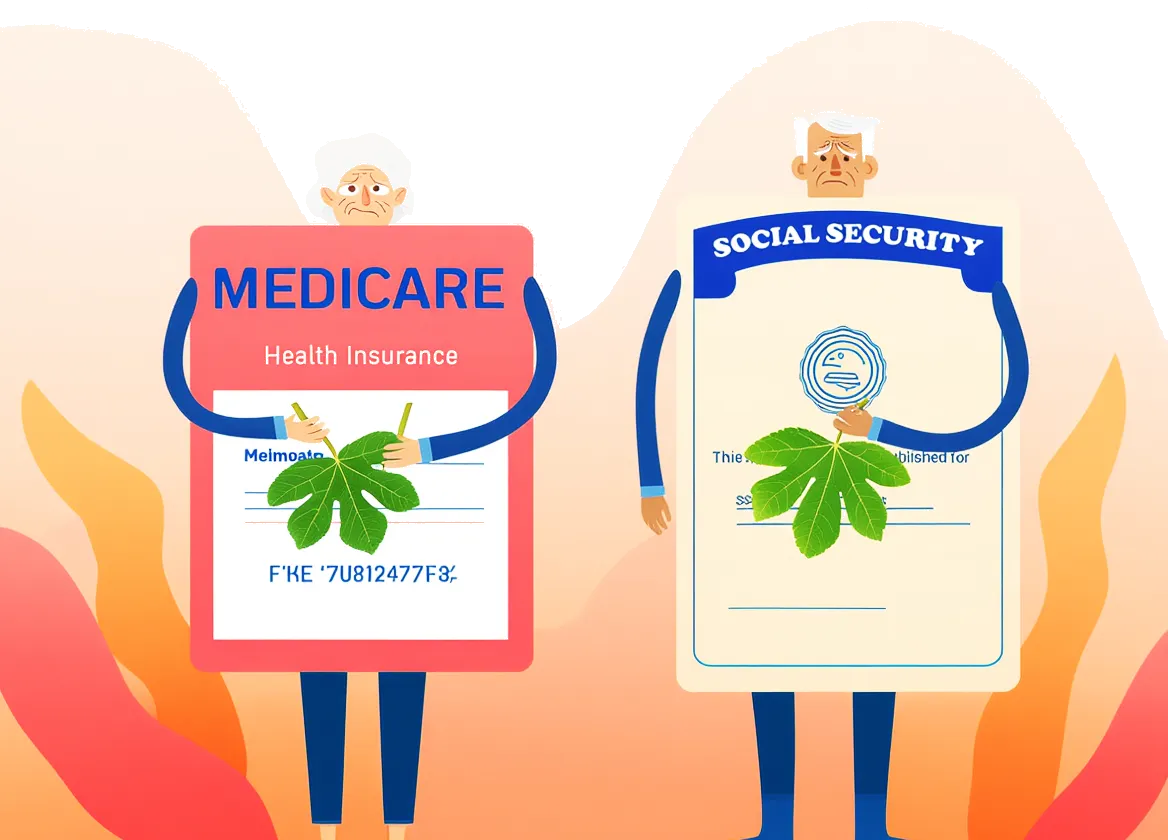
Naked as a jaybird – and, now, your problem
This wasn't a hack. Nobody broke in. The database was intentionally made public as part of the administration's transparency push. The SSNs were just... in there.
Funny/sad? Your choice...
CMS says the problem traces back to providers or their office staff typing Social Security numbers into the wrong fields when submitting their directory information.
The agency told The Post that mistake was "incorrect entries of provider or provider-representative-supplied information in the wrong places" and said it has "taken steps to address it promptly and reinforce safeguards around data submission and validation."
That explanation may be technically accurate. It doesn't make the exposure any less real. And that's not funny.
 Gary P Guthrie
Why This Matters Beyond the Headlines
The exposed numbers belong to doctors and other healthcare providers — not patients. So you might reasonably ask: why should seniors care?
Three reasons.
First, your doctor's compromised SSN becomes your problem.
Identity thieves who obtain a physician's Social Security number can file fraudulent Medicare billing claims in that doctor's name. When fake claims go through, your Medicare Beneficiary Identifier (MBI) can get dragged in as the attached patient. Suddenly you're fighting phantom charges on your Medicare Summary Notice for procedures you never had.
Second, the portal itself is a trust issue.
The National Provider Directory was the tool millions of seniors were supposed to use during the last Annual Enrollment Period to verify which doctors take which plans. If the database powering that tool is leaking sensitive data in one direction, what confidence do you have about the data flowing the other way?
Third, this is part of a pattern.
Since the directory launched (with a little assistance from DOGE), it has been flagged for inaccurate listings, misidentified insurance plan coverage, and duplicated provider entries.
Senators Jeff Merkley and Ron Wyden wrote to CMS Administrator Mehmet Oz last November warning that the "rushed rollout" would mislead seniors comparing Medicare Advantage plans during enrollment. The SSN leak is the latest — and most serious — entry on that list.
Did this happen to YOUR doctor?
If you have a doctor you trust, you may want to mention this to them at your next visit. They may not even know their information was exposed. Reports indicate that at press time, it remained unclear how many providers were affected or whether they'd been formally notified.
A provider whose Social Security number was exposed should take these steps immediately:
Freeze your credit with all three bureaus.
Equifax, Experian, and TransUnion each allow a free security freeze that blocks new credit from being opened in your name. For a doctor whose SSN is now in the wild, this is not optional.
Set up fraud alerts.
A fraud alert is lighter than a freeze — it tells creditors to take extra steps to verify your identity before extending credit. It's free and lasts one year.
Monitor Medicare billing activity.
Providers should review any Medicare remittance notices for claims they didn't submit. Patients should do the same — check your Medicare Summary Notices for unfamiliar services or dates.
File a report with the FTC.
IdentityTheft.gov is the official starting point. It generates a personalized recovery plan and a report you can use with creditors.
Gary P Guthrie
What this means for you as a patient
Your Medicare benefits are not directly affected by this incident. CMS has said so, and there's no evidence that patient data was exposed in this particular breach.
But this is a good moment to revisit a few standing practices:
Review your Medicare Summary Notice every time one arrives.
Look for claims from providers you don't recognize, services you didn't receive, or dates that don't match your calendar.
Guard your Medicare Beneficiary Identifier like a credit card number.
Your MBI is the 11-character code on your red, white, and blue Medicare card. It replaced the old SSN-based numbers specifically to reduce fraud — but it's only as safe as the people who store it.
Report suspicious Medicare billing to 1-800-MEDICARE
Call Medicare at 1-800-633-4227 or the HHS Office of Inspector General at oig.hhs.gov/fraud/report-fraud.
The Bigger Picture: Government Data and the Trust Gap
There's an uncomfortable irony here. The National Provider Directory was created, in part, to help seniors avoid fraudulent providers. The tool meant to build trust became a source of exposure.
That's not a reason to avoid Medicare's digital tools entirely — you'll need them. But it is a reason to approach any government health portal with the same skepticism you'd apply to any other website handling sensitive data.
Sources
- The Washington Post — Dan Diamond and Clara Ence Morse, "Medicare portal database exposed health providers' Social Security numbers," May 1, 2026. Original reporting; first to identify the exposed SSNs in the database and obtain the CMS statement.
- The Hill — "Medicare portal database exposed Social Security numbers: Reports," May 4, 2026.
- CBS News / CBS8 — "Medicare directory exposed Social Security numbers of health providers, reports show," May 5, 2026.
- CMS.gov — Official press release, "CMS Notifies Individuals Potentially Impacted by Data Incident" (related prior breach disclosure, March 2026).
- TechRadar — "Error in Medicare database exposes US healthcare providers Social Security numbers," May 3, 2026.
- Identity Theft Resource Center (ITRC) — guidance on credit freezes at Equifax, Experian, and TransUnion.
- Federal Trade Commission — IdentityTheft.gov recovery resources.
- HHS Office of Inspector General — fraud reporting at oig.hhs.gov/fraud/report-fraud.
Editorial disclaimer: Smart Senior Daily reported this story independently. The Washington Post broke the original news and conducted the primary investigation, including downloading the database and identifying the exposed Social Security numbers. SSD's coverage draws on multiple corroborating sources and adds original analysis, context, and guidance specifically for a senior audience. No exclusive reporting or original quotes from The Washington Post were reproduced in this article.
The information in this article is provided for general awareness and educational purposes. It does not constitute legal, financial, or medical advice. Readers who believe they or their healthcare providers may have been affected should contact CMS directly at 1-800-MEDICARE (1-800-633-4227) or consult a qualified professional.