
For years, retirement rankings have read like a Sun Belt travel brochure. Florida. Arizona. The Carolinas. But the 2026 U.S. News and World Report Best Places to Retire list just rewrote the script, and the city at the top may be one you've never thought much about.
Midland, Michigan is #1.
The small city about two hours north of Detroit claimed the top spot in its first appearance on the list, earning high marks for affordability and retiree taxes. It dethroned Naples, Florida, which had held the #1 position the previous year.
The rest of the top 10 fills in like this:
2️⃣ Weirton, West Virginia
3️⃣ Homosassa Springs, Florida
4️⃣ The Woodlands, Texas
5️⃣ Spring, Texas
6️⃣ Rio Rancho, New Mexico
7️⃣ Spring Hill, Florida
8️⃣ Altoona, Pennsylvania
9️⃣ Palm Coast, Florida
🔟 Lynchburg, Virginia
As Smart Senior Daily looked at this list, the geographic spread of this year's top 10 is worth noting because it's a meaningful shift: West Virginia at #2. Pennsylvania at #8. Virginia at #10. From the coastal and Sun Belt dominance that has defined these lists for decades, something new may be happening.
 Smart Senior Daily Staff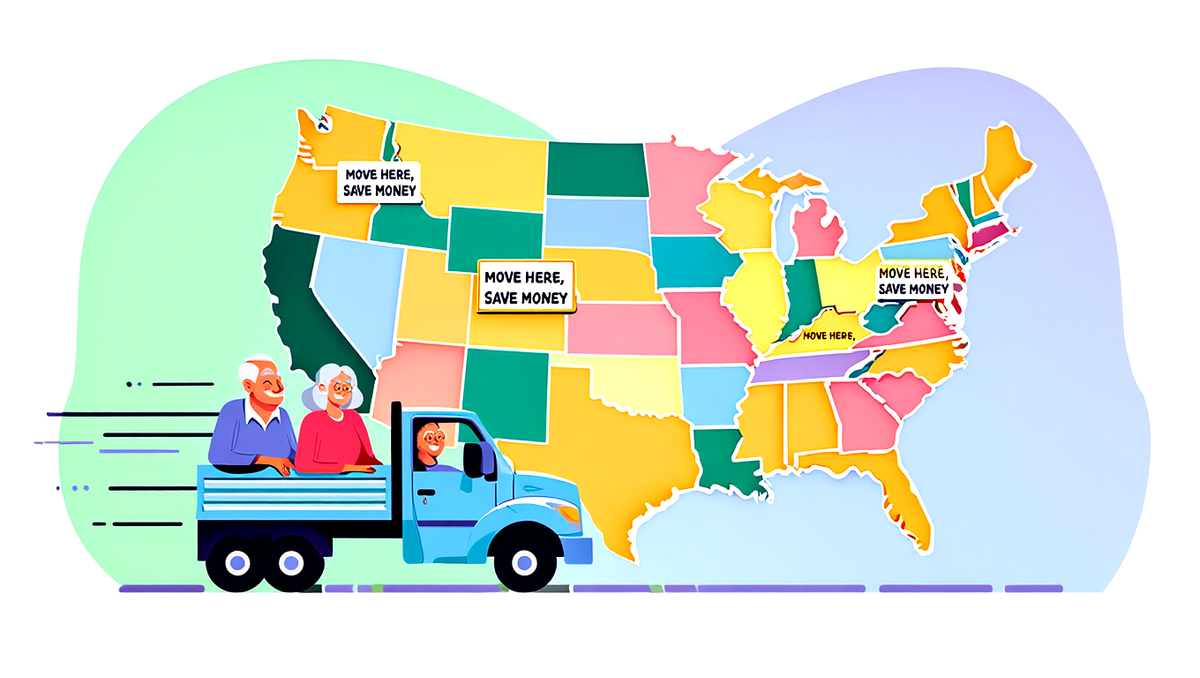
Why Midland?
The numbers tell a straightforward story. Midland has a median home value of around $206,000, median monthly rent of $790, and a 14-minute average commute. Michigan has also expanded tax relief for retirees in recent years, which pushed the city's overall score higher.
But the appeal goes beyond the balance sheet. Residents have access to Dow Gardens, which features the longest treetop canopy walk in the country, along with Broadway-style performances at the Midland Center for the Arts. It's a small city that punches well above its weight culturally.
Midland also scores well on quality of life overall, ranking 8th in that category. About 20% of its residents are over 65, meaning retirees are moving into an established community rather than pioneering one.

Quality of Life Important to You?
So, if Midland only makes #8 in the quality of life category that's important to you, where could you look? Try Weirton, West Virginia which earned its #2 ranking on the strength of quality of life, happiness scores, and affordability. Homosassa Springs, Florida took #3 largely due to strong population growth among residents 55 and older.
The underlying message from the data: more retirees are running the math on total cost of living and tax burden before they pack the moving truck, and the math is pointing them toward places they might not have considered before.
 Smart Senior Daily Staff
But Wait — What About My Tax Bill?
The U.S. News rankings tell one story. A separate affordability analysis from Forbes tells another, and if taxes are your primary concern, the map looks different.
Mississippi and Wyoming both exempt retirement income from state taxes entirely. That means Social Security, pensions, 401(k) distributions, and IRA withdrawals all go untouched by the state. Biloxi, sitting on the Gulf Coast with housing costs well below the national average, becomes a much more interesting option when you run those numbers.
Texas shows up on both lists for the same reason: no state income tax, and several metros where housing is still below the national median. Corpus Christi, in particular, offers Gulf Coast beach access at a fraction of what Florida coastal markets charge.
 Visit the Tens Towels Store
The practical takeaway is this: the best place for you to retire depends on which levers matter most. If overall quality of life, healthcare access, and community are the priority, the U.S. News rankings are a solid guide. If stretching retirement income is the mission, start with the tax map and work backward from there.
Both approaches point away from the obvious answers. Florida still shows up, but it's no longer the loudest voice in the room. Take a look for yourself...
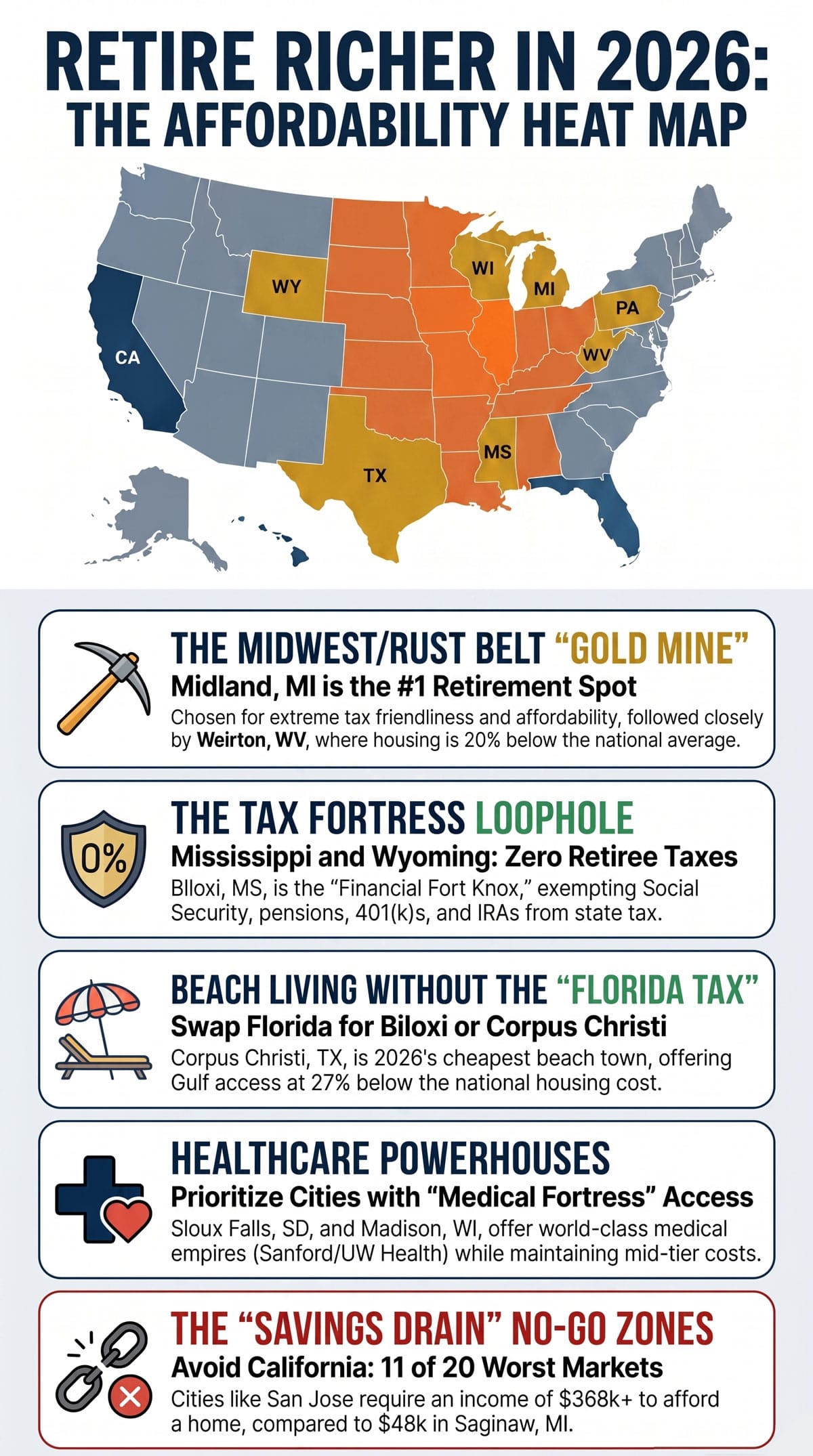
How the rankings work: U.S. News evaluated cities across six indexes: quality of life, housing affordability and cost of living, health care quality, tax-friendliness for retirees, senior population and migration rates, and the local job market. This year's edition evaluated 859 cities, up from 150 in 2025.