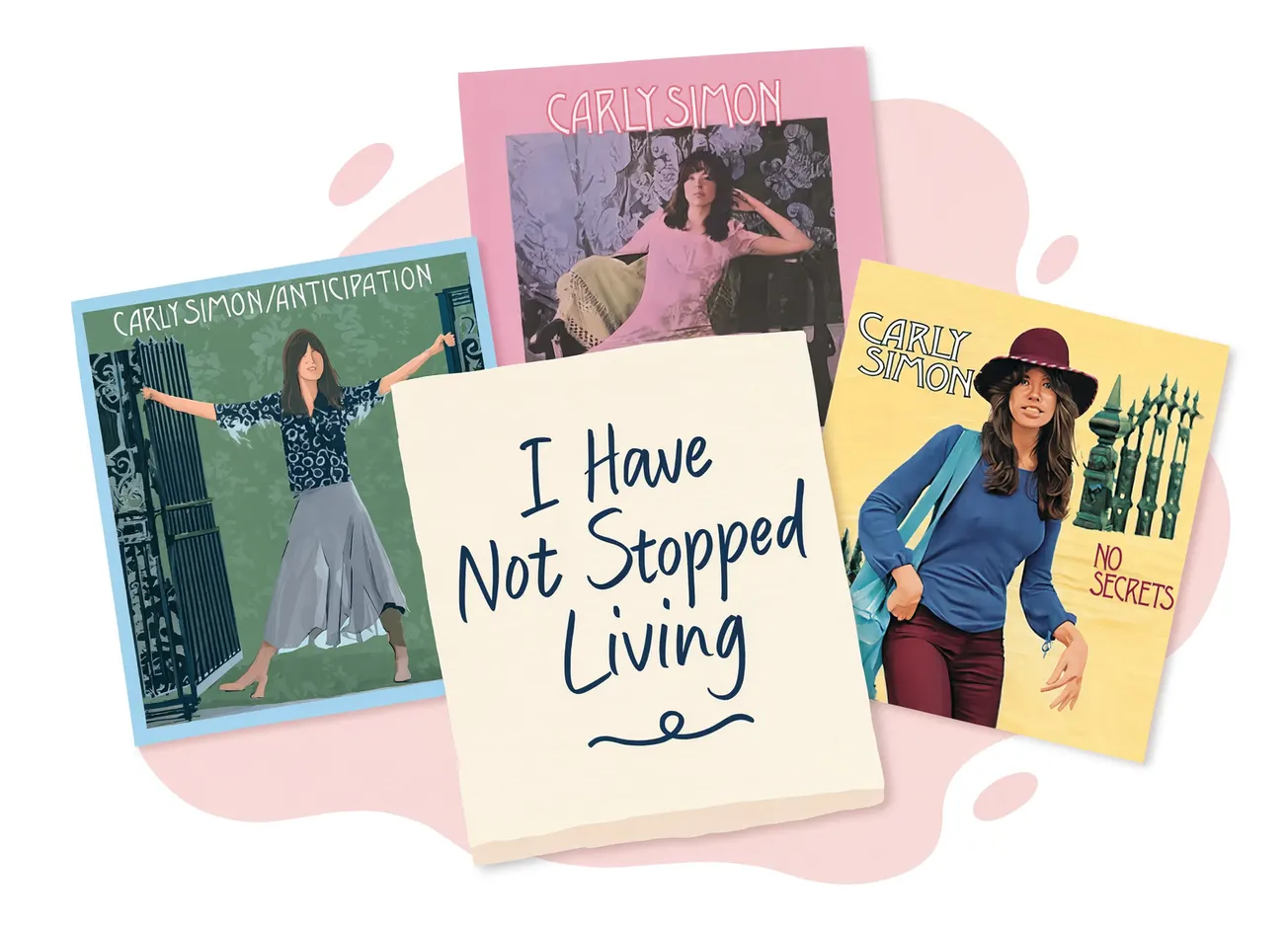
Singer-songwriter Carly Simon recently ended months of relative silence with a letter to her fans.
"The truth is," she wrote, "I've been learning how to live with Parkinson's disease."
There's no "you're so vain," no "that's the way I always heard it should be," but there is a good deal of "haven't got time for the pain" in her unusually candid letter.
Two details in Carly's letter carry lessons worth passing along, whether you're noticing new symptoms in yourself or watching a loved one seem to lose interest in everything.
Carly Simon's Letter to Her Fans
So many people have written to me, kindly wondering about my relative silence, asking how I am and what I have been doing. The truth is, I’ve been learning how to live with Parkinson’s disease.
It has taken me some time to understand the diagnosis, to adjust to it, and to decide how much I wanted to say about it publicly. Parkinson’s is different for everyone, and it can be unpredictable. Some days I’m so tired I can’t get the day moving at all. On others, it gives me a little more room to move, think, work, and feel like myself.
The problems began with arthritis in both knees and one hip. I eventually had all three joints replaced, out with the old and in with delicate bouquets of metal and plastic. After three replacement surgeries, I assumed my difficulty walking was simply an unfortunate and rather ironic part of the recovery process.
But my mobility continued to worsen. I had trouble standing up from low chairs and deep couches without someone offering me an arm. Overstuffed furniture became my enemy. Once seated, I could feel as though I had been swallowed by the chair and might remain there permanently, like a guest who had badly overstayed her welcome.
Eventually, there were periods when I could not walk without considerable help. My family and I knew that something more was going on. After an extensive evaluation at the Mayo Clinic, I was diagnosed with Parkinson’s.
I began treatment, including taking medication to help with stiffness and other symptoms. There is no tidy or predictable schedule to the illness. It does not consult my calendar before deciding what kind of day I am going to have.
Parkinson’s is usually associated with movement, tremors, and balance, but it can affect much more than the body. It can bring anxiety, depression, exhaustion, and apathy. The apathy is particularly strange. You can find yourself lying there like a starfish drying in the sun, arms pointing in all directions, while nothing inside is telling you to get up, read, watch, write, sing, call someone, or do much of anything at all.
That has been one of the hardest things to explain. It is not simply sadness or laziness. It is as though the part of the brain that sends out invitations to participate in life has temporarily misplaced the guest list.
During this same period, I was also treated for basal cell carcinoma on my face. The cancer was removed, but the surgery affected my appearance and made me more self-conscious about being seen in public. I have always been more critical of my appearance than anyone else could possibly imagine (check out the irony of having written “You’re So Vain"), and this gave my inner critic quite a lot of new material.
Between my mobility issues, the Parkinson’s diagnosis, the surgery, and the emotional effects of it all, withdrawing from public view was the most palatable reaction. If a person is allowed to hibernate during both winter and summer, then I have become an all-season bear.
But I have not stopped living, and I have not stopped working.
In the middle of all this, I began recording a new album, Comes in Waves. That still feels mysterious to me. Music has always known when to arrive. It has rescued me more times than I can count. It is like a cat or dog that quietly appears beside you when it senses you are not quite yourself.
The album includes songs and fragments of songs that had been waiting for me, some for years. There were melodies, verses, and ideas written down and tucked away for some unknown future when I would have the time and attention to finish them.
Apparently, that future is now.
Working on the music gave shape to days that did not always have much shape. It gave me somewhere to go without having to leave the room. It reminded me that illness can change your life without becoming the whole of your life.
I do not consider Parkinson’s a gift or a blessing. It is neither. It is difficult, frustrating, and sometimes frightening. I am still learning how to live with it and how to accept it without feeling that I have surrendered something essential.
I am still writing, singing, imagining, laughing, worrying, remembering, and occasionally getting trapped in an overstuffed chair.
I am deeply grateful to my children, my family, my friends, my caregivers, and the medical professionals who have helped me through this. Their love and patience have carried me through days when my own reserves were not enough.
I wanted to share this now because so many people have reached out with genuine concern. I am touched by that concern, even when I have not known how to respond.
These days I move more slowly, I lean on others more than I once did, and I have learned to accept that every day will look a little different. But I am still very much here.
With love, Carly
Source: https://people.com/carly-simon-reveals-parkinsons-disease-cancer-diagnosis-12020645
"Overstuffed Furniture Became My Enemy"
Simon writes that her mobility problems began with arthritis in both knees and one hip, eventually treated with three joint replacements. She assumed her ongoing trouble getting up from low chairs and overstuffed couches was simply a hard recovery. It wasn't until doctors at the Mayo Clinic ran a full workup that Parkinson's entered the picture.
That kind of delay is common, says Dr. Rebecca Gilbert, a neurologist at Bellevue Hospital Center in New York City and Chief Mission Officer at the American Parkinson Disease Association.
"As people age, they encounter new symptoms which could be attributed to the normal wear and tear that accompanies aging, but might be due to a new medical condition such as Parkinson's disease," Gilbert told Smart Senior Daily. "A neurologist is usually able to distinguish them from changes due to regular aging."
A handful of symptoms, she says, don't overlap with normal aging at all, and are worth knowing by name.
- One is a rest tremor. Gilbert calls it "highly characteristic of PD and is not seen in other conditions": a rhythmic shaking of a hand or arm that occurs only when the limb is completely relaxed and not being used, as when it is resting in your lap or hanging at your side while you are walking.
- Gilbert also notes a “masked face” (an uncharacteristically blank look), a distinctive shuffling gait with shoulders and elbows bent forward, orthostatic hypotension (a light-headed or faint sensation when standing up too quickly due to the body’s slow adjustment of blood pressure), and REM sleep behavior disorder (in which an individual physically acts out their dreams while asleep).
- Vaguer symptoms, like general slowness or stiffness, are harder to sort out alone. Gilbert's advice there is simple: "discuss all new symptoms with your primary care physician," who can judge whether something is more concerning than ordinary aging.
 Smart Senior Daily Staff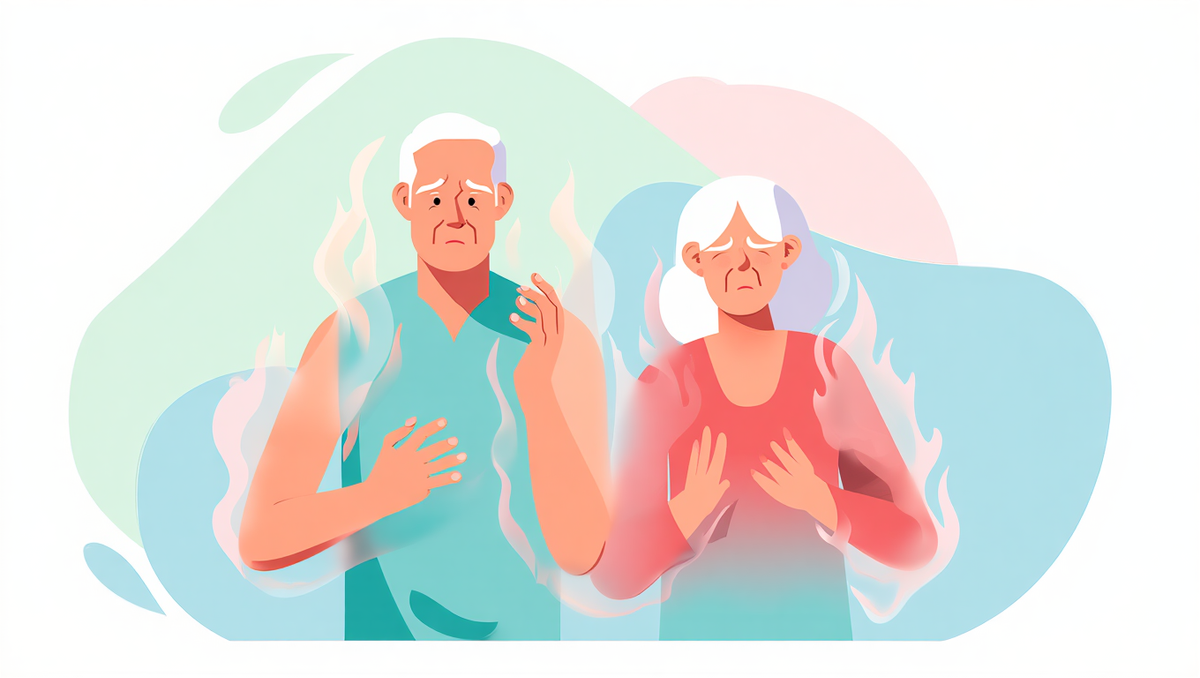
"The Apathy Is Particularly Strange"
The second passage worth pulling from Simon's letter has nothing to do with movement. She describes lying "like a starfish drying in the sun," unable to summon the will to read, write, or call someone, and calls it one of the hardest parts of her diagnosis to explain.
Not sadness exactly. Not laziness. Just an absence of the internal pull toward doing anything at all.
That's apathy, and Gilbert says it's a genuine, distinct feature of Parkinson's disease, not a mood problem or a character flaw.
"People with PD may feel that they have lost their 'get up and go,' and can't muster enthusiasm for anything, even things they once engaged in and enjoyed," Gilbert says. It can occur alongside depression, but it doesn't have to; someone can be apathetic without feeling sad or hopeless in the least, simply uninterested.
That distinction matters for families. Apathy is easy to mistake for someone giving up, which breeds frustration on both sides. It's also quietly dangerous, Gilbert notes, because it can interfere with the very activities, like exercise, that help manage Parkinson's symptoms in the first place.
Her recommended countermeasure isn't a pep talk. It's structure: she advises care partners to encourage specific activities, since "establishing a regular routine of activities is crucial," turning parts of the day into something non-negotiable rather than optional.
 Maura Horton
"I Am Still Very Much Here"
Simon's letter doesn't end on apathy. She describes recording a new album during this same period, writing that the work "gave shape to days that did not always have much shape." It's a fitting note to end on, and it runs through both halves of Gilbert's guidance: a disease that reshapes the body, and at times the will to participate in life, doesn't have to define every day of it.
For anyone noticing new symptoms in a parent, a spouse, or themselves, or trying to make sense of a loved one who suddenly seems checked out, Simon's letter and Gilbert's explanation together offer something more useful than sympathy: specifics worth acting on.