- Volunteering can be one of the most powerful no-cost anti-aging tools for seniors
- About two hours a week may help lower blood pressure, inflammation, and stress
- It can strengthen brain function, especially when others are counting on you
- Volunteering fights loneliness by replacing isolation with purpose and mattering
- Even homebound seniors can benefit through remote and online volunteer opportunities
Every April, Smart Senior Daily celebrates National Volunteer Month, but for seniors looking for connections, volunteerism can be a 365-day-a-year program in and of itself full of connections.
Now, the supplement industry would rather you load up on bottles of weedy magic and that you never hear these words: one of the most powerful anti-aging interventions costs nothing and doesn't require a prescription. It just requires showing up for someone else.
Call it counterintuitive. Call it old-fashioned. The science calls it significant.
Two Hours a Week Changes Your Biology
In January 2025, Social Science & Medicine published findings that should have made bigger headlines. Volunteering — specifically hitting about 100 hours a year, or two hours a week — produces measurable physical changes at the cellular level: lower biological age acceleration, better stress regulation, and improvements in key DNA methylation markers linked to long-term disease risk.
Not "you'll feel better about yourself" changes. Cellular changes. The kind that show up in labs.
Dr. Maya Reynolds, MD, MPH, a psychiatrist and behavioral health spokesperson at ChoicePoint, told Smart Senior Daily what's happening underneath:
"When a person is involved in consistent, valuable helping behaviors, their nervous system takes a smooth shift from chronic threat mode to a regulated state. This further has a significant impact on physical resilience, heart health and inflammation."
But motivation matters. Reynolds is clear on this:
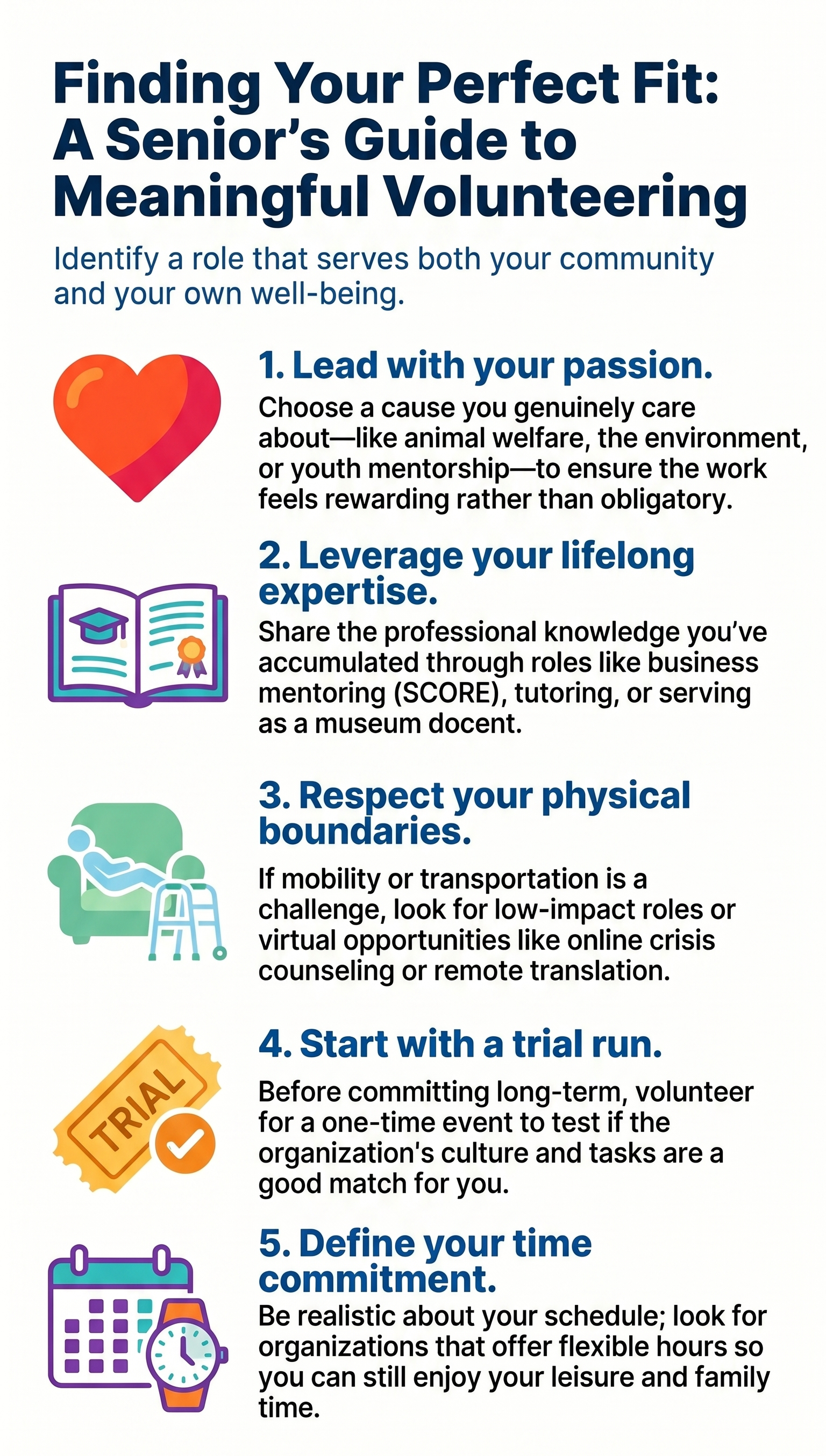
"Volunteering that is done intentionally to serve some purpose has stronger psychological and biological benefits than something that is done out of obligation only."
Your body, apparently, knows the difference.
 Gary P Guthrie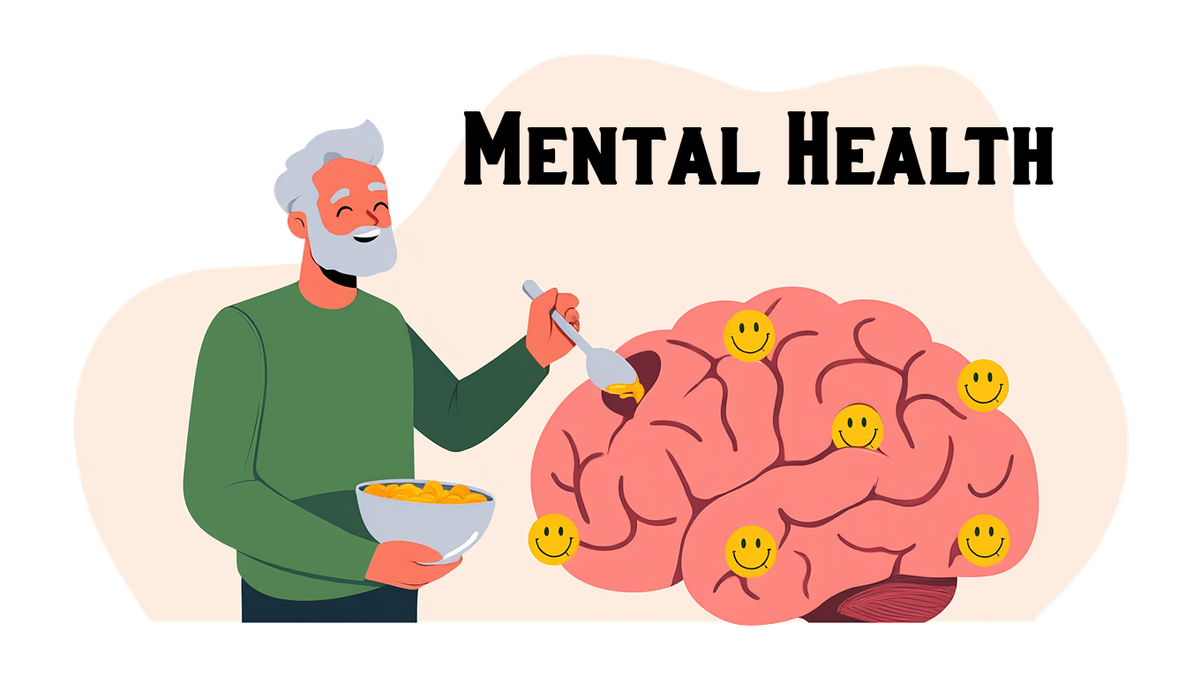
Your Brain Gets a Workout Too
The cognitive benefits are just as real. Research consistently links regular volunteering to improvements in executive function — the mental machinery behind planning, decision-making, and focus.
And a separate 2025 study in the same journal found that volunteering during early retirement reduces the probability of depression by roughly 5%, with even larger gains for women.
That's not a trivial number. Depression in older adults is underdiagnosed, underreported, and closely tied to cognitive decline. Anything that moves that needle matters.
Mentorship is particularly potent. Taking on a role where someone is counting on you replaces the drift of isolation with something concrete: responsibility. And intergenerational connection — whether through tutoring programs, community groups, or one-on-one mentoring — delivers benefits to both the mentor and the student.
Loneliness Is the Disease. Mattering Is the Cure.
Loneliness in older adults isn't just emotionally painful — it's physically dangerous. Dr. Reynolds puts it plainly:
"The feeling that you matter to someone works as a substantial protective factor for mental and physical health, especially as we age."
Richard Leider, one of America's leading voices on purpose and aging, has spent decades making the same case: that the antidote to late-life anxiety isn't more social events — it's feeling like you matter.
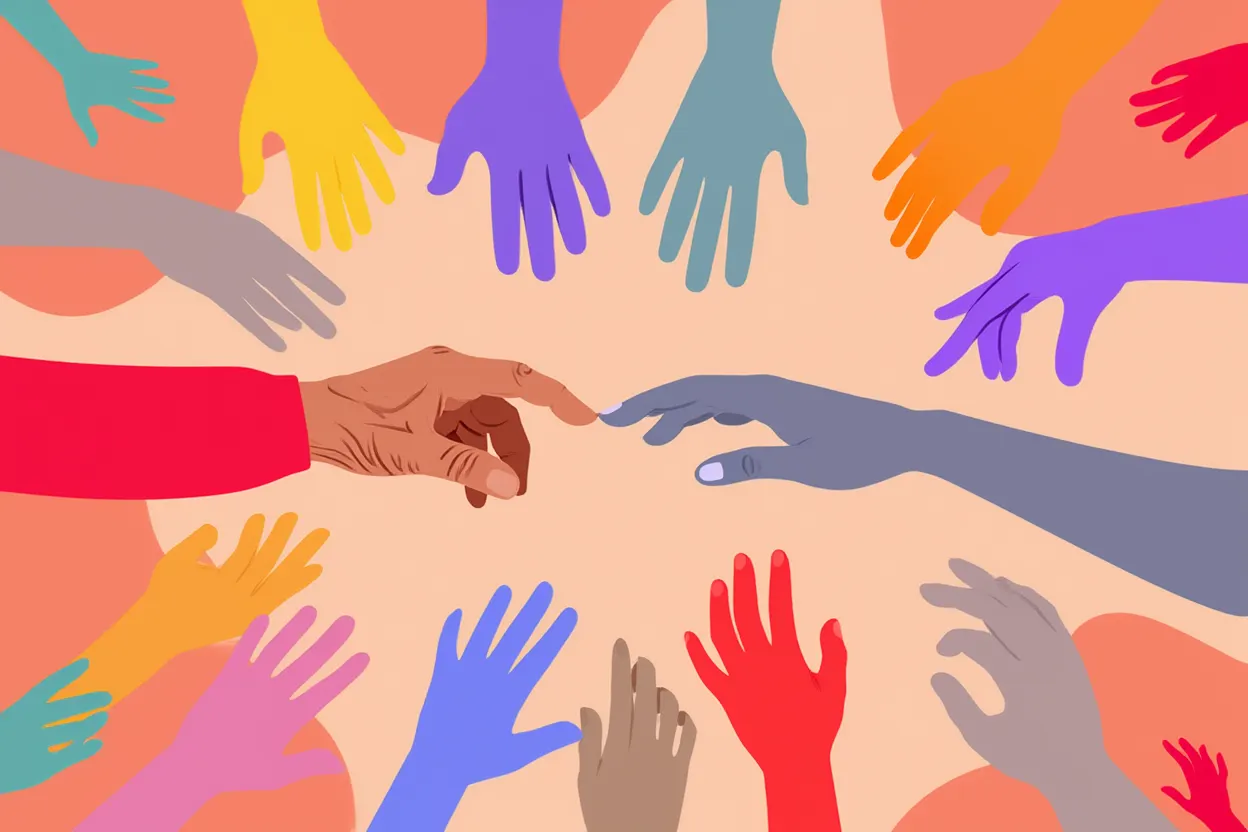
Volunteering delivers that. When you know someone is waiting on you, counting on you, better off because of you, your brain responds chemically. Serotonin, dopamine, endorphins. The good stuff.
Medical professionals are catching on. An evaluation of a social prescribing program in Rotherham, England — where doctors connect patients to community involvement alongside clinical care — found that 82% of nearly 1,000 participants reported positive changes in their wellbeing across multiple self-management measures. Emergency department visits also dropped 17% in the year following their first contact with the program.
Gary P Guthrie
It Starts With You, It Outlasts You
Volunteering turns out to be contagious. People who do it tend to raise families that do it. That's what Leider calls generativity — the drive to leave something behind that matters.
And research shows you don't need a formal program to get the benefit. Helping a neighbor, regularly and reliably, produces measurable gains in personal agency and well-being.
Leider says curiosity is the engine of healthy aging. Stop being curious, stop growing. The same logic applies to giving: stop contributing, and something essential starts to atrophy.
Two hours a week. That's the price of admission. The return, it turns out, is biological.
Sources
- Kim, S. et al. "Does volunteering reduce epigenetic age acceleration among retired and working older adults?" Social Science & Medicine, Vol. 364, January 2025. https://www.sciencedirect.com/science/article/abs/pii/S0277953624009559
- Lorenti, A. et al. "Volunteering during early retirement reduces depression." Social Science & Medicine, Vol. 367, 2025. https://www.sciencedirect.com/science/article/pii/S0277953625001194
- Richard Leider, The Power of Purpose and Who Do You Want to Be When You Grow Old? https://richardleider.com/books
- Chatterjee, H.J. et al. "Maximising the impact of social prescribing on population health." Journal of the Royal Society of Medicine, 2020. https://pmc.ncbi.nlm.nih.gov/articles/PMC7575293/
- Dr. Maya Reynolds, MD, MPH — Psychiatrist and Behavioral Health Spokesperson, ChoicePoint. Quote sourced via Qwoted.