If you quizzed people who own a medical alert system, you're likely to get this as their #1 expectation: press the button, get help fast. And for decades, that's exactly what personal emergency response systems, or PERS, were designed to do.
But that was then. The now of how these systems work is a wake-up worthy shift—all starting with a simple fact that the manufacturers of those devices don't shout from the rafters in their ads: most button presses aren't emergencies at all!
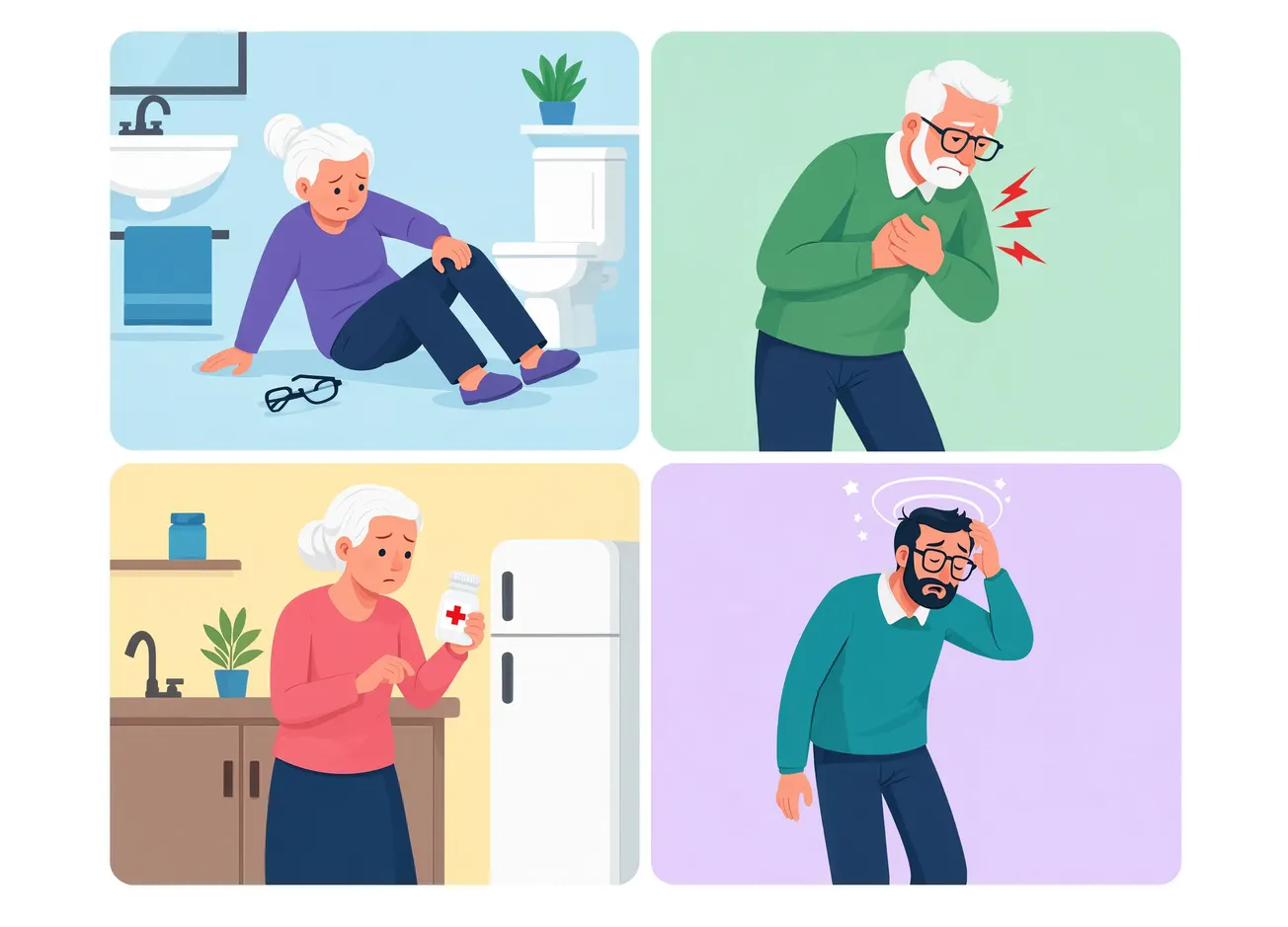
Connect America, the company behind the well-known Lifeline brand, says roughly half of the calls its PERS users make involve a health concern rather than a true 911 situation. Things like a fall with no obvious injury. Chest tightness that might be nothing more than indigestion. A medication question. Or just feeling a little "off" and unsure what they should do about it.
Finding the Hole and Filling It
Up to now, calls like that got the same treatment every PERS call did, which was a trained monitoring center operator decides, rather quickly, whether to:
a) send an ambulance,
b) contact the next of kin, or
c) do neither.
Operators are basically that—operators. They're generally not equipped to make a clinical judgment about what's actually happening with someone's health. That's something that flies in the face of what those users are now leaning in toward.
And it's that gap Connect America had their designs on to close. Enter CareCompass.
Launched in late 2025, CareCompass's leading differentiator is a registered nurse injected into the call flow for situations that aren't a clear emergency.
Instead of a simple binary response of "dispatch or don't," a nurse gets in the mix to assess symptoms in real time and recommend what to do next: either stay home and monitor, call a doctor, go to urgent care, or make that 911 call.
"About half the calls we get aren't emergencies. They're someone who feels dizzy or isn't sure about a medication. For years, the only choice was to send an ambulance or do nothing. CareCompass puts a registered nurse on the line in that moment, so the person gets the right level of care, and often that means staying safely at home," said Janet Dillione, CEO of Connect America.
The company says the interaction between the user and its assessment team doesn't end when the call does, either. It then adds a structured record layer that can flag patterns, such as repeated falls or medication issues, back to a person's care team or health plan.
 Smart Senior Daily Staff
Connect America is currently the loudest voice describing this shift, and it's important to be upfront about that: the company positions itself as the first to offer this kind of integrated nurse triage, and the results it points to come from its own studies.
In a company-run study across roughly 10,000 members with multiple health plan partners, the numbers that Connect America reported are noteworthy: a 39% drop in avoidable emergency department transports and a 6 to 9% drop in all-cause ED utilization [Emergency Department (ED) utilization measures how frequently patients or health plan members visit a hospital emergency room] when CareCompass was in use, along with people reaching a live person in under 20 seconds. *
*Those numbers haven't been independently verified, and it's reasonable to expect a company to highlight its best results. Still, the underlying pressures driving this kind of product are real and industry-wide, not specific to one company.Will Healthcare Step Up to Help?
Two of the more glaring things standing at healthcare's crossroads are a) health plans and providers are under growing pressure to reduce unnecessary emergency department visits and manage the total cost of care; and b) more seniors want to age in place rather than move into assisted living.
Emergency departments are increasingly overcrowded. Americans made 155 million ER visits in 2022, roughly 11% more than in the previous national survey, and adults 75 and older visit at nearly twice the overall rate, second only to infants.
Staying put is more of a goal for seniors than it ever has, too. AARP found that fewer than a third of adults 50+ (29%) would leave their community to move into a continuing care community, compared with 75% who want to stay in their current homes.
Add to that, workforce shortages across home care and nursing mean adding more people isn't a simple fix, which is part of why technology-enabled triage is getting attention as a way to extend clinical judgment without needing to hire proportionally more staff.
For someone shopping for a medical alert system today, this matters in a practical way. If you're comparing providers, it's worth asking directly:
- Whether nurse triage, or anything like it, is included in your plan or sold as an add-on, and
- Whether it's available to individual consumers or only offered through health plans and provider partnerships.
- It's also worth asking what actually happens during a non-emergency call: who's on the other end, what they're trained to do, and what information gets shared with your doctor or family afterward.
The bigger picture is that PERS is starting to shift from a device that sits quietly until something goes wrong to something closer to an ongoing part of a person's care, one that's paying attention even on the days nothing dramatic happens.
Whether that shift plays out the way any one company describes it is something worth watching, not taking on faith. But the direction itself, from reactive safety net to earlier, everyday support, looks like a genuine trend rather than a one-off pitch.
 Smart Senior Daily Staff
Disclaimer: The content published on Smart Senior Daily is intended for informational and educational purposes only and does not constitute medical advice. Nothing on this site should be interpreted as a recommendation for a specific treatment, medication, or course of action, nor is it intended to diagnose, treat, cure, or prevent any disease or health condition. Always consult a qualified healthcare provider before making changes to your diet, exercise routine, medications, or other aspects of your health care. Never disregard professional medical advice or delay seeking it because of something you have read on this site. Smart Senior Daily makes every effort to present accurate, up-to-date health information, but we cannot guarantee the completeness or timeliness of any content. Health information changes frequently, and what is current today may be revised as new research emerges. Individual health needs vary widely. Information that applies generally may not be appropriate for your personal situation. Smart Senior Daily is not affiliated with any medical institution, health system, or pharmaceutical company.