Air travel is supposed to be easier than ever. Book online, check in with your phone, and breeze through the airport.
But according to a new industry report, the reality is often the opposite.
A study titled “Jay Sorensen Busts 8 Airline Business Myths” argues that many airline practices — from confusing fare rules to baggage policies — persist simply because they’ve become industry habits.
And some of them make flying harder for passengers.
“Challenging outdated thinking is essential for the airline industry’s next phase of growth,” said Jay Sorensen, president of IdeaWorksCompany, the airline consulting firm that released the report.
“Airlines that simplify pricing, strengthen service consistency, and focus on customer clarity will build stronger brands.”
Here are five airline myths from the report that matter most to older travelers — and what you can do about them.
Myth #1: “Seamless travel” is real
Airlines often promise “seamless travel,” especially when flights involve partner airlines or global alliances.
In practice, the report says those partnerships can create confusion. Seat assignments, check-in systems, and baggage rules may not work smoothly between airlines.
“Seamless travel is a myth,” Sorensen writes in the report, noting that even experienced travelers run into problems when different airlines operate the same trip.
Myth #2: Airline change rules make sense
Airlines have been tweaking fare restrictions since the mid-1980s, when deeply discounted tickets began carrying penalties and restrictions.
Over time, the rules became so complicated that many travelers only discover them when they try to change a flight.
Sorensen argues the rules have become unnecessarily complex and confusing.
“Crazy-stupid complex fare change rules are… stupid,” he writes bluntly.
Myth #3: Carry-on chaos is unavoidable
Ever noticed how overhead bins fill up instantly?
The report says airlines actually created the problem themselves when they started charging for checked bags in the late 2000s.
Passengers quickly adapted by bringing more luggage onboard.
The result: crowded bins, boarding delays and last-minute gate checks.
 Smart Senior Daily Staff
Myth #4: Airline websites make travel easier
Modern airline websites are powerful booking tools — but they’re also cluttered with add-ons.
Seat upgrades, baggage purchases, car rentals and hotel bookings now appear throughout the booking process.
The report says airlines have become retailers, pushing transactions rather than simplifying travel planning.
Myth #5: Everyone is comfortable with airline technology
Perhaps the report’s most striking observation involves automation.
Many airlines now rely heavily on kiosks, apps and self-service systems.
But not every traveler finds them intuitive.
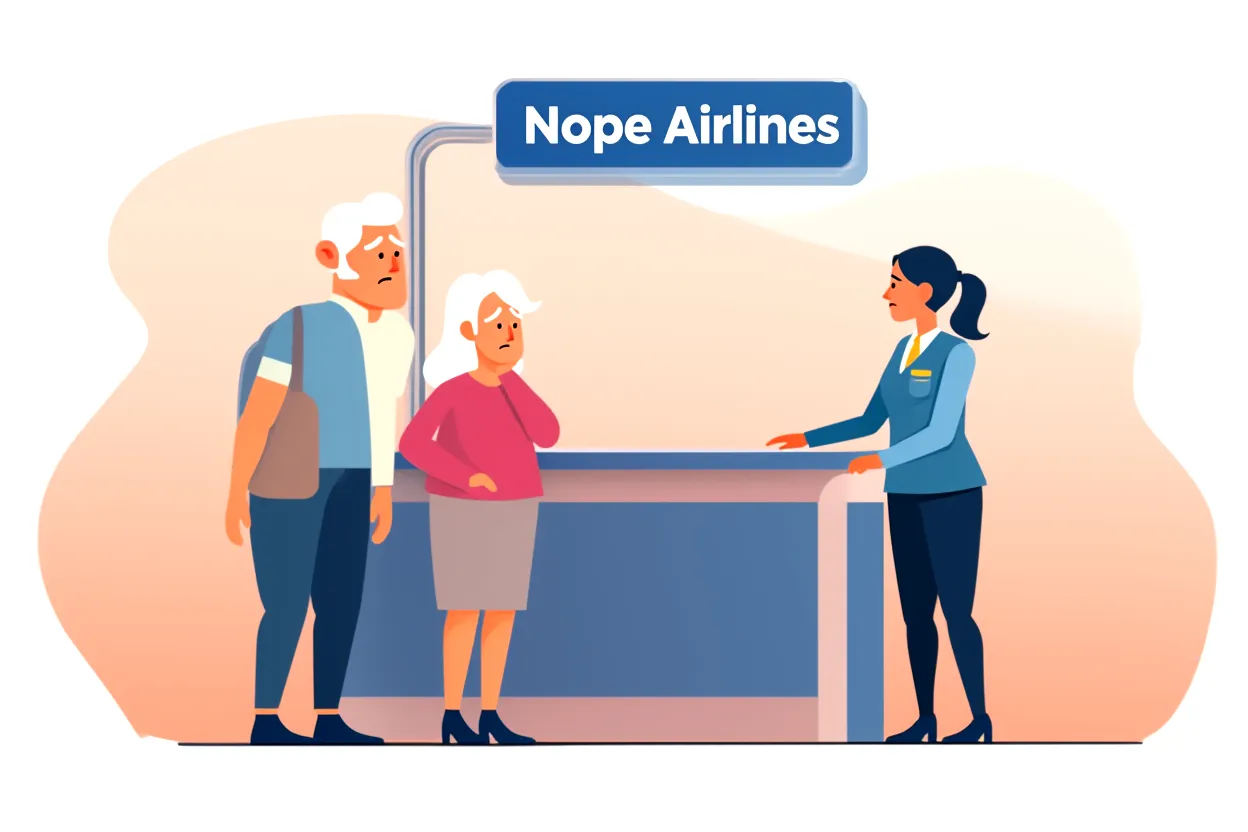
Sorensen recounts watching a couple struggle with a self-check-in kiosk at an airport with no staff nearby to help.
Some travelers may have disabilities, cognitive issues or simply lack familiarity with touchscreens and QR codes, he notes.
Airlines, he argues, must remember they are “common carriers” — legally required to serve the general public.
 Smart Senior Daily Staff
The bigger issue
Beyond the individual frustrations, the report suggests airlines may be undermining customer trust with overly complex systems.
Small policy choices — confusing fare rules, inconsistent baggage fees, and heavy reliance on automation — can add up to a stressful travel experience.
The solution, Sorensen says, isn’t complicated.
“Airlines that simplify policies and improve clarity will build stronger brands while achieving better long-term revenue results.”
For travelers — especially those who fly only occasionally — the takeaway is simple:
A little preparation can make a complicated system easier to navigate.
Disclaimer: This article provides general travel information and consumer tips. Airline policies change frequently, and travelers should confirm current rules with the airline before booking or flying.