It shows up in a window envelope stamped FINAL NOTICE in red, with RESPONSE TO THIS NOTICE REQUIRED printed below. Your name and address are there. So is the name of your mortgage lender, often right after the words "Secured By."
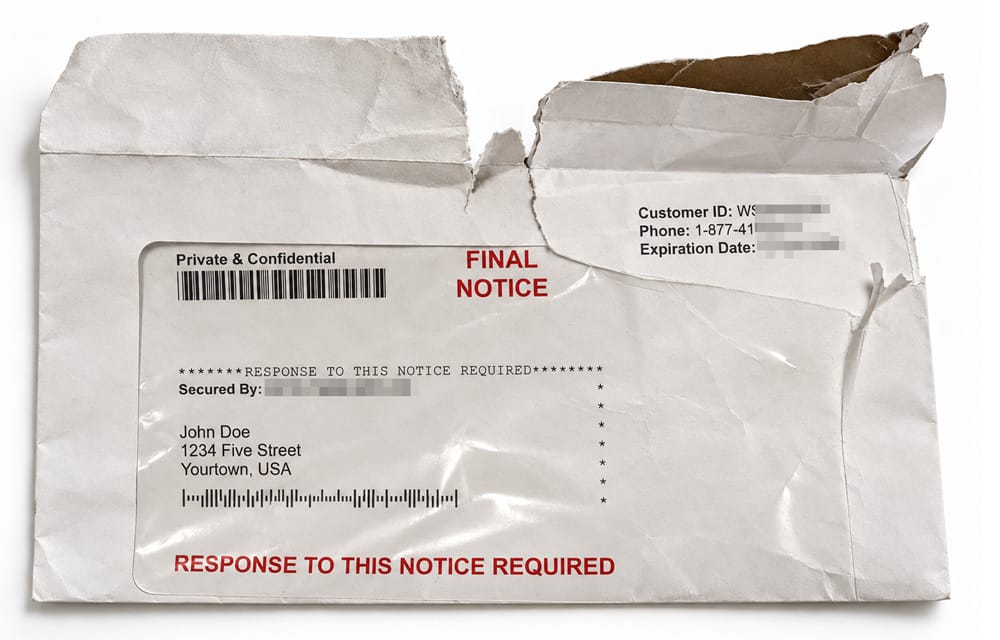
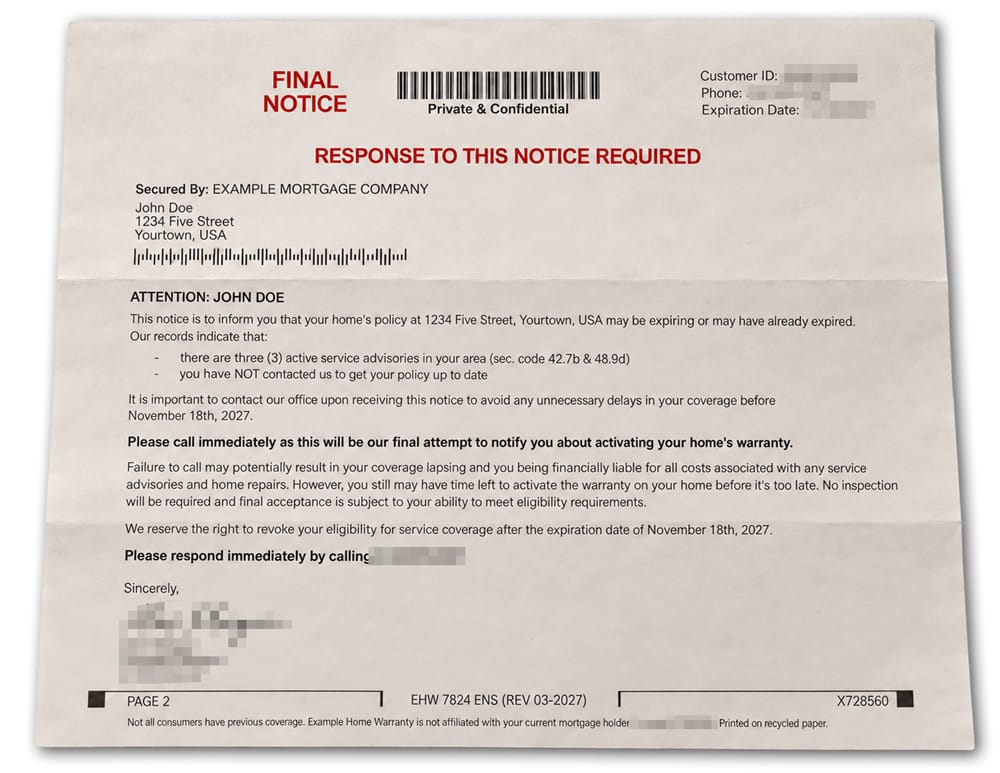
Inside, the letter warns that your "home's policy" may be expiring or may have already expired. It mentions "active service advisories" in your area and says you could be financially liable for repair costs if you don't call by a deadline a week or two away.
It looks like it came from your bank. In most cases, it didn't. It's an offer to buy a home warranty.
Not a Scam, But Read EVERY Word
Many of these mailers come from companies that sell real home warranty contracts, a type of service contract that pays for certain repairs to appliances and home systems.
The offer itself may be legitimate – but not a scam. What can mislead you, though, is the packaging.
The key detail is usually found at the very bottom of the page, in teeny-tiny type: a line saying, "The company is not affiliated with your current mortgage holder."
Many also note that not everyone who gets the letter has previous coverage or was sent to someone who has already paid off their mortgage. Read that, and the "final notice" becomes what it is: a sales offer for coverage you may never have had.
How Do They Know My Lender?
Mortgage records are public. All it takes are deeds and liens filed with your county that list your name, address, and lender, and that information is widely available to marketers for a small fee and in person or online.
Sounds like something that shouldn’t be allowed, but it is. Using public records is legal everywhere. A handful of states, including Louisiana and Illinois, do require these mailers to say plainly that they aren’t from your lender or that they aren’t a bill. And some states – like Connecticut and California – have taken action against mailers like these.
What to Look For
- A "final notice" when you never received a first one.
- Your lender's name after "Secured By" or "Re:"
- Reference codes the letter doesn't explain, such as "sec. code" numbers.
- A short deadline and a warning about repair costs.
- No company name or return address at the top, just a phone number.
- A "not affiliated with your mortgage holder" line in the fine print.
Want a Home Warranty? Shop on Your Own Terms.
Have a furnace or stove that came over on the Mayflower? Then, a warranty can make sense, and you prefer a predictable bill. But there are other steps you should take before you sign anything.
- Check what you already have. The FTC notes a warranty may duplicate coverage you already have. Look at manufacturer warranties and your credit card; Consumer Reports says some cards extend original warranties. Condo owners should check the association's master policy.
- Know the real price. You pay a premium plus a fee each time a technician comes out. NerdWallet's 2026 review of AFC Home Warranty found plans from $333 to $1,330 a year, plus $75 to $125 per service call.
- Read the contract, not the brochure. Look for per-item caps, pre-existing-condition exclusions and maintenance requirements. Consumer Reports found claims can be denied over poor maintenance or improper installation.
- Confirm the company is licensed. Most states require home warranty companies to register or be licensed, usually with the state insurance department. Ask for the license or registration number, then check it with your state insurance department.
- Check complaints and get three quotes from companies you found yourself.
- Or skip it. Consumer Reports suggests putting the premium money into a savings account for repairs instead.
Other "Final Notices" to Read Twice
- Car warranty notices. Same format, but they name your car's make and model instead of your lender. All they're doing is selling a vehicle service contract, not extending your factory warranty. As Washington's attorney general points out, your original warranty may be far from expiring or may have run out long ago. Check with your dealer before you call anyone.
- Mortgage protection postcards. Marked "important notice" or "time sensitive" and naming a local bank, they're selling insurance that pays off your mortgage if you die. No lender requires it, and a regular term life policy is often the better fit.
If One of These Lands in Your Mailbox
- Don't call just because it says "final." If the offer interests you, research the company first.
- Unsure who sent it? Call your lender using the number on your statement.
- Shred it if you're not interested. It has your name, address and lender on it.
- Think it crossed a line? Report it at ReportFraud.ftc.gov and to your state attorney general.
- Already bought one? Check the cancellation terms right away, and contact your state insurance department if the company stalls.
The bottom line: the offer may be real. The urgency usually isn't.
Sources
- Connecticut AG: Integrity Admin Group settlement (2023)
- Connecticut AG: home warranty ad warning (2022)
- Insurance Journal: California DOI orders refunds over mailers (2023)
- Atlanta News First: "final notice" letters under scrutiny (2024)
- Midwest Farm Report: Wisconsin agencies' home warranty mailer alert (2023)
- FTC consumer alert: So what's the deal with home warranties?
- WSLS / Consumer Reports: what home warranties really cover (July 2026)
- NerdWallet: AFC Home Warranty review (March 2026)
- Kentucky regulation 806 KAR 5:060, service contract registration