By Dr. Heather Swanson of CareMore Health
Based on temperature datasets from five different research groups, Carbon Brief predicts that 2026 is likely to be the second-warmest year on record. For most people, that's a headline. For 90% of adults ages 65 and older who have at least one chronic condition, it’s a serious health hazard.
Rising temperatures are not an inconvenience. They are a medical stressor, adding extra pressure to emergency rooms across the United States. In some events, it can cause death.
The heat season is longer than you think
Health-related ER visits and urgent care calls increase from May through September, with July and August representing the peak danger. For older adults with chronic conditions, heat risk doesn't snap on at a specific temperature. It builds.
Vigilance should start when the heat index exceeds 85°F. But it's sustained heat that does the most damage. Three or more consecutive days at or above 90°F are associated with higher rates of heat-related ER visits and hospitalizations than isolated hot days.
 Smart Senior Daily Staff
The conditions most people overlook
While heart disease and lung conditions get most of the attention, there are three categories of chronic illness that don't get enough:
- Mental health disorders, including dementia, schizophrenia, and severe depression, carry some of the highest heat-related mortality risks of any condition. Impaired heat perception, reduced ability to adapt behavior, and medications that disrupt the body's internal thermostat create a dangerous combination.
- Chronic kidney disease, even in patients not on dialysis, shows some of the strongest associations with heat-related ER visits. The kidneys are already less efficient at conserving fluids, and many of these patients are on diuretics (water pills) that compound the problem.
- Diabetes affects the body's nervous system in ways that can impair sweating and blood sugar regulation, both of which drive dehydration risk faster than most people expect.
Your medications may be working against you in the heat
Our bodies cool themselves in two ways: sweating and radiating heat through the skin. Did you know that a number of medications, used by millions of older adults, interfere with both?
Diuretics reduce the body's ability to sweat. Blood pressure and heart medications, including certain beta-blockers and calcium channel blockers, affect heat radiation through the skin. Bladder-control drugs and some antihistamines can block sweating outright. If you or a loved one stops sweating on a hot day, get to a cool place and call a doctor immediately.
Antipsychotics, mood stabilizers, and some antidepressants can dull the body's perception of heat entirely, making it easy to not realize danger until it's advanced.
Before the first heat wave arrives, do a medication review, as it is one of the highest-value conversations a patient and their doctor can have.
Smart Senior Daily Staff
What family members and caregivers should watch for
By the time someone feels weak, dizzy, or thirsty, they're already behind. The earliest warning signs are behavioral: not acting like themselves, slower thinking, irritability, staying in bed more than usual, or unusual resistance to turning on the AC. As for the physical signs, look for flushed or unusually pale skin, dry skin without sweating, and a rapid pulse.
Mild symptoms that resolve with rest in a cool environment and fluids; even then, it warrants a call to a provider. Confusion, fainting, seizures, elevated body temperature, severe weakness, or repeated vomiting are emergencies that must be treated at the hospital. Keep in mind that heat stroke causes permanent organ damage, which requires immediate care. Ignoring it could cause death.
Have a heat plan before you need one
Don't wait for the first heat wave to figure out your plan.
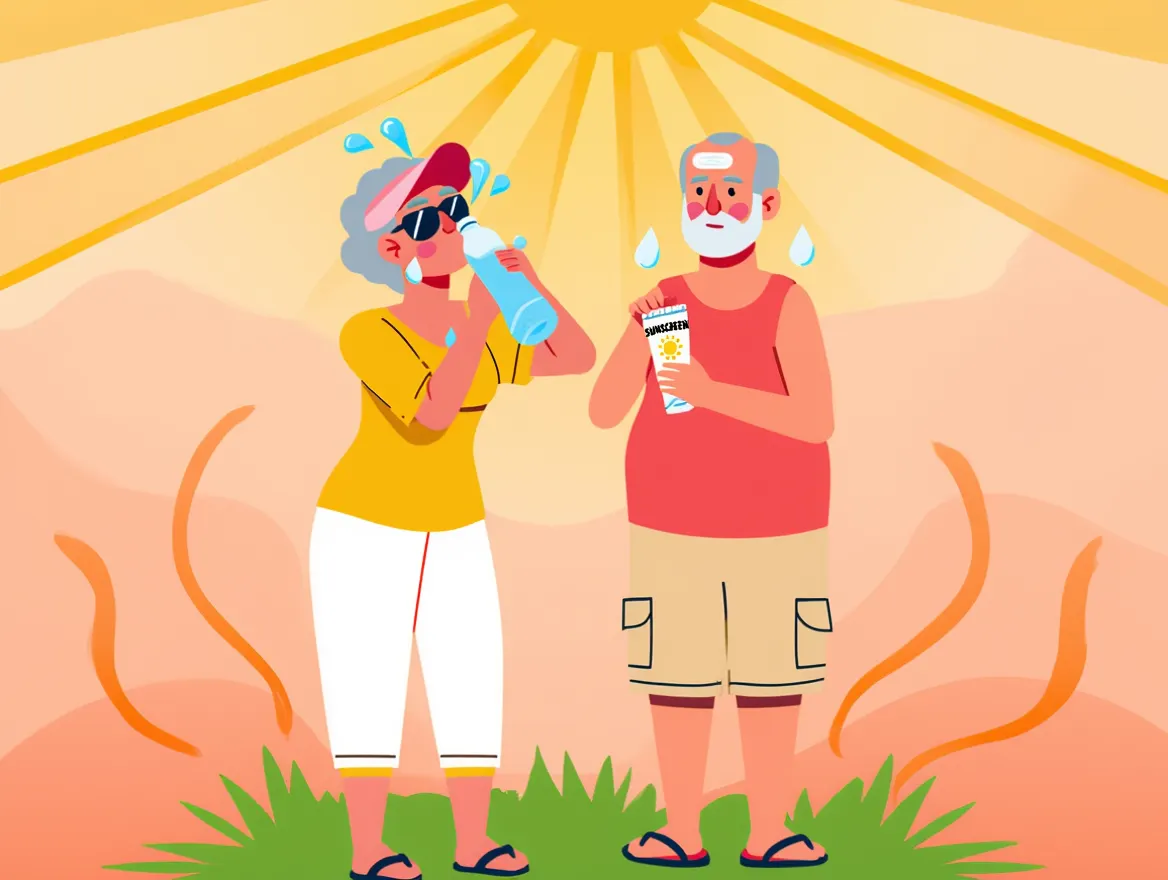
Before leaving your home, wear lighter clothing, stay in the shade, and slow down in the heat. Identify a cooling location that isn't just a fan or shade but somewhere with real air conditioning. Review your medications in the spring and ask your doctor if any adjustments are needed. Drink fluids on a schedule. One glass every one to two hours while awake, unless you're on fluid restriction. Avoid strenuous activity between 11 a.m. and 6 p.m.
If possible, identify a "Heat Wave Helper.” That is someone who will check in on you, make sure the AC is working, offer you water, notice if something seems off, and help you communicate with a healthcare worker if needed in the event you are incapacitated due to a heat stroke.
How you hydrate (and eat) makes a difference
During an extreme heat wave, avoid drinking alcohol or super sugary drinks, which can worsen dehydration, cloud judgment, and impair the body’s ability to radiate heat; and heavily caffeinated drinks, which have a mild diuretic effect, increase heart rate, and increase metabolic heat production.
Instead, drinking water or a diluted electrolyte drink if you are heavily sweating is the best option. If hungry, limit eating heavy, high-fat meals, because these increase metabolic heat production and can lead to post-meal low blood pressure in older adults.
About Dr. Swanson
Dr. Heather Swanson is a Memphis native who spent the first 17 years of her career as a hospitalist at Methodist University Hospital, where she trained internal medicine residents from the University of Tennessee and rose to chief of staff. But her real passion was the human side of medicine — she championed bringing therapy animals and live music into the hospital to lift the patient experience.